Quick Summary
- A Chanel fashion dataset for brand performance analysis can organize product, pricing, availability, and market observations to evaluate luxury-fashion positioning.
- Chanel Fashion Data Scraping can support structured research when information is publicly accessible or otherwise authorized for collection.
- Chanel's reported revenue increased from $15.6 billion in 2021 to $19.3 billion in 2025, while 2024 represented a temporary decline before renewed growth in 2025.
Introduction
A Chanel fashion dataset for brand performance analysis can help luxury-market researchers connect product-level observations with broader indicators such as pricing, category activity, geographic expansion, and consumer-market conditions. This is particularly relevant for analysts evaluating how a global luxury house responds to changing demand, pricing pressure, and regional differences.
Chanel Fashion Data Scraping can provide structured observations from permitted public sources, including product names, categories, displayed prices, availability, collection information, and market-specific listings. Such data should be collected only where access is authorized and in accordance with applicable terms, technical restrictions, and laws.
Chanel's own financial disclosures provide an important benchmark for interpreting external product data. Revenue increased from $15.6 billion in 2021 to $17.2 billion in 2022 and $19.7 billion in 2023 before declining to $18.7 billion in 2024. In 2025, revenue recovered to $19.3 billion, up 2% on a comparable constant-currency basis.
This report therefore treats product and market data as an analytical layer rather than a substitute for company financial reporting. The objective is to show how structured fashion data can help researchers investigate product demand, price positioning, retail expansion, and luxury-market dynamics.
How can product-level observations strengthen luxury market research?
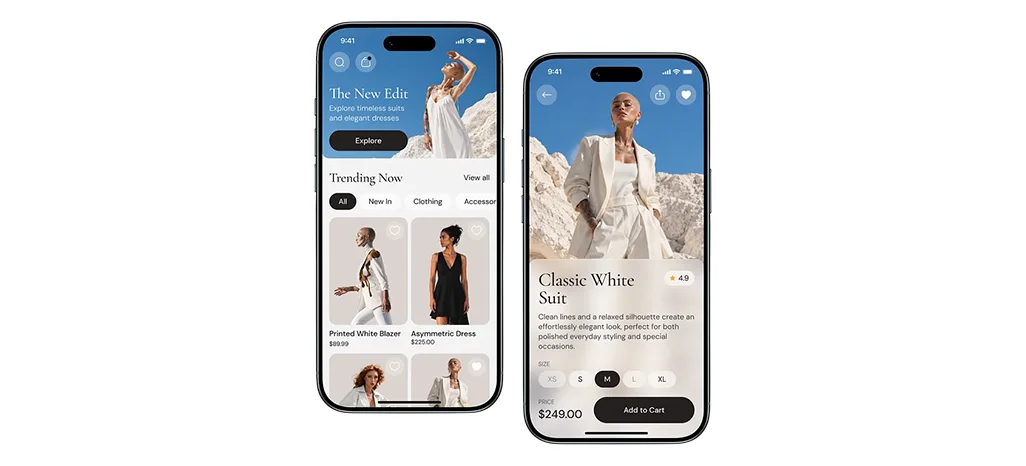
A Chanel fashion web data scraper for market research can help analysts organize observable information about products, categories, prices, availability, and market-specific assortments. This allows researchers to compare products over time and across selected geographic markets instead of relying exclusively on high-level industry commentary.
The value comes from connecting product observations with verified business results. Chanel reported $15.6 billion in revenue in 2021, followed by $17.2 billion in 2022 and $19.7 billion in 2023. In 2024, revenue declined 4.3% to $18.7 billion as macroeconomic conditions affected some markets.
| Year | Chanel reported revenue | YoY direction |
|---|---|---|
| 2020 | ~$10.4B* | — |
| 2021 | $15.6B | +49.6% |
| 2022 | $17.2B | +17% |
| 2023 | $19.7B | +16% |
| 2024 | $18.7B | -4.3% |
| 2025 | $19.3B | +2% |
| 2026 | Not yet a completed annual result | Current year |
*2020 is calculated from Chanel's reported 2021 revenue and stated 49.6% increase versus 2020; it is not a separately reported figure in the cited 2021 release. Chanel's 2025 result was released in May 2026.
The dataset should retain collection timestamps because product availability and prices can change. Researchers can then compare observed changes with company-level developments without claiming that an individual product caused a movement in overall revenue.
For market-research teams, useful fields include product category, product identifier, displayed price, currency, market, availability, collection or season, observation date, and source reference. These fields make the dataset easier to audit and update.
How can catalog-level data support ecommerce analysis?
Luxury ecommerce analysis requires more than counting products. Researchers need to understand which categories are visible, how products are positioned, whether prices differ by market, and how assortment changes over time.
Businesses can scrape Chanel fashion catalog data for ecommerce analytics when the relevant source permits collection. Product records can then be standardized into categories such as ready-to-wear, handbags, shoes, accessories, and other applicable fashion classifications. Researchers should avoid assuming that a missing online listing means a product has been discontinued; it may reflect regional availability, inventory conditions, or channel differences.
Chanel's 2021 financial release stated that Fashion delivered strong results, with double-digit growth across all product lines and particularly strong performance from leather goods and ready-to-wear. In 2025, Chanel reported positive performance across all business activities and specifically cited the success of the CHANEL 25 handbag campaign.
These disclosures show why product-category data can be useful as a research layer. Researchers can monitor the assortment while using official financial disclosures to establish the broader business context.
| Indicator | What it can reveal |
|---|---|
| Product count | Assortment breadth |
| Category share | Relative assortment emphasis |
| Listed price | Observed price positioning |
| Price range | Entry-to-premium positioning |
| Availability | Market or channel coverage |
| New listings | Assortment development |
| Removed listings | Potential assortment change requiring verification |
Price observations should always retain currency and market. A direct numerical comparison between two countries without exchange-rate, tax, and market-context adjustments can be misleading.
For ecommerce analysts, the strongest dataset therefore combines standardized product records with market metadata. This creates a foundation for longitudinal analysis without presenting scraped observations as official Chanel sales figures.
What makes an API-based dataset useful for luxury research?
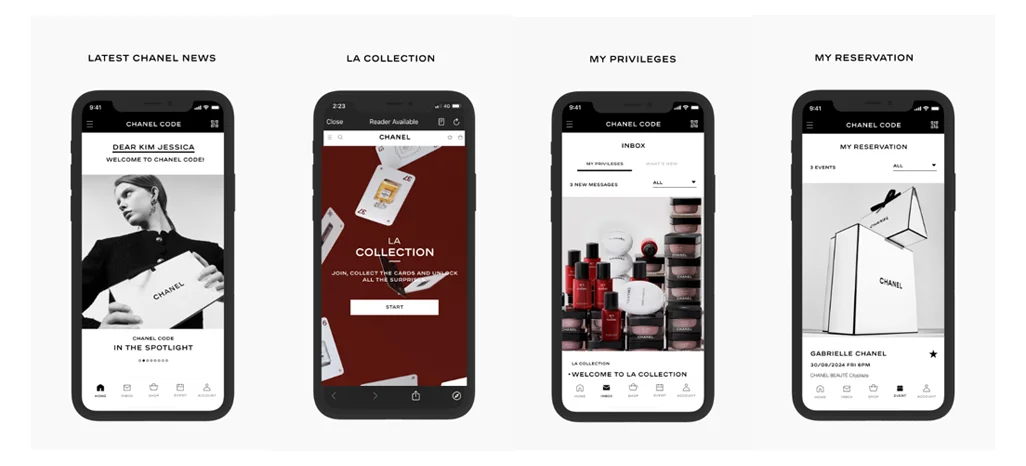
An API-based workflow can make structured research easier when an authorized endpoint or integration provides the necessary information. APIs can reduce repetitive collection and make it easier to deliver standardized records to dashboards, databases, and analytical systems.
A Chanel fashion dataset API for luxury market research should be evaluated according to actual documentation rather than assumed capabilities. Researchers should verify available fields, geographic coverage, update frequency, historical availability, usage limits, and licensing conditions before implementation.
A useful luxury-fashion dataset may include:
- Product identifiers and names.
- Category and subcategory.
- Displayed price and currency.
- Market or country.
- Product availability.
- Collection or season information where available.
- Product URLs or source references where permitted.
- Collection timestamp.
- Data-validation status.
The distinction between external observations and official financial information is critical. Chanel's 2025 results report $19.3 billion in revenue and $4.712 billion in operating profit, but the company does not publish revenue for individual fashion products in that release. Therefore, an external dataset cannot legitimately claim that a particular product generated a specific amount of revenue unless that information comes from a verified source.
A research API can instead support indicators such as product availability, displayed price movement, assortment breadth, and market-level observations. Those indicators can then be combined with public financial disclosures.
This approach is particularly useful for researchers studying the relationship between luxury pricing and market conditions. Reuters reported in 2024 that major luxury brands had increased prices substantially since 2019, with price increases contributing significantly to industry sales growth.
Ready to turn luxury fashion data into actionable market intelligence? Explore our data solutions and uncover product, pricing, and market trends with greater confidence.
Get Insights Now!How can timely data improve retail analytics?
Luxury retail changes quickly through new collections, product launches, market expansion, store openings, and evolving customer preferences. Timely data can therefore help researchers distinguish current assortment conditions from historical observations.
A real-time Chanel fashion data API for retail analytics can be useful when an authorized source genuinely supports frequent updates. However, “real-time” should be treated as a technical specification, not a marketing assumption. Analysts should verify the actual refresh interval and distinguish source updates from the time at which the underlying retail change occurred.
Chanel's 2024 results highlighted substantial investment despite lower revenue. The company reported $1.755 billion in capital expenditure, up 43% from 2023, and said it expanded its global footprint with boutiques including locations in New York, Nanjing, Chengdu, and Tokyo.
In 2025, Chanel reported opening more than 40 boutiques across established and newer markets, including Japan, Mainland China, the Middle East, and Mexico.
| Year | Selected verified development |
|---|---|
| 2021 | Fashion recorded double-digit growth across product lines |
| 2022 | Chanel reported double-digit growth across all categories |
| 2023 | Retail network exceeded 600 boutiques worldwide |
| 2024 | Capital expenditure reached $1.755B |
| 2025 | More than 40 boutiques opened |
| 2026 | Matthieu Blazy's Fall/Winter 2026 collection presented in March |
Sources: Chanel financial releases and Reuters reporting.
For retail analysts, timely product data can therefore be paired with verified expansion and financial information to understand how assortment, geographic reach, and investment evolve together.
How can a structured fashion dataset support performance measurement?
A Chanel Fashion Dataset becomes more useful when each record has a consistent definition and a traceable source. Researchers can use it to monitor product availability, observed pricing, category breadth, and changes in assortment.
However, product-level observations should not be presented as sales performance unless transaction data is available. A product appearing frequently on an official website does not establish that it sells more units than another product. Similarly, a higher price does not automatically indicate stronger demand.
Chanel's financial results provide useful context. Revenue increased 49.6% in 2021, 17% in 2022, and 16% in 2023 on comparable constant-currency bases before falling 4.3% in 2024. Revenue then rose 2% in 2025 to $19.3 billion.
A research framework can separate measurable indicators into three levels:
Product level
- Listed price.
- Availability.
- Category.
- Market.
- Collection date.
Market level
- Luxury-market growth.
- Regional consumer conditions.
- Currency movements.
- Retail expansion.
Company level
- Revenue.
- Operating profit.
- Capital expenditure.
- Boutique expansion.
This separation prevents researchers from treating a product listing as a direct financial measure. It also makes reports easier for decision-makers to interpret.
The broader luxury market experienced significant regional variation. Bain reported that China's mainland personal luxury market declined 18%–20% in 2024, while overseas luxury spending increased as international travel recovered.
For luxury analysts, geographic context is therefore essential when interpreting product availability, pricing, and assortment data.
How can structured records improve luxury-market intelligence?
A Chanel Fashion Dataset Luxury Market Intelligence framework can connect product observations with broader market indicators without confusing correlation with causation. Researchers can monitor product changes while separately tracking company disclosures and external industry conditions.
This distinction is particularly important because luxury performance can vary significantly between regions. Bain reported that the global personal luxury goods market reached an estimated €362 billion in 2023, up 4% from 2022, while Asia and Europe were important contributors to growth.
The 2024 China slowdown provides another example. Bain estimated an 18%–20% decline in China's mainland personal luxury market during 2024, attributing the weakness to lower consumer confidence and increased overseas spending.
For 2025, Reuters reported that Bain expected global luxury sales to decline 2%–5%, illustrating the challenging environment facing premium brands. Chanel subsequently reported 2% revenue growth for 2025, reaching $19.3 billion.
| Research layer | Example measure | Use |
|---|---|---|
| Product | Listed price | Pricing comparison |
| Category | Assortment count | Product positioning |
| Geography | Market availability | Regional analysis |
| Company | Revenue | Performance context |
| Industry | Luxury-market growth | Macro benchmarking |
A strong research report can therefore combine structured product observations with verified company and industry statistics. It can identify patterns worth investigating while clearly separating observed facts, reported financial data, and analytical interpretation.
For researchers, this makes the dataset more valuable than a simple product catalog because it provides a repeatable evidence base for examining pricing, assortment, geography, and competitive positioning.
A data provider should be evaluated on data quality, source coverage, technical consistency, scalability, and transparency. For luxury-market research, the provider should also make it clear which fields are observed, how frequently they are updated, and what limitations apply.
Fashion Data Scraping can support structured research when data collection is authorized and the required information is accessible. A suitable workflow should include validation for duplicate products, missing prices, inconsistent currencies, changed product identifiers, and unavailable pages.
Key evaluation criteria include:
- Source coverage: Verify the markets and sources actually supported.
- Field availability: Confirm that required product attributes can be collected.
- Refresh frequency: Establish how often records can be updated.
- Data validation: Check how missing and inconsistent records are handled.
- Historical depth: Determine whether historical observations are available.
- Output format: Ensure compatibility with databases, BI platforms, and analytics workflows.
- Responsible collection: Confirm compliance with applicable source terms and legal requirements.
For brand-performance research, structured data should complement—not replace—official company disclosures. Chanel's published financial results provide the authoritative benchmark for company-level revenue and investment figures, while external product data can provide additional market observations.
Conclusion
The 2026 luxury market requires researchers to evaluate product assortment, pricing, geographic positioning, and business performance together. Chanel's reported results show a major post-pandemic expansion from 2021 through 2023, a 2024 revenue decline amid a tougher luxury environment, and renewed 2025 growth.
A Chanel fashion dataset for brand performance analysis can provide a structured layer for examining product and market observations alongside those verified financial results. The most valuable datasets retain timestamps, market information, product identifiers, pricing fields, and source references so analysts can distinguish real changes from missing or incomparable records.
For fashion brands, retailers, market researchers, ecommerce teams, and investment analysts, the practical objective is not simply to collect more product data. It is to create a traceable evidence base that supports better questions about pricing, assortment, regional positioning, and luxury-market performance.
Ready to transform fashion-market data into actionable intelligence? Contact Real Data API to discuss your product-data, ecommerce research, and luxury-market analytics requirements!
Frequently Asked Questions
1. How can a Chanel fashion dataset for brand performance analysis support luxury research?
A Chanel fashion dataset for brand performance analysis can organize product, pricing, availability, and geographic observations, helping researchers evaluate positioning alongside verified company and industry performance data.
2. Is Chanel Fashion Data Scraping useful for ecommerce research?
Yes. Chanel Fashion Data Scraping can structure permitted product observations for research, provided collection complies with source terms, technical restrictions, applicable laws, and data-use requirements.
3. What does a Chanel fashion web data scraper for market research collect?
A Chanel fashion web data scraper for market research may organize permitted product names, categories, displayed prices, availability, markets, and timestamps when those fields are accessible.
4. Can businesses scrape Chanel fashion catalog data for ecommerce analytics?
Where authorized, businesses can scrape Chanel fashion catalog data for ecommerce analytics to compare assortment, displayed pricing, and product availability while maintaining appropriate source attribution and validation controls.
5. What is a Chanel fashion dataset API for luxury market research?
A Chanel fashion dataset API for luxury market research can provide structured records where an authorized endpoint supports them. Real Data API can be evaluated for relevant coverage and integration requirements.



.png)


