TL;DR
- HBO Max OTT dataset provides structured information about movies, shows, genres, ratings, release years, and catalog attributes for streaming-market research.
- HBO Max OTT Data Scraping can organize publicly accessible streaming information into research-ready datasets for catalog analysis, content benchmarking, and trend monitoring.
- The 2020–2026 period highlights major changes in streaming consumption, platform expansion, content strategies, and digital entertainment competition, making historical OTT data valuable for longitudinal analysis.
Introduction
The streaming industry has become increasingly data-driven as platforms expand their content libraries, introduce new programming, adjust subscription strategies, and compete for viewer attention. Movies and shows are continuously added, removed, categorized, rated, and promoted, creating a constantly changing digital content environment. For researchers and media businesses, maintaining an accurate view of these changes requires structured and repeatable data collection.
An HBO Max OTT dataset can organize information such as movie and show titles, genres, ratings, release years, content types, descriptions, runtime information, and other publicly available attributes. When captured consistently, these records can support content benchmarking, catalog research, genre analysis, competitive intelligence, and streaming trend studies.
HBO Max OTT Data Scraping can further support recurring data collection, allowing businesses to compare catalog snapshots across different periods. This can help researchers understand how content libraries evolve and identify changes in genre distribution, release patterns, ratings, and programming composition.
The streaming market has undergone significant transformation since 2020. WarnerMedia launched HBO Max in May 2020, while Warner Bros. Discovery later consolidated HBO Max and Discovery+ under the Max brand in 2023 before the HBO Max name was restored in 2025. These developments demonstrate why historical streaming datasets can provide useful context for analyzing platform evolution.
Building a Structured View of Streaming Catalogs
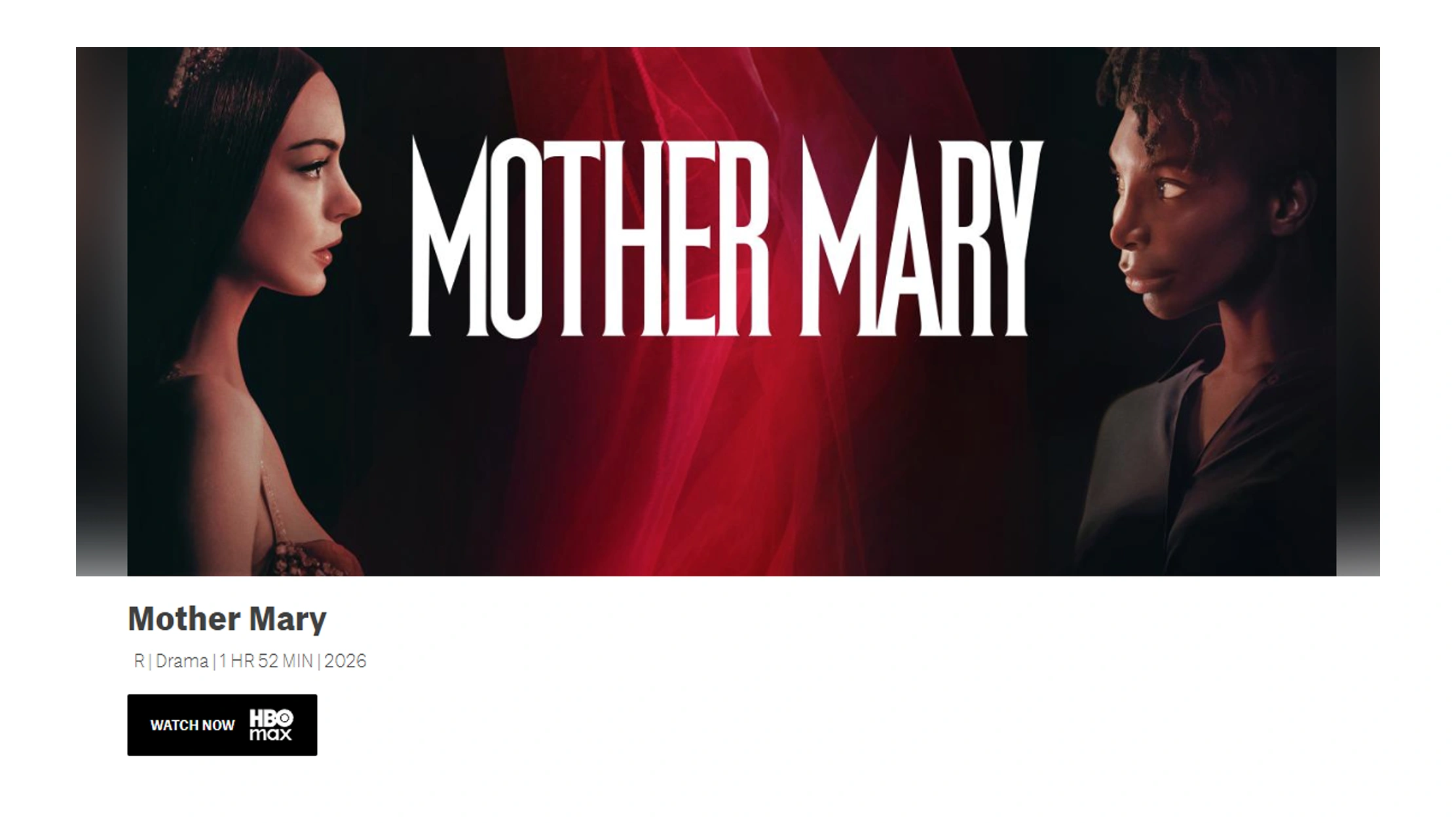
A streaming catalog contains many attributes that can be useful for market research. However, catalog information presented across web pages or platform interfaces is not automatically suitable for large-scale analysis. Researchers need consistent fields, standardized values, and recurring collection processes to turn individual content records into an analytical resource.
HBO Max data collection services can help businesses structure information around content titles, content types, genres, ratings, release years, descriptions, runtime, availability, and other accessible fields. A consistent schema makes it easier to compare content across collection periods and identify changes within the catalog.
| Data Attribute | Research Application |
|---|---|
| Title | Content identification |
| Content type | Movie vs. series analysis |
| Genre | Genre distribution |
| Rating | Audience/content analysis |
| Release year | Content-age research |
| Runtime | Content-format analysis |
| Description | Content-theme research |
| Collection date | Historical monitoring |
2020–2026 Perspective
The 2020–2026 period is particularly important for streaming analysis because the industry experienced rapid changes in platform strategies, content distribution, and consumer behavior. HBO Max launched in May 2020 with a large catalog combining HBO programming, Warner Bros. content, and other library titles.
In 2023, Warner Bros. Discovery introduced Max as a combined streaming service following the integration of HBO Max and Discovery+, expanding the platform's content proposition beyond the traditional HBO-focused catalog. In 2025, the company announced the return to the HBO Max name, explaining that the HBO brand was being emphasized again as a signal of premium programming.
For researchers, these changes create a valuable historical period for studying catalog composition. Data collected across 2020, 2021, 2022, 2023, 2024, 2025, and 2026 can help compare how the platform's content structure evolved.
| Year | Streaming Research Context |
|---|---|
| 2020 | HBO Max launched in the U.S. |
| 2021 | Original programming and catalog expansion continued |
| 2022 | Streaming competition intensified |
| 2023 | HBO Max transitioned to Max |
| 2024 | Max continued broader entertainment positioning |
| 2025 | HBO Max branding was restored |
| 2026 | Historical catalog analysis spans multiple platform phases |
Turning Online Content Into Comparable Records
Streaming platforms contain large volumes of content metadata, but individual records are most useful when they can be compared using a standardized structure. A title's genre, rating, release year, content type, and other attributes can provide different perspectives on catalog composition.
For researchers, web scraping HBO Max content data can provide a systematic method for organizing publicly accessible information into structured records. Depending on source availability and permitted fields, datasets can include title names, genres, ratings, descriptions, release years, content types, runtime information, and URLs.
| Research Dimension | Possible Insight |
|---|---|
| Genre | Catalog composition |
| Rating | Audience segmentation |
| Release year | Content freshness |
| Content type | Movie/series balance |
| Runtime | Viewing-format analysis |
| Title availability | Catalog movement |
| Description | Theme analysis |
2020–2026 Perspective
From 2020 onward, streaming services increasingly competed through content breadth, exclusive programming, technology, and differentiated brand positioning. HBO Max's launch in 2020 represented a major expansion of WarnerMedia's direct-to-consumer strategy.
The subsequent Max transition in 2023 changed the scope of the platform's catalog proposition. Warner Bros. Discovery described Max as combining HBO Max and Discovery+ content, adding a wider range of entertainment categories. The later return to HBO Max branding in 2025 marked another strategic change in how the service was positioned to consumers.
These developments make historical catalog records useful for researchers studying how content composition changes alongside platform positioning. A dataset can be segmented by year to examine changes in genres, content types, ratings, and release-year distributions.
Rather than analyzing a platform from one static snapshot, researchers can use recurring records to understand the direction and pace of catalog changes.
Monitoring Changes in the Streaming Landscape
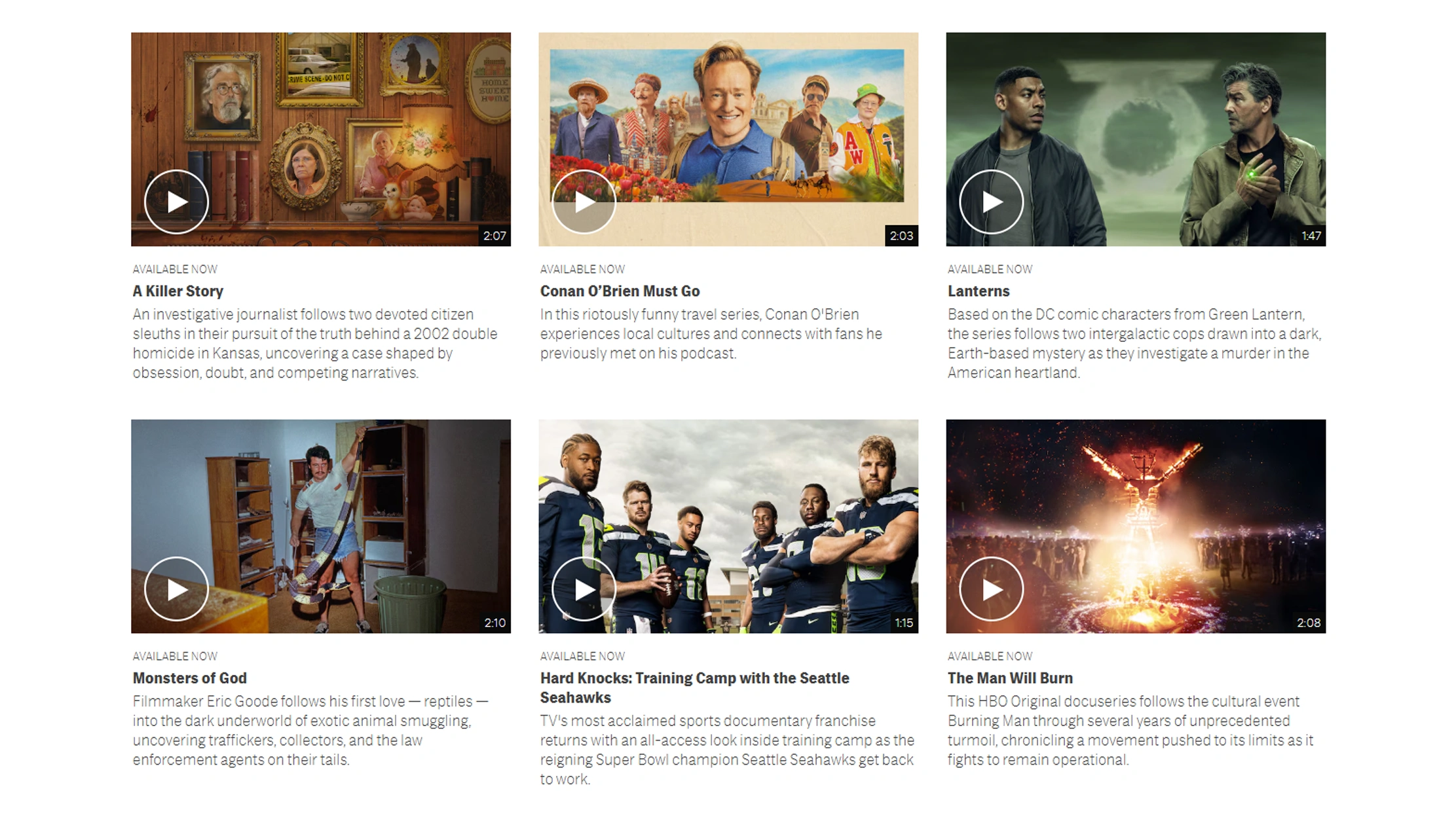
Streaming catalogs are dynamic. Content can be introduced, removed, reclassified, promoted, or repositioned over time. For businesses researching entertainment markets, this means that a single data snapshot may not provide sufficient information for understanding catalog movement.
Real-time HBO Max streaming data can support more frequent monitoring of accessible catalog attributes. Depending on the data source and collection architecture, recurring extraction can capture changes in content metadata and help analysts compare current observations with historical records.
| Monitoring Area | Business Use |
|---|---|
| New titles | Content addition monitoring |
| Removed titles | Catalog-change research |
| Genre distribution | Programming analysis |
| Ratings | Content-performance research |
| Release years | Catalog freshness |
| Content type | Movies vs. series analysis |
2020–2026 Perspective
The streaming sector experienced substantial strategic changes between 2020 and 2026. HBO Max's launch coincided with an industry-wide expansion of direct-to-consumer streaming, while the subsequent Max transition reflected broader attempts to combine entertainment libraries and strengthen platform economics.
Warner Bros. Discovery's 2025 reporting described the return of HBO Max branding as part of a strategy centered on HBO's reputation for premium storytelling while maintaining the broader entertainment offering developed under Max.
For researchers, frequent catalog monitoring can provide context around such platform changes. By capturing content information at regular intervals, analysts can examine whether changes in platform positioning coincide with differences in catalog composition.
Historical records can also support content lifecycle research. Analysts may compare the proportion of older versus newer titles, changes in genre availability, and shifts between movies and television series.
Want to monitor changing streaming catalogs with structured data? Real Data API can help build scalable workflows for OTT content collection, normalization, and analysis!
Get Insights Now!Analyzing Titles, Genres, and Programming Mix
Content-level information provides a foundation for understanding how a streaming service structures its library. Researchers can examine individual titles while also aggregating records by genre, release year, rating, and content type.
The ability to extract HBO Max show information can support analyses ranging from simple catalog counts to more advanced content intelligence. For example, analysts can compare the number of television series and movies, identify dominant genres, examine release-year distributions, and study how ratings vary across content categories.
| Content Metric | Example Analysis |
|---|---|
| Number of titles | Catalog size |
| Genre count | Genre diversity |
| Average release year | Catalog age |
| Rating distribution | Audience classification |
| Movie/series ratio | Content mix |
| Runtime | Format analysis |
2020–2026 Perspective
HBO Max's catalog strategy changed significantly across the period covered by this report. Its 2020 launch emphasized HBO programming alongside Warner Bros., New Line, DC, CNN, TNT, TBS, truTV, Adult Swim, and other content sources.
The 2023 Max launch broadened the platform's proposition further by combining HBO Max and Discovery+ programming. The 2025 decision to restore HBO Max branding represented another shift, with Warner Bros. Discovery emphasizing the HBO identity while retaining the broader content offering.
A historical dataset can help researchers place these strategic changes into a measurable content context. For example, analysts can compare genre distribution before and after platform transitions or examine whether the proportion of movies and series changed over time.
This approach can turn catalog metadata into a longitudinal research resource that supports reports, dashboards, and market studies.
Comparing Catalog Composition Over Time
Streaming intelligence becomes more valuable when data can be compared across periods. A single catalog snapshot shows what is available at one point in time, while historical datasets reveal how content composition changes.
HBO Max OTT Datasets can support this longitudinal approach by maintaining structured records from multiple collection periods. Researchers can compare genre proportions, rating distributions, release-year groups, and content types across years or months.
| Comparison Area | Research Question |
|---|---|
| Genres | Which genres expanded or contracted? |
| Release years | Is the catalog becoming newer? |
| Ratings | How is content distributed by rating? |
| Content type | Are movies or series more prominent? |
| Availability | Which titles appear or disappear? |
| Themes | How does content positioning evolve? |
2020–2026 Perspective
The period from 2020 to 2026 covers multiple stages in the service's development. HBO Max began in 2020, evolved into Max in 2023, and returned to HBO Max branding in 2025.
These changes create opportunities for comparative research. A dataset containing multiple historical snapshots can help analysts distinguish structural catalog changes from short-term content fluctuations.
For example, researchers can compare pre-Max and post-Max catalog characteristics, examine changes in genre representation, or analyze the distribution of release years. Researchers can also investigate whether the catalog became broader or more specialized at different stages, while keeping the underlying analysis descriptive rather than assuming the reasons for those changes.
Historical OTT data therefore provides context that cannot be obtained from a single current catalog view.
Creating a Reusable Foundation for OTT Research
OTT data becomes increasingly useful when it can be reused across multiple research questions. A structured dataset can serve as the underlying source for dashboards, reports, content comparisons, genre analysis, and historical trend studies.
An OTT Dataset can combine content metadata into a standardized structure that supports filtering, aggregation, visualization, and recurring reporting. The same dataset can potentially be used by media researchers, entertainment companies, analysts, content strategists, and market-intelligence teams.
| Use Case | Dataset Contribution |
|---|---|
| Catalog analysis | Structured content inventory |
| Genre research | Category-level records |
| Content benchmarking | Comparable title attributes |
| Trend analysis | Historical snapshots |
| Competitor research | Cross-platform comparison |
| Reporting | Analytics-ready data |
2020–2026 Perspective
The expansion and restructuring of HBO's streaming service between 2020 and 2026 demonstrates why reusable OTT datasets can be valuable. The platform moved from HBO Max to Max and later back to HBO Max branding, while maintaining a broader content strategy.
A reusable dataset allows researchers to revisit historical information as new questions emerge. Instead of recollecting everything for every project, teams can maintain standardized records and add new collection periods.
This also supports trend analysis. Researchers can examine changes in genre representation, release-year distributions, content formats, and catalog turnover. When combined with other publicly available market information, structured content datasets can provide a richer foundation for understanding the streaming environment.
Why Choose Real Data API?
Real Data API can help businesses build scalable data pipelines for entertainment and OTT research. The focus can extend beyond simple extraction to include data normalization, validation, recurring collection, structured delivery, and integration with analytical workflows.
Businesses looking to Scrape streaming content trends using HBO Max data can use structured collection methodologies to organize content information into consistent records. Depending on source availability, datasets can be designed around titles, genres, ratings, release years, content types, availability, and other accessible attributes.
The value of a data pipeline is its repeatability. Instead of manually researching hundreds or thousands of titles, analysts can work with standardized records that are easier to filter and compare. Recurring collection can also create historical snapshots that support longitudinal research.
Real Data API can tailor data structures to specific business requirements, whether the objective is catalog intelligence, content benchmarking, genre research, competitive analysis, or streaming-market reporting. The resulting datasets can be delivered in formats suitable for databases, dashboards, spreadsheets, or downstream analytics environments.
Conclusion
Streaming platforms have become dynamic digital catalogs where movies, shows, genres, ratings, release years, and availability can change over time. For researchers and businesses, structured historical data provides a practical foundation for understanding these changes and analyzing the evolution of streaming content.
An HBO Max OTT dataset can organize relevant content attributes into consistent records that support catalog research, genre analysis, ratings analysis, content benchmarking, and streaming trend monitoring. The 2020–2026 period is particularly useful because the service experienced several major stages, including the HBO Max launch in 2020, the transition to Max in 2023, and the return to HBO Max branding in 2025.
When collected consistently, OTT data can move beyond a one-time catalog snapshot and become a historical intelligence resource.
Partner with Real Data API to build scalable OTT data solutions for catalog intelligence, content research, genre analysis, and streaming trend monitoring!
FAQs
What information can an HBO Max dataset contain?
An HBO Max OTT dataset can contain titles, genres, ratings, release years, content types, descriptions, runtime details, availability information, and other publicly accessible metadata.
How does content scraping support streaming research?
HBO Max OTT Data Scraping can organize accessible streaming metadata into structured records, helping researchers compare catalogs, genres, ratings, release periods, and content types.
Why are historical OTT datasets useful?
HBO Max OTT Datasets can preserve multiple catalog snapshots, enabling researchers to examine changes in content composition, genre distribution, ratings, and release-year patterns.
What can an OTT dataset be used for?
An OTT Dataset can support catalog analysis, content benchmarking, genre research, competitor studies, historical trend analysis, reporting, and entertainment-market intelligence.
How can businesses analyze streaming trends?
Scrape streaming content trends using HBO Max data can help researchers study changes in catalog composition, genre distribution, content types, ratings, and availability across recurring collection periods.
Latest posts
How Levi's Fashion Dataset Improves Fashion Intelligence Across Products, Prices, Categories, and Denim Market Trends?

How Myntra Fashion Dataset Solves Fashion Intelligence Challenges Across Products, Prices, Brands, and Fashion Market Trends?
How Hyatt Travel Dataset Helps Businesses Track Hotels, Room Prices, Amenities, Locations, and Travel Trends?

How Louis Vuitton Fashion Dataset Enables Better Analysis of Luxury Products, Prices, Brands, and Fashion Trends?






.png)



