Introduction
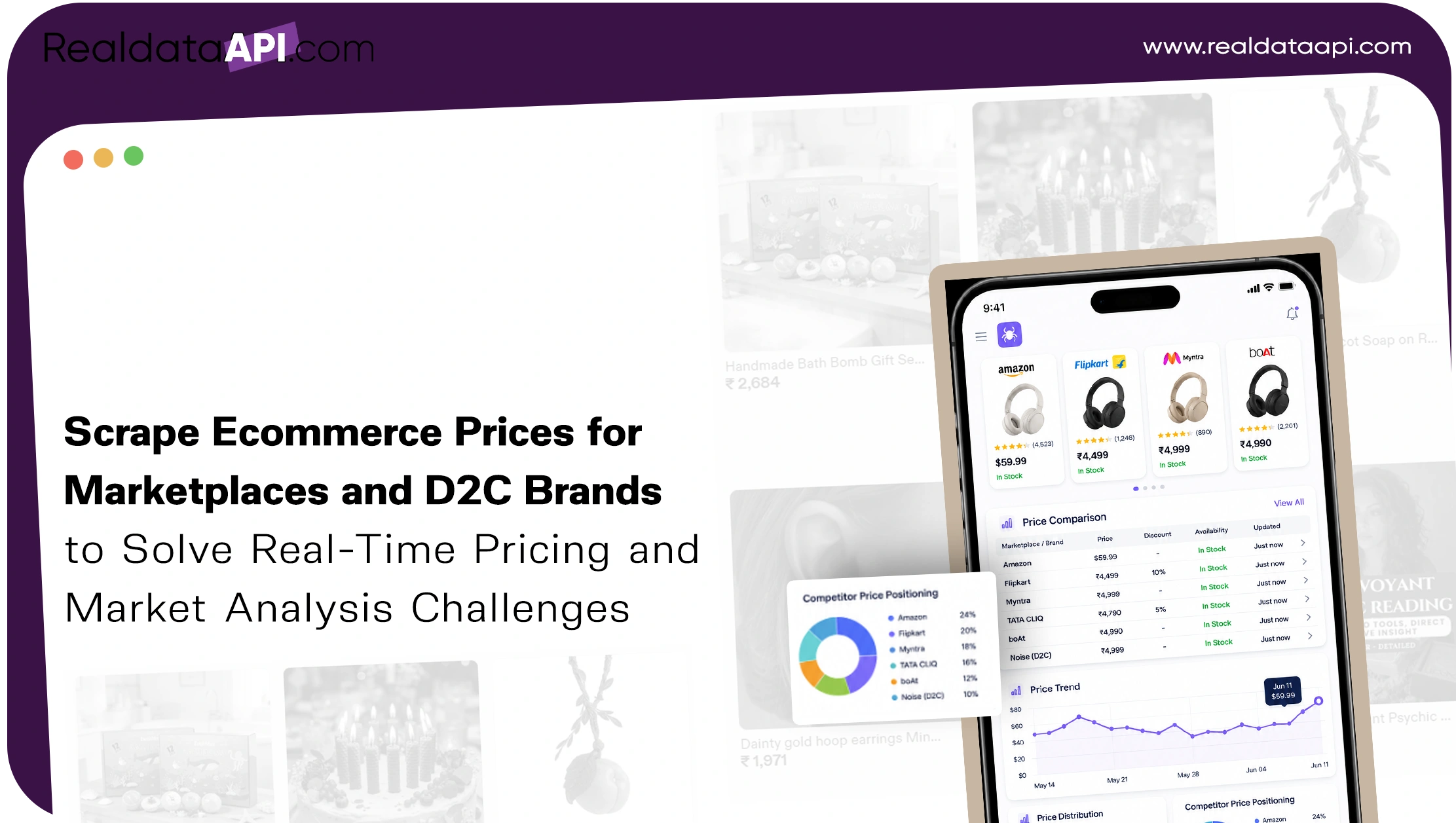
Online pricing changes constantly. Retailers and D2C brands need real-time data to stay competitive. Scrape ecommerce prices for marketplaces and D2C brands to monitor competitor pricing, discounts, stock availability, and customer demand across multiple ecommerce platforms.
According to Statista, global ecommerce sales are expected to exceed $8 trillion by 2026. Businesses using automated pricing intelligence improve pricing accuracy by up to 35% and reduce revenue loss caused by delayed market reactions.
Modern retailers rely on data-driven pricing strategies to:
- Monitor competitor prices
- Detect discount trends
- Improve profit margins
- Track stock availability
- Optimize dynamic pricing
Advanced End-to-End Web Scraping Solutions for Retail and Ecommerce Analytics help businesses automate large-scale ecommerce data collection for faster decision-making.
Why Do Retailers Need Real-Time Pricing Visibility?
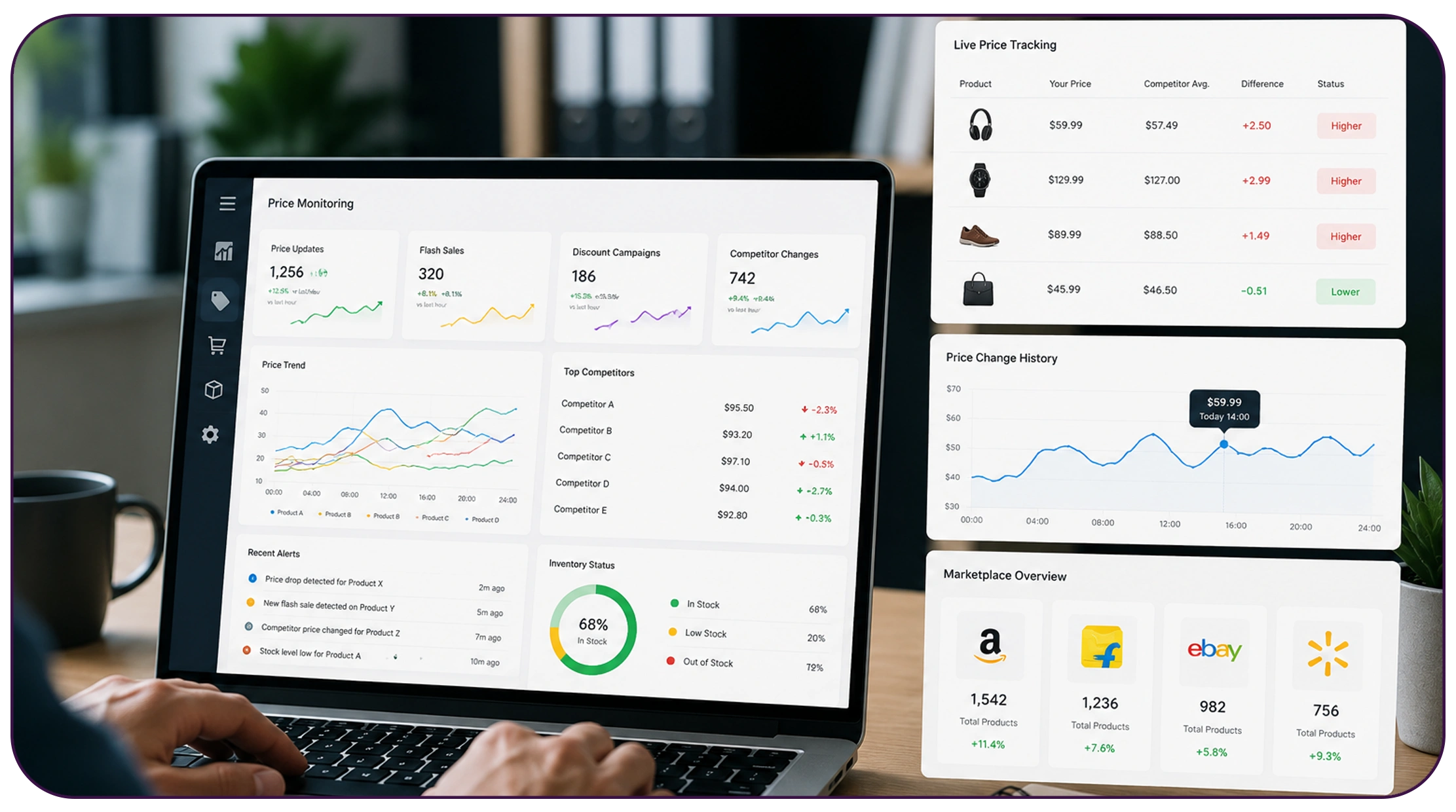
Ecommerce pricing changes every hour. Competitors adjust prices based on promotions, stock levels, customer demand, and seasonal trends. Businesses that react slowly risk losing customers and revenue.
Using real-time ecommerce pricing data intelligence solutions, companies can track:
- Product pricing updates
- Flash sales
- Discount campaigns
- Marketplace competition
- Inventory changes
Global Ecommerce Growth Statistics
| Year | Global Ecommerce Revenue |
|---|---|
| 2020 | $4.2 Trillion |
| 2021 | $4.9 Trillion |
| 2022 | $5.7 Trillion |
| 2023 | $6.3 Trillion |
| 2024 | $6.9 Trillion |
| 2025 | $7.5 Trillion |
| 2026 | $8.1 Trillion |
Retailers that use automated pricing intelligence can improve operational efficiency and respond to pricing changes faster.
For example:
- A competitor lowers product pricing.
- Web scraping tools detect the change instantly.
- AI systems recommend pricing adjustments.
- Retailers maintain competitive positioning.
Real-time pricing visibility also supports:
- Better promotional planning
- Faster inventory decisions
- Improved customer retention
Businesses can avoid underpricing or overpricing products by using accurate market intelligence.
How Can Businesses Monitor Competitor Pricing Effectively?
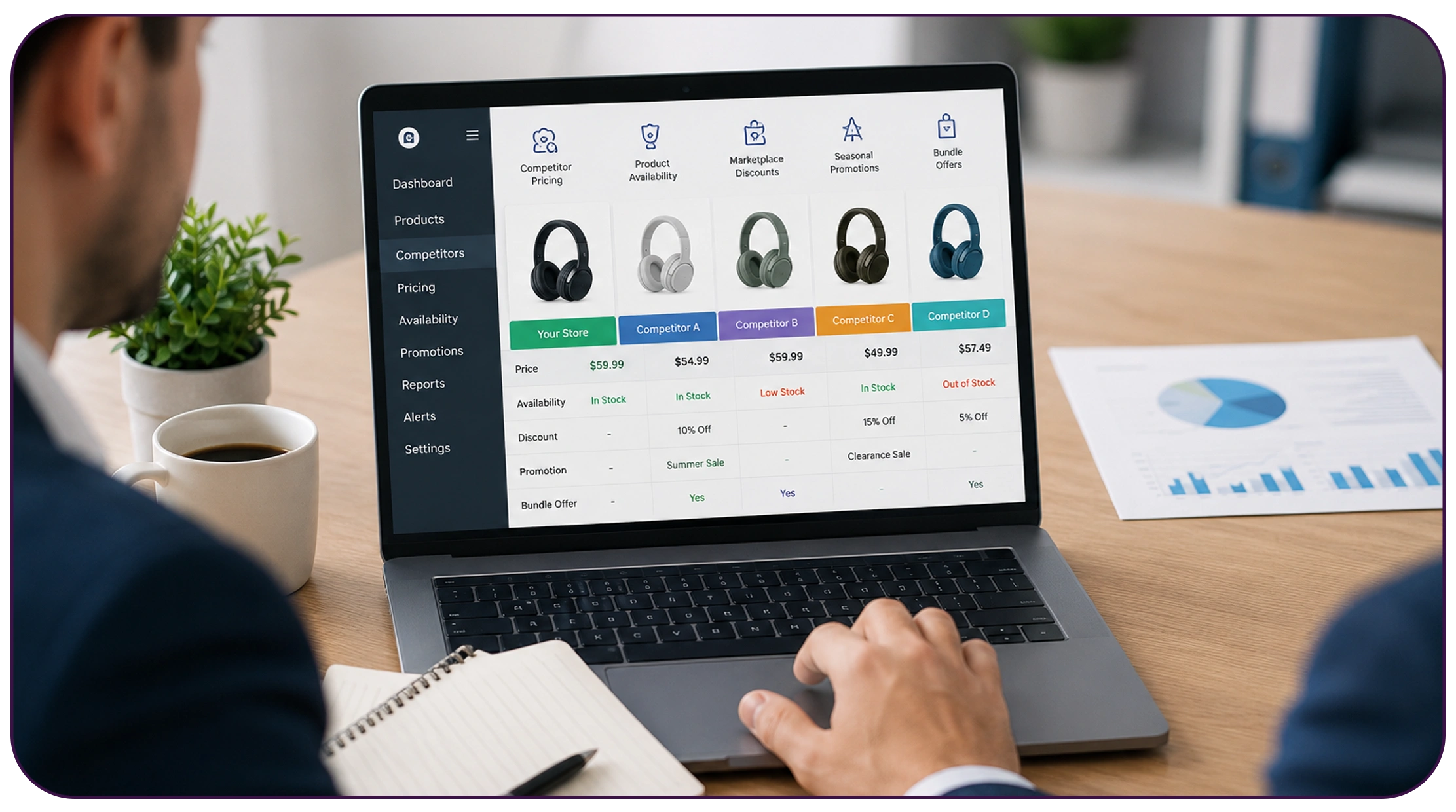
Competitor monitoring is essential in highly competitive ecommerce markets. D2C brands and online retailers must understand how competitors price products across marketplaces and websites.
Through competitor price tracking for online retailers and brands, businesses can analyze:
- Competitor pricing strategies
- Product availability
- Marketplace discounts
- Seasonal promotions
- Bundle offers
Retail Price Monitoring Adoption
| Year | Businesses Using Automated Price Tracking |
|---|---|
| 2020 | 24% |
| 2021 | 33% |
| 2022 | 45% |
| 2023 | 56% |
| 2024 | 65% |
| 2025 | 73% |
| 2026 | 81% |
Manual price tracking is no longer practical. Ecommerce marketplaces update millions of listings daily. Automated scraping tools provide faster and more accurate insights.
Retailers can:
- Compare prices across marketplaces
- Detect sudden pricing drops
- Monitor unauthorized sellers
- Improve promotional strategies
Businesses using automated competitor tracking gain:
- Faster decision-making
- Better margin protection
- Improved market positioning
Accurate competitor intelligence helps retailers respond quickly to changing market conditions.
How Does Automated Data Extraction Improve Retail Analytics?
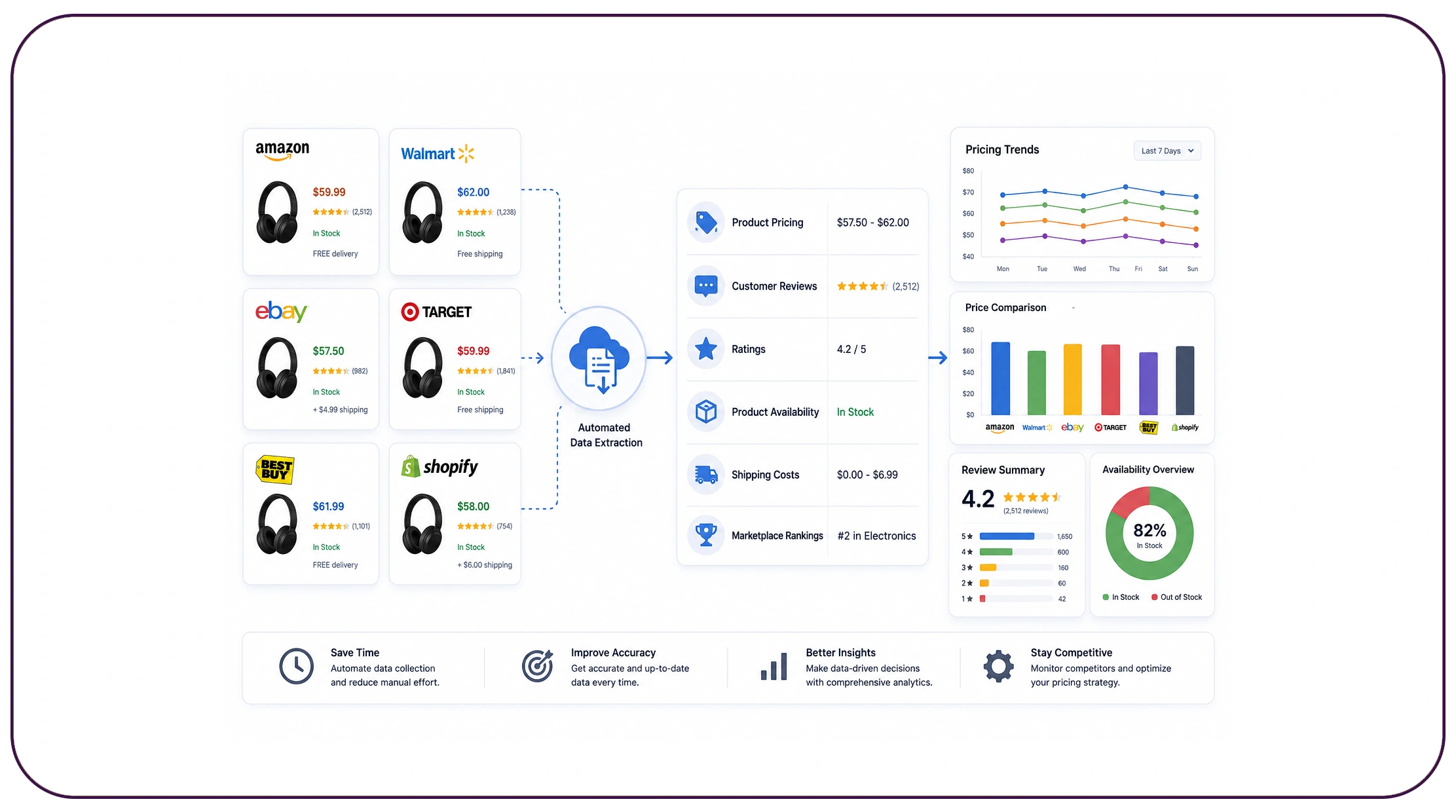
Ecommerce businesses generate massive amounts of pricing and product data every day. Collecting this information manually creates delays and inaccuracies.
Using ecommerce competitor price data extraction for online retailers and brands, businesses can automate the collection of:
- Product pricing
- Customer reviews
- Ratings
- Product availability
- Shipping costs
- Marketplace rankings
Ecommerce Product Listing Growth
| Year | Global Ecommerce Product Listings |
|---|---|
| 2020 | 12 Billion |
| 2021 | 16 Billion |
| 2022 | 21 Billion |
| 2023 | 27 Billion |
| 2024 | 34 Billion |
| 2025 | 42 Billion |
| 2026 | 51 Billion |
Automated data extraction improves:
- Data accuracy
- Reporting speed
- Market visibility
- Pricing optimization
AI-powered systems process extracted data and identify patterns quickly. Retailers can discover high-performing products, market pricing gaps, and consumer buying trends.
How Can Businesses Understand Ecommerce Market Trends Better?
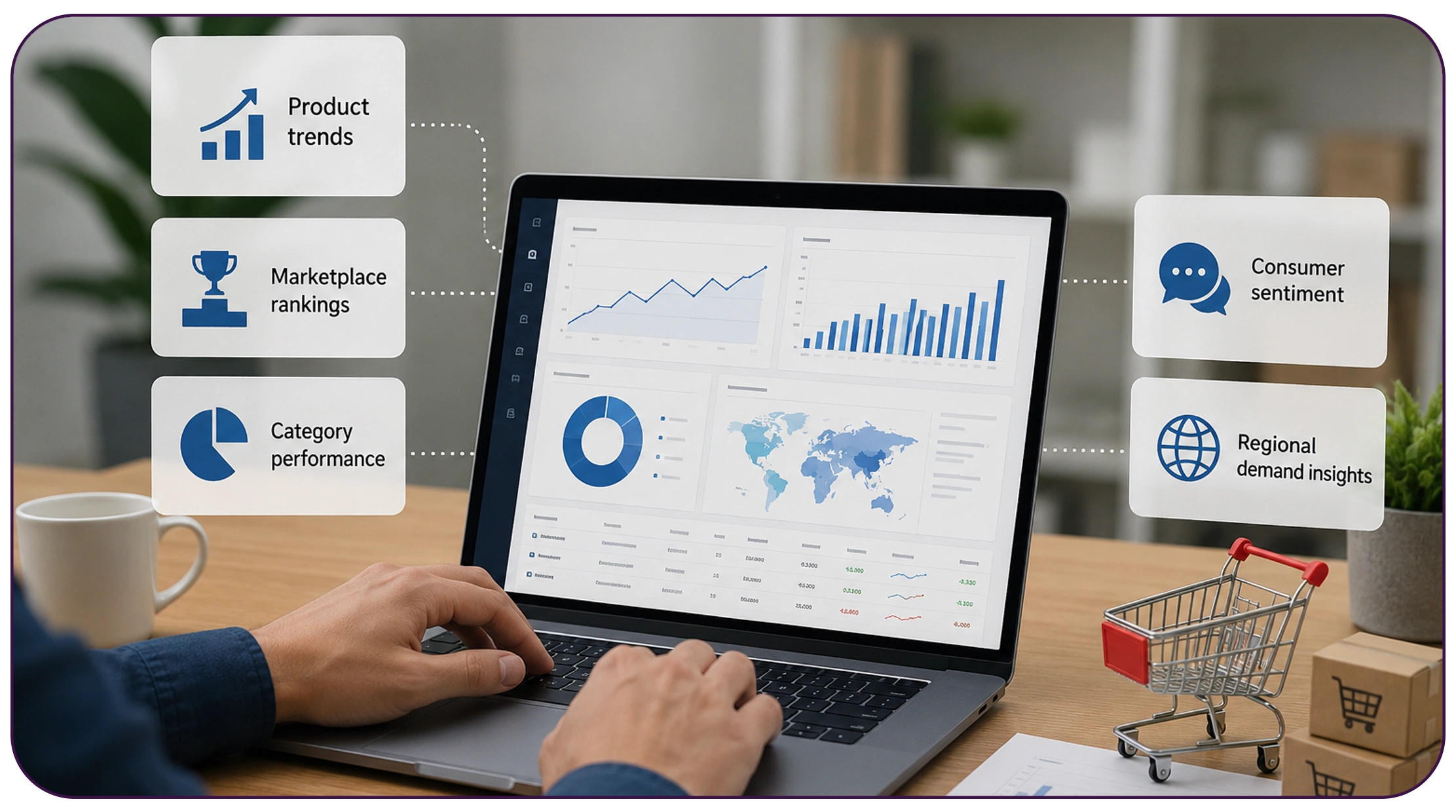
Retailers need more than pricing information. They also need market-wide insights to understand customer demand and product performance.
An ecommerce retail market data intelligence scraper helps businesses collect:
- Product trends
- Marketplace rankings
- Category performance
- Consumer sentiment
- Regional demand insights
Ecommerce Intelligence Platform Growth
| Year | Businesses Using Market Intelligence Tools |
|---|---|
| 2020 | 20% |
| 2021 | 31% |
| 2022 | 44% |
| 2023 | 57% |
| 2024 | 67% |
| 2025 | 75% |
| 2026 | 84% |
Market intelligence tools help businesses identify trending product categories, seasonal buying patterns, high-growth marketplaces, and consumer preferences.
Real-time insights reduce uncertainty and improve long-term planning.
What Are the Best Approaches for Scraping Niche Ecommerce Platforms?

Many businesses focus only on major marketplaces like Amazon and Walmart. However, niche ecommerce platforms also contain valuable market data.
The Best Data Extraction Strategies for Niche Ecommerce Platforms include:
- Rotating proxy infrastructure
- AI-powered parsing
- Dynamic content scraping
- Structured API integration
- Automated monitoring systems
Niche Ecommerce Market Expansion
| Year | Niche Ecommerce Market Share |
|---|---|
| 2020 | 11% |
| 2021 | 15% |
| 2022 | 19% |
| 2023 | 24% |
| 2024 | 29% |
| 2025 | 34% |
| 2026 | 40% |
Niche marketplaces often specialize in luxury goods, handmade products, organic foods, fashion accessories, and electronics components.
Businesses that scrape niche platforms gain access to unique consumer insights and pricing opportunities.
What Are the Most Valuable Ecommerce Scraping Applications?
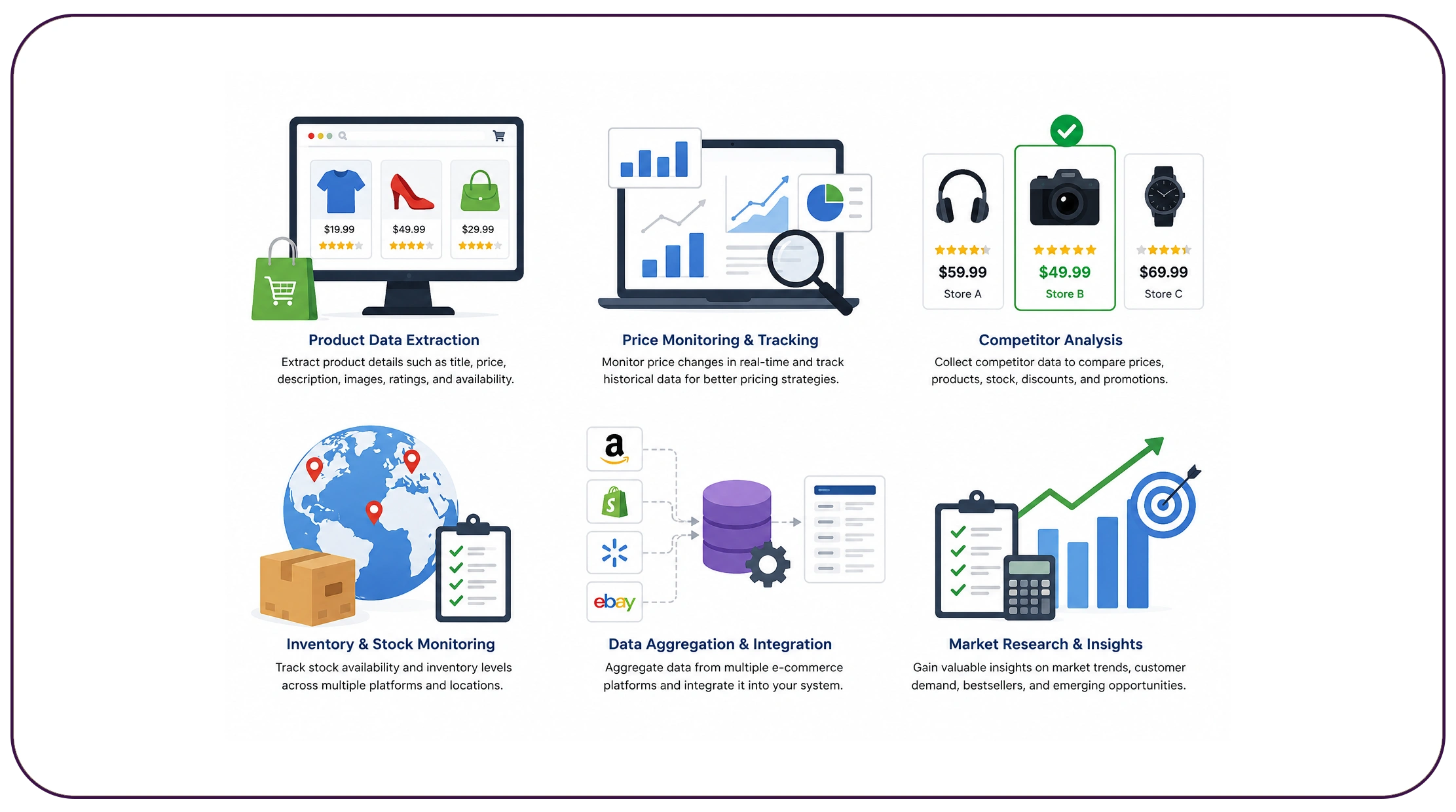
Ecommerce scraping supports multiple business functions across retail, analytics, and supply chain operations.
Some of the Top Ecommerce Scraping API Use Cases include:
- Dynamic pricing optimization
- Product trend analysis
- Competitor monitoring
- Inventory tracking
- Customer sentiment analysis
- Demand forecasting
Ecommerce API Adoption Trends
| Year | Businesses Using Ecommerce APIs |
|---|---|
| 2020 | 26% |
| 2021 | 37% |
| 2022 | 48% |
| 2023 | 59% |
| 2024 | 68% |
| 2025 | 76% |
| 2026 | 85% |
Retailers use scraping APIs to automate repetitive research tasks and improve business intelligence.
Why Choose Real Data API?
Real Data API delivers scalable ecommerce data extraction solutions for retailers, D2C brands, analytics companies, and marketplaces.
Using the E-Commerce Data Scraping API, businesses can collect real-time pricing data, product availability, customer reviews, marketplace rankings, and competitor insights.
Real Data API supports businesses that want to Scrape ecommerce prices for marketplaces and D2C brands through automated web scraping, structured datasets, AI-ready analytics integration, high-speed API delivery, and multi-platform data collection.
Key advantages include:
- Scalable infrastructure
- Real-time data updates
- High extraction accuracy
- Custom analytics support
- Competitive pricing intelligence
Businesses can improve pricing decisions, optimize retail operations, and gain stronger market visibility using reliable ecommerce data solutions.
Conclusion
The ecommerce industry is becoming more competitive every year. Businesses need real-time pricing intelligence and market analytics to stay ahead. Scrape ecommerce prices for marketplaces and D2C brands to monitor competitors, optimize pricing strategies, analyze customer demand, and improve operational efficiency.
Automated ecommerce scraping combined with AI-powered analytics helps retailers make faster and smarter business decisions in rapidly changing online markets.
Ready to transform your ecommerce pricing and analytics strategy? Contact Real Data API today for scalable real-time ecommerce data scraping solutions!
Latest posts
How Ixigo API Helps Businesses Solve Flight, Train, Hotel, Travel, and Pricing Data Challenges
How to Extract Restaurants, Menus, Prices, Ratings, and Business Data for Market Insights
How Brands Track Restaurant, Menu, Pricing, Rating, and Delivery Data for Competitive Intelligence

How Retailers Track Fashion Products, Prices, Brands, and Category Data for Competitive Intelligence Using AJIO API






.png)



