.webp)
Introduction
Yes, you can automate restaurant intelligence by using an API to collect Foodora restaurant listings, menu items, prices, availability, ratings, and delivery information in real time. This helps businesses monitor competitors, optimize pricing strategies, improve market research, and build food delivery applications without relying on manual data collection.
Industry Insight: According to market research, the global online food delivery market is expected to surpass $500 billion by 2030, with digital ordering and restaurant analytics continuing to grow rapidly between 2020 and 2026. Businesses using automated data collection gain faster access to pricing changes, menu updates, and customer preferences.
For restaurant aggregators, food delivery startups, market researchers, Q-commerce platforms, pricing analysts, and AI developers, staying updated with restaurant information is essential. Manual monitoring across thousands of restaurants is time-consuming and often inaccurate. Businesses need automated solutions that provide structured, reliable, and frequently updated restaurant data.
By choosing to scrape Foodora restaurant and menu data using API, organizations can automatically collect restaurant names, cuisines, menu categories, item prices, promotional offers, delivery availability, ratings, operating hours, and more. This enables better competitive intelligence and data-driven business decisions.
Many enterprises also depend on a Web Scraping Foodora Dataset to support dynamic pricing models, demand forecasting, restaurant benchmarking, recommendation engines, location intelligence, and customer behavior analysis. Structured datasets help organizations transform raw restaurant information into valuable business insights while reducing operational effort.
Why Is Automated Restaurant Data Collection Important?
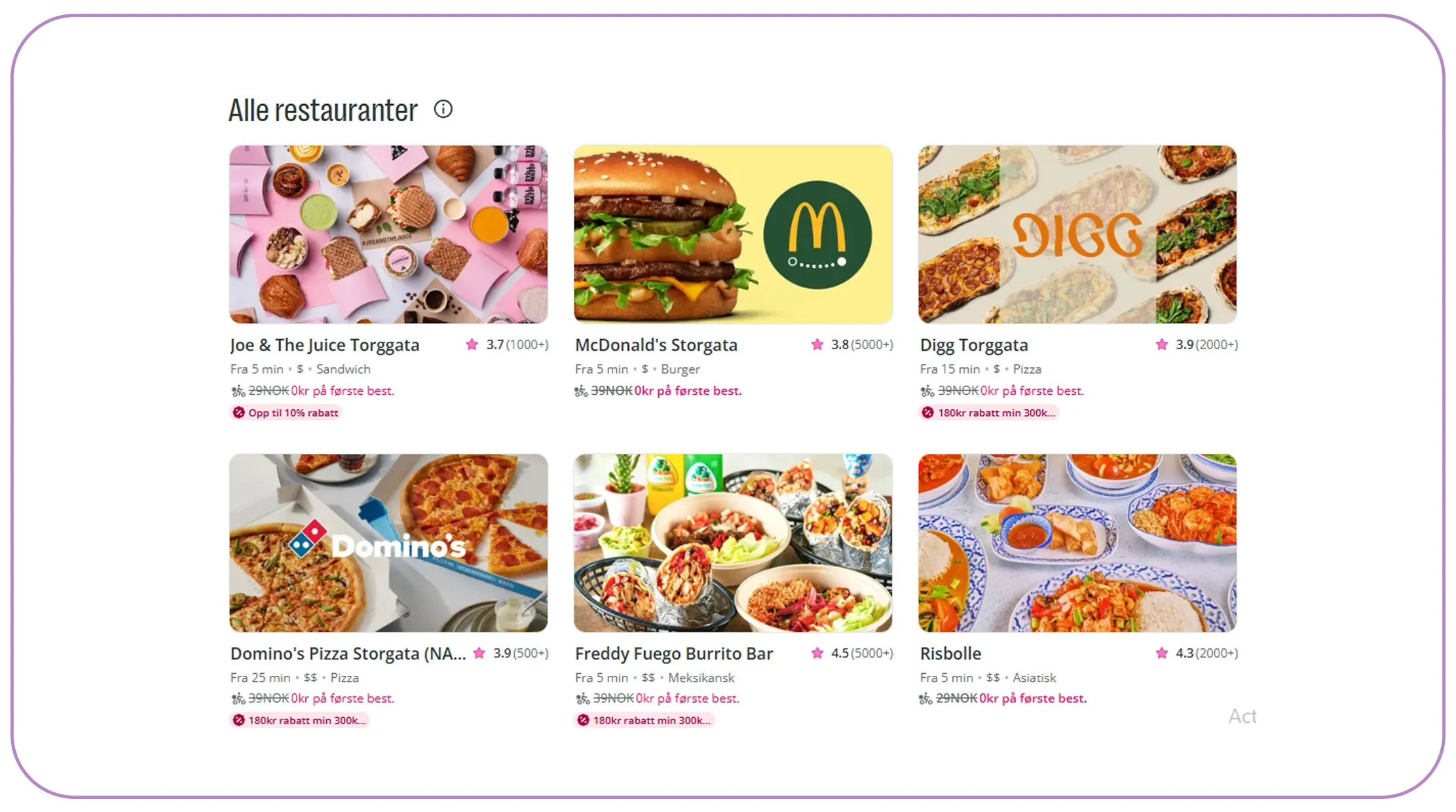
Modern food delivery platforms update menus, prices, delivery fees, and restaurant availability throughout the day. Businesses that rely on outdated information risk making inaccurate pricing decisions and losing competitive advantages. Automated data collection ensures decision-makers always work with current market intelligence.
One of the most valuable capabilities is Foodora menu data extraction, which allows organizations to retrieve complete menu information directly from restaurant listings. Instead of manually copying menu items, APIs collect structured information including categories, product names, descriptions, prices, images, customization options, and availability.
This information supports several business objectives:
- Competitive menu analysis
- Restaurant benchmarking
- Price monitoring
- Menu optimization
- Consumer preference analysis
- Delivery marketplace intelligence
- AI recommendation systems
- Business intelligence dashboards
For example, restaurant chains compare competitor pricing across different cities. Delivery platforms analyze cuisine popularity. AI companies train recommendation engines using menu attributes and pricing trends. Investors monitor restaurant expansion by analyzing newly listed locations.
Food Delivery Data Adoption Trends (2020-2026)
| Year | Businesses Using Automated Restaurant Data | Average Restaurants Monitored | Daily Menu Updates |
|---|---|---|---|
| 2020 | 25% | 8,500 | 1 |
| 2021 | 34% | 15,000 | 2 |
| 2022 | 46% | 28,000 | 3 |
| 2023 | 60% | 46,000 | 5 |
| 2024 | 73% | 75,000 | 7 |
| 2025* | 84% | 110,000 | 10 |
| 2026* | 91% | 155,000 | 12 |
*Projected industry estimates.
Organizations using automated restaurant datasets can respond quickly to market changes while reducing manual workloads. Continuous updates improve reporting accuracy and support smarter pricing, marketing, and operational decisions across competitive food delivery markets.
How Can Businesses Track Menu Availability in Real Time?
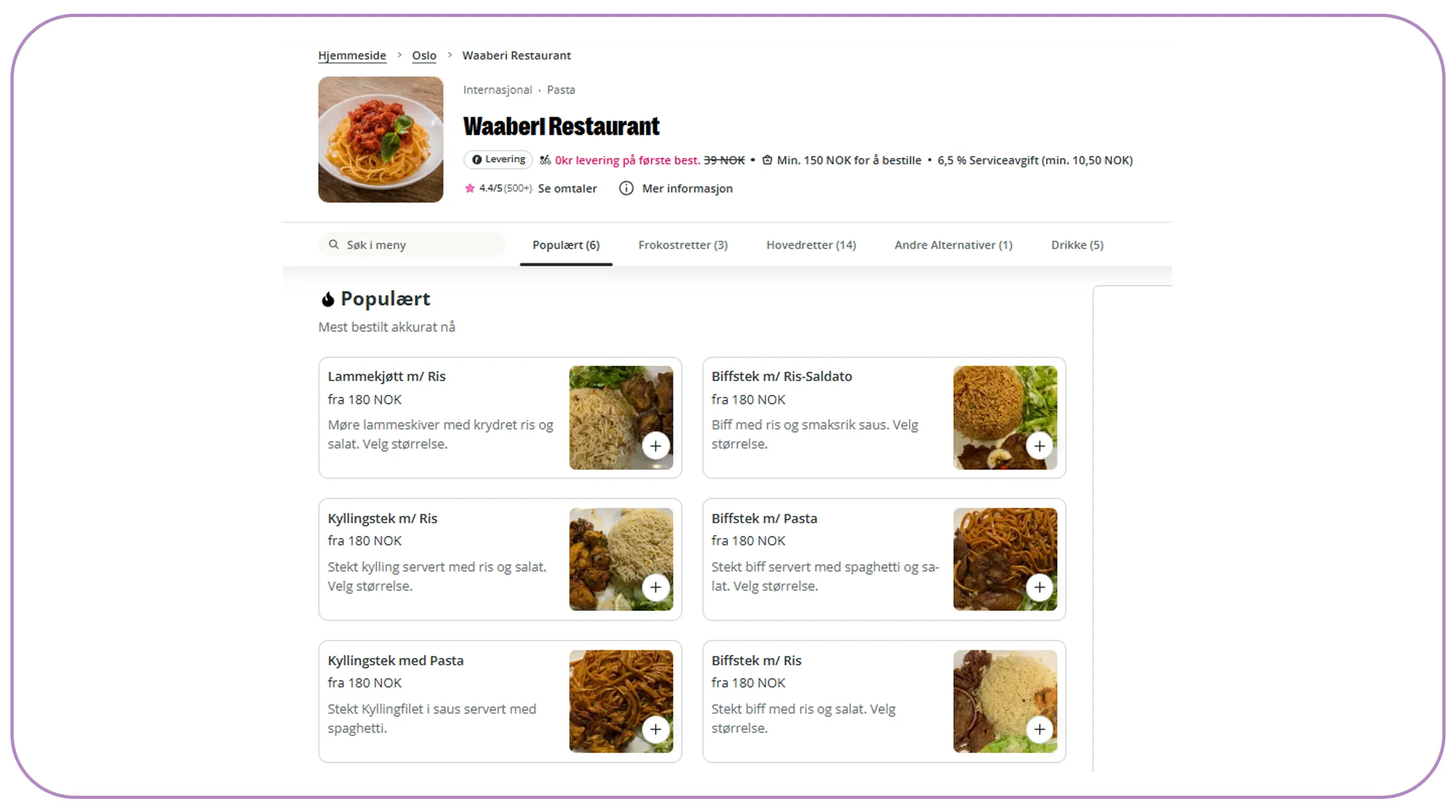
Restaurant menus change frequently due to inventory levels, seasonal promotions, demand fluctuations, and special offers. Businesses that monitor these updates manually often struggle to maintain accurate datasets. Automated APIs simplify this process by collecting current menu availability throughout the day.
A reliable Foodora menu and availability data scraper helps businesses monitor whether menu items are available, temporarily unavailable, newly launched, or discontinued. It also captures delivery status, estimated delivery times, promotional discounts, and menu category changes. This enables companies to analyze restaurant performance and customer offerings with greater accuracy.
Real-time menu monitoring benefits multiple industries:
- Food delivery platforms
- Restaurant chains
- Market research firms
- Pricing intelligence providers
- Grocery delivery companies
- Investment analysts
- AI recommendation platforms
- Consumer analytics businesses
Businesses commonly use automated restaurant data to answer questions such as:
- Which menu items are most frequently discounted?
- Which cuisines experience seasonal growth?
- How often do competitors update prices?
- Which restaurants expand into new delivery zones?
- What delivery times are offered during peak hours?
Menu Availability Monitoring Trends (2020-2026)
| Year | Restaurants Updating Menus Daily | Businesses Monitoring Availability | Average Daily Menu Changes |
|---|---|---|---|
| 2020 | 31% | 26% | 18 |
| 2021 | 39% | 35% | 24 |
| 2022 | 51% | 48% | 33 |
| 2023 | 65% | 61% | 46 |
| 2024 | 76% | 73% | 58 |
| 2025* | 86% | 84% | 71 |
| 2026* | 92% | 91% | 85 |
*Projected industry estimates.
Real-time availability monitoring enables businesses to identify pricing opportunities, detect promotional campaigns, and evaluate restaurant competitiveness more effectively. As digital food ordering continues to expand, automated restaurant intelligence helps organizations make faster, more informed decisions while improving customer experiences and operational efficiency.
How Can Developers Collect Complete Restaurant Catalogs Efficiently?
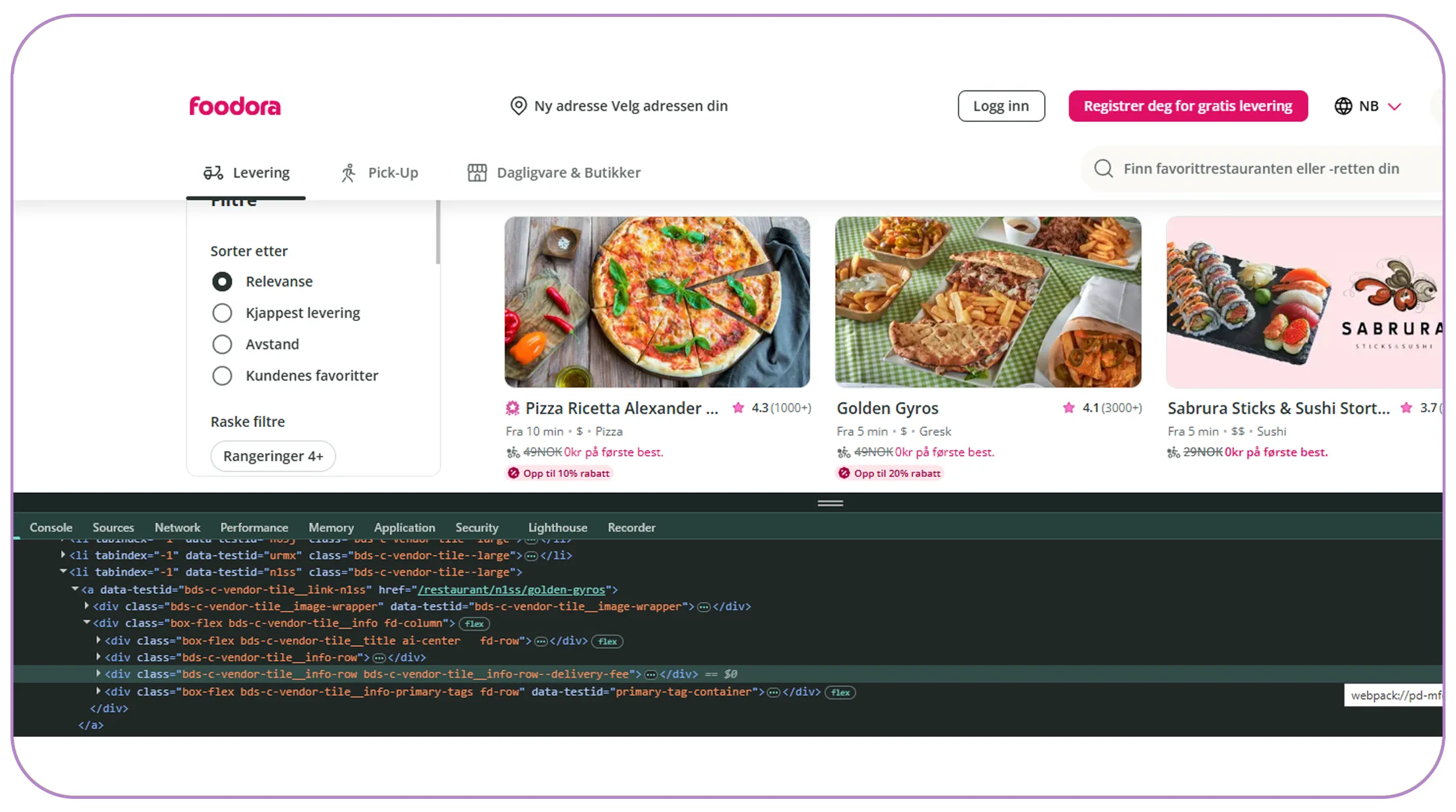
Restaurant marketplaces contain thousands of listings across multiple cities. Each restaurant continuously updates menus, pricing, operating hours, promotional offers, and delivery zones. Collecting this information manually is inefficient and quickly becomes outdated. APIs provide a scalable way to automate the entire process.
A powerful Foodora catalog API for restaurant data scraping enables businesses to gather comprehensive restaurant information from a centralized workflow. Developers can retrieve restaurant names, cuisines, menu categories, item descriptions, pricing, ratings, review counts, delivery fees, opening hours, addresses, and promotional offers in structured formats such as JSON or CSV.
This data supports several business functions:
- Restaurant discovery platforms
- Food delivery aggregators
- Competitor intelligence
- AI-powered recommendation engines
- Customer analytics
- Location intelligence
- Restaurant benchmarking
- Business intelligence dashboards
For example, a restaurant chain can compare competitor menu diversity across multiple cities. Market researchers can identify emerging cuisine trends, while investors can monitor restaurant expansion into new markets.
Restaurant Catalog Growth (2020-2026)
| Year | Restaurants Indexed | Average Menu Items per Restaurant | Cities Covered |
|---|---|---|---|
| 2020 | 180,000 | 42 | 180 |
| 2021 | 230,000 | 46 | 215 |
| 2022 | 295,000 | 52 | 260 |
| 2023 | 370,000 | 58 | 320 |
| 2024 | 455,000 | 64 | 390 |
| 2025* | 540,000 | 71 | 455 |
| 2026* | 620,000 | 78 | 520 |
*Projected industry estimates.
Automated catalog collection enables businesses to maintain accurate restaurant databases without constant manual intervention. Fresh catalog data improves recommendation systems, enhances analytics, and supports more informed pricing and expansion strategies.
How Can Businesses Monitor Delivery Performance Across Markets?
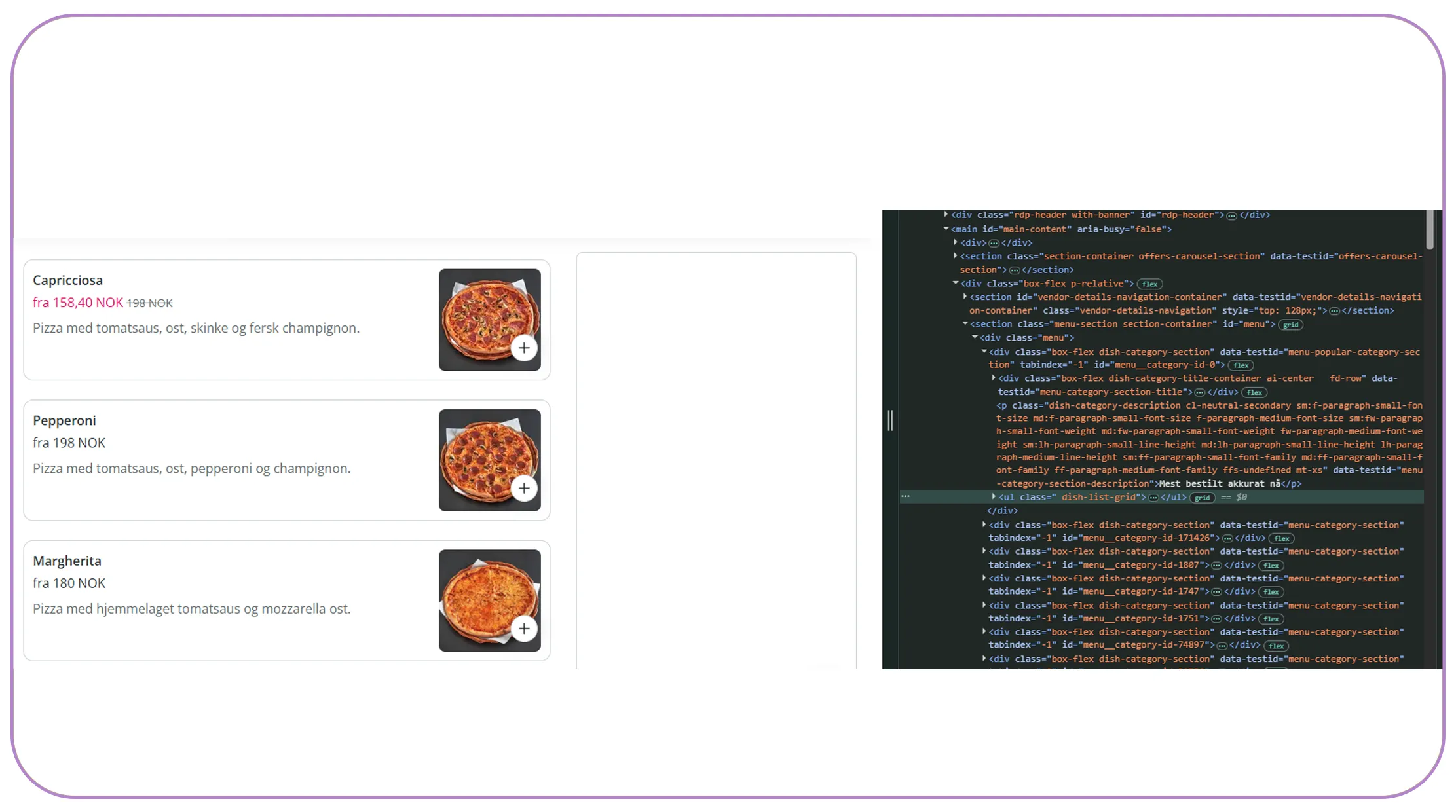
Delivery speed and service availability have become major competitive factors in online food ordering. Customers expect accurate delivery estimates and reliable service. Businesses therefore need continuous visibility into delivery operations across restaurants and regions.
Using a Foodora Delivery API, organizations can automate the collection of delivery-related information such as estimated delivery times, delivery fees, service availability, delivery radius, minimum order values, promotions, and operational status. This information helps businesses evaluate marketplace performance and benchmark competitors.
Delivery intelligence supports many business activities:
- Delivery performance monitoring
- Competitor delivery fee comparison
- Service coverage analysis
- Peak-hour demand forecasting
- Customer experience optimization
- Operational planning
- Dynamic pricing strategies
- Regional market expansion
For example, delivery platforms can identify neighborhoods with longer delivery times. Restaurant chains can evaluate whether competitors offer lower delivery charges. Analysts can measure how delivery performance changes during holidays, weekends, or promotional campaigns.
Delivery Performance Trends (2020-2026)
| Year | Restaurants Offering Delivery | Average Delivery Time (Minutes) | Businesses Monitoring Delivery Data |
|---|---|---|---|
| 2020 | 58% | 43 | 24% |
| 2021 | 64% | 41 | 34% |
| 2022 | 71% | 39 | 47% |
| 2023 | 79% | 36 | 60% |
| 2024 | 85% | 34 | 73% |
| 2025* | 90% | 32 | 84% |
| 2026* | 94% | 30 | 91% |
*Projected industry estimates.
Continuous delivery monitoring provides valuable insights into operational efficiency and customer satisfaction. Organizations that analyze delivery performance alongside menu pricing and restaurant availability can build stronger competitive strategies and improve overall marketplace intelligence.
How Can Restaurant Data Power Better Business Decisions?
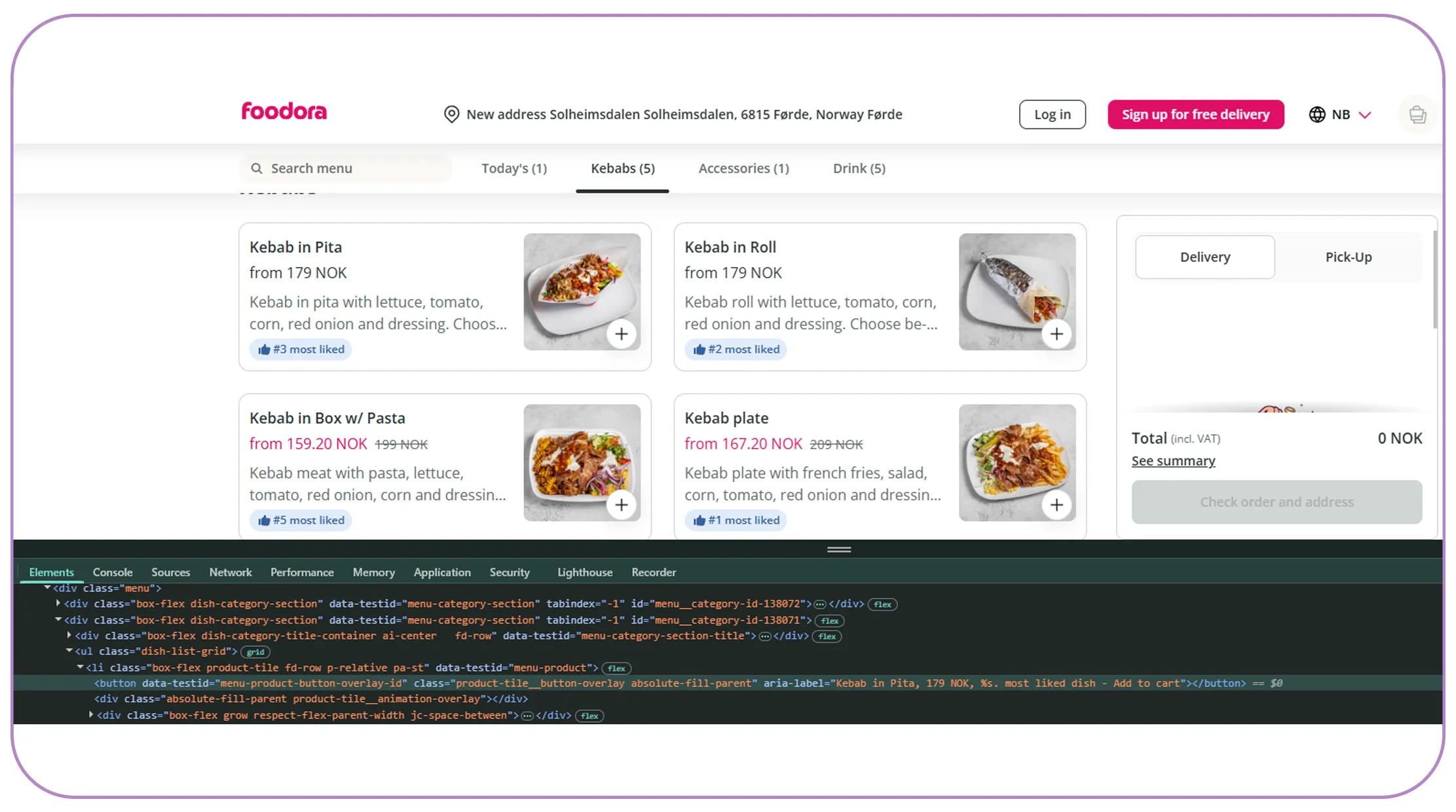
Restaurant data has become a strategic asset for food delivery platforms, restaurant chains, market researchers, and AI companies. Beyond menu prices, organizations analyze customer preferences, cuisine trends, promotions, and delivery performance to improve decision-making and increase profitability.
One of the most valuable applications involves Food Scraping API Use Cases that automate restaurant intelligence across multiple markets. Instead of collecting information manually, businesses receive structured datasets that integrate directly into dashboards, analytics platforms, and machine learning models.
Popular business applications include:
- Competitor menu monitoring
- Dynamic pricing optimization
- Restaurant recommendation engines
- Market expansion analysis
- Customer demand forecasting
- Promotion tracking
- Cuisine popularity analysis
- Delivery marketplace benchmarking
For example, a food delivery startup can compare pricing across hundreds of restaurants before entering a new city. Restaurant brands can identify which menu categories generate the highest customer engagement. Market researchers can analyze cuisine trends by location and season.
Restaurant Analytics Adoption (2020-2026)
| Year | Businesses Using Restaurant Analytics | AI-Based Recommendation Systems | Average Monthly Restaurant Records |
|---|---|---|---|
| 2020 | 29% | 18% | 3 Million |
| 2021 | 38% | 26% | 5 Million |
| 2022 | 50% | 39% | 8 Million |
| 2023 | 63% | 54% | 13 Million |
| 2024 | 75% | 68% | 20 Million |
| 2025* | 85% | 80% | 29 Million |
| 2026* | 92% | 89% | 40 Million |
*Projected industry estimates.
Organizations that leverage restaurant analytics gain better visibility into consumer behavior, pricing trends, and market dynamics. Automated data collection allows teams to make faster decisions, identify emerging opportunities, and respond proactively to changing customer preferences.
What Features Should You Look for in a Restaurant Data Solution?
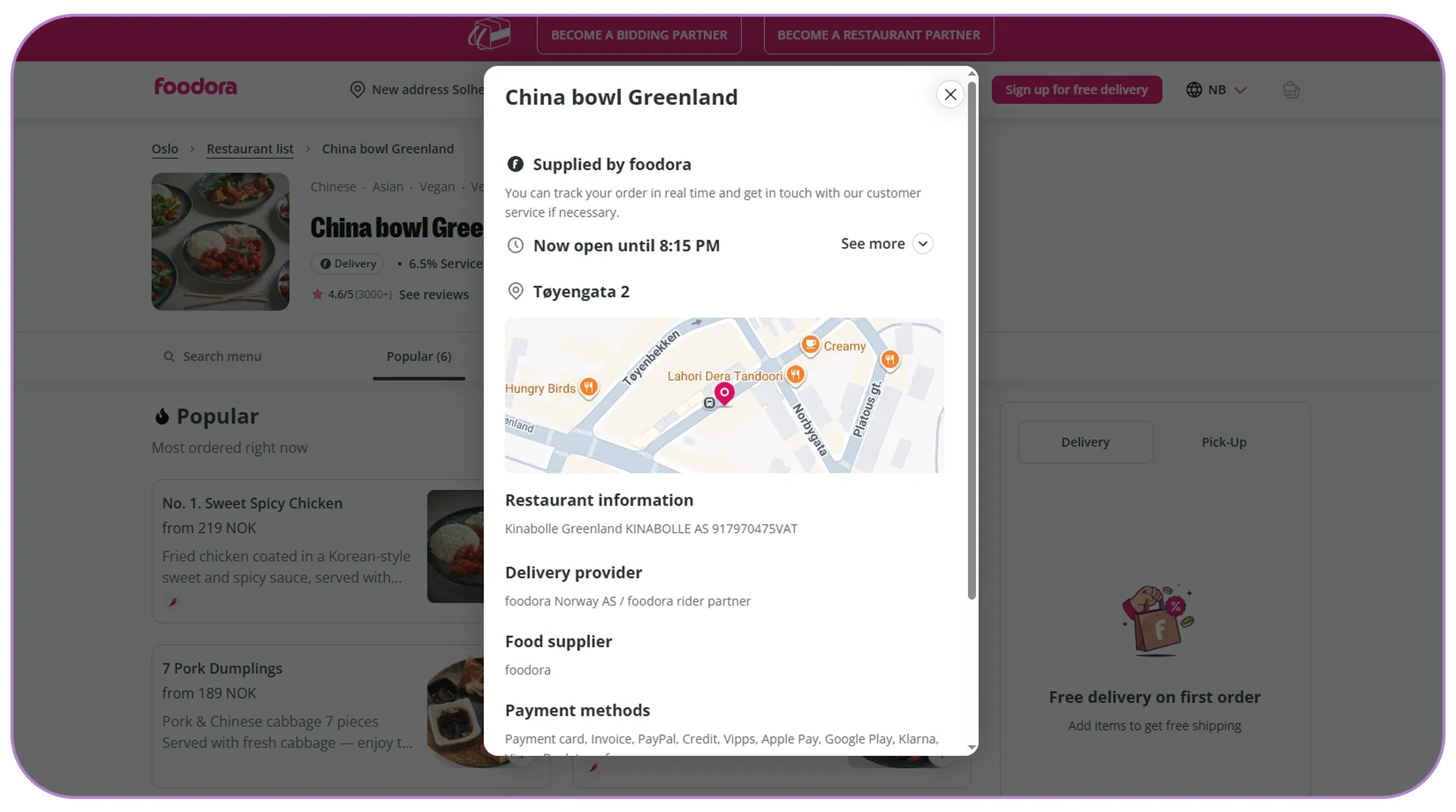
Selecting the right restaurant data platform is essential for building reliable analytics and AI applications. Businesses require solutions that deliver accurate, structured, and frequently updated information without adding unnecessary operational complexity.
A comprehensive Food Data Scraping API should support high-volume restaurant collection while maintaining consistent data quality and flexible integration options. It should also provide rich metadata that simplifies reporting and downstream analytics.
Important capabilities include:
- Real-time restaurant monitoring
- Complete menu extraction
- Price tracking
- Delivery fee monitoring
- Restaurant ratings and reviews
- Cuisine categorization
- Structured JSON and CSV outputs
- Scheduled automatic updates
- Enterprise scalability
- API integration support
Modern restaurant data platforms also help businesses reduce engineering effort by eliminating manual scraping infrastructure. Instead of maintaining complex extraction pipelines, organizations receive ready-to-use datasets that integrate directly into business intelligence systems.
Enterprise Adoption of Restaurant Data APIs (2020-2026)
| Year | Enterprise API Adoption | Average API Requests per Day | Data Refresh Frequency |
|---|---|---|---|
| 2020 | 23% | 180K | Weekly |
| 2021 | 34% | 320K | Every 3 Days |
| 2022 | 48% | 560K | Daily |
| 2023 | 62% | 920K | Daily |
| 2024 | 76% | 1.4 Million | Multiple Times Daily |
| 2025* | 87% | 2.0 Million | Hourly |
| 2026* | 93% | 2.8 Million | Near Real-Time |
*Projected industry estimates.
As competition in the food delivery industry intensifies, businesses increasingly rely on scalable restaurant data solutions to support pricing intelligence, AI development, customer analytics, and operational planning.
Why Choose Real Data API?
Real Data API provides enterprise-grade restaurant intelligence solutions that help businesses automate restaurant and menu data collection at scale. Whether you are building a food delivery application, conducting competitor analysis, monitoring menu prices, or developing AI-powered recommendation systems, our platform delivers accurate, structured, and real-time restaurant data.
With the ability to scrape Foodora restaurant and menu data using API, organizations can collect restaurant listings, menu items, pricing, delivery information, ratings, promotions, operating hours, and availability through a reliable and scalable infrastructure.
Why businesses choose Real Data API:
- High-speed API performance
- Real-time restaurant and menu updates
- Structured JSON and CSV responses
- Scalable enterprise architecture
- Comprehensive restaurant metadata
- Easy integration with BI and AI platforms
- Flexible delivery schedules
- Dedicated technical support
Our solutions empower food delivery companies, restaurant brands, market research firms, AI developers, and analytics teams to transform restaurant data into actionable business intelligence while reducing manual effort and operational costs.
Conclusion
Restaurant intelligence has become a competitive necessity in today's digital food delivery ecosystem. Businesses need accurate, real-time visibility into menus, pricing, delivery performance, promotions, and restaurant availability to make informed decisions. Automated APIs simplify this process by delivering structured datasets that support analytics, AI applications, pricing optimization, and competitor monitoring.
Choosing to scrape Foodora restaurant and menu data using API enables organizations to automate large-scale restaurant monitoring, improve operational efficiency, enhance customer insights, and respond quickly to changing market conditions. As food delivery platforms continue to evolve, reliable restaurant data will remain a critical driver of innovation and business growth.
Ready to automate restaurant intelligence? Partner with Real Data API to scrape Foodora restaurant and menu data using API and gain real-time menu, pricing, delivery, and restaurant insights that power smarter business decisions and long-term competitive success!
Latest posts

How Travel Dataset Solves Destination Intelligence Gaps with Flights, Hotels, Prices, Destinations, and Travel Market Trends

How Zomato Food Dataset Helps Businesses Solve Restaurant, Pricing, and Food Delivery Data Challenges

How Apple TV OTT Dataset Helps Solve Movie and Show Performance, Ratings, and Streaming Intelligence Challenges
How Musafir scraper Helps Businesses Extract Travel Information Efficiently?







.png)