
Introduction
Travel aggregators increase conversions and revenue by continuously collecting and analyzing OTA pricing data to understand market fluctuations, competitor pricing strategies, and demand shifts. This enables smarter pricing decisions, better offers, and higher booking conversions.
Industry studies show that over 78% of travelers compare prices across multiple OTAs before booking, and even a small 5–12% price difference can change purchase decisions instantly. In a market where prices change multiple times per hour, static pricing models no longer work.
For OTAs, travel aggregators, airlines, hotel booking platforms, and travel analytics companies, scrape OTA pricing data for travel aggregators is essential to stay competitive. When combined with a Travel Data Scraping API, companies can automate data collection and build real-time pricing intelligence systems that improve profitability and customer experience.
How Does Real-Time OTA Price Monitoring Improve Travel Business Performance?
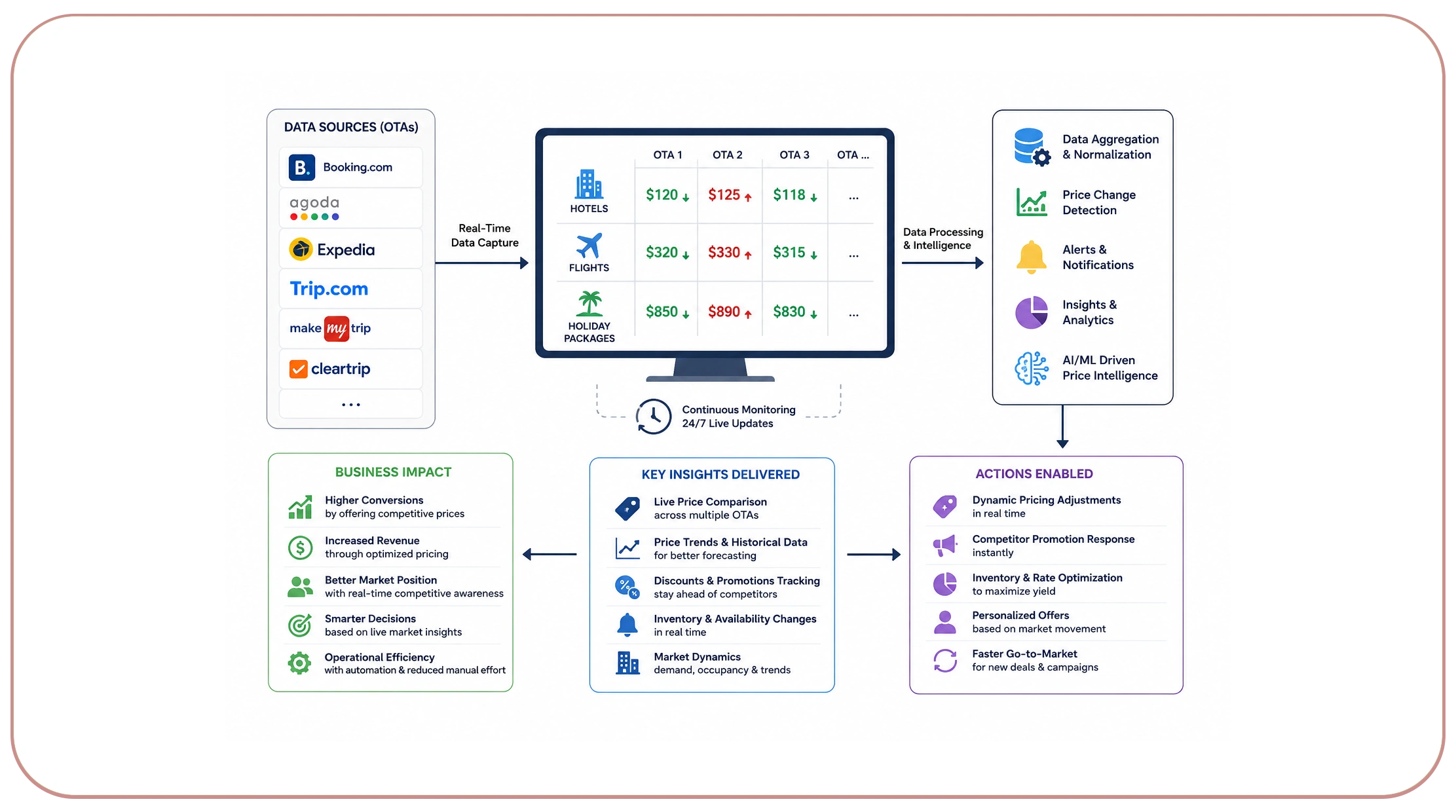
What is a real-time OTA pricing intelligence system?
A real-time OTA price monitoring tool tracks live pricing changes across multiple travel platforms such as hotels, flights, and holiday packages. It continuously captures updates and converts them into structured insights.
This allows aggregators to react instantly to market shifts instead of relying on outdated pricing snapshots.
Why does real-time monitoring matter?
OTA pricing is extremely volatile due to:
- Seasonal demand changes
- Competitor promotions
- Last-minute booking trends
- Dynamic airline pricing algorithms
- Hotel occupancy levels
OTA Pricing Volatility Trends (2020–2026)
| Year | Avg Daily Price Changes per Listing |
|---|---|
| 2020 | 5–7 |
| 2021 | 8–10 |
| 2022 | 11–15 |
| 2023 | 14–19 |
| 2024 | 17–23 |
| 2025* | 21–27 |
| 2026* | 24–32 |
*Projected values
Key Benefits:
- Real-time pricing visibility
- Faster decision-making
- Better revenue optimization
- Improved conversion rates
- Reduced pricing mismatches
Real-time systems allow aggregators to automatically adjust pricing when competitors change rates. This prevents lost bookings and ensures competitive parity across platforms.
How Does OTA Data Scraping Improve Pricing Strategy Efficiency?

Why is OTA data important for pricing strategy?
Travel companies use travel price monitoring using OTA data scraping to understand competitor pricing patterns and optimize their own pricing models.
Without structured data, pricing decisions become reactive instead of predictive.
Strategic Applications:
- Detect competitor price drops
- Track seasonal fare variations
- Identify high-demand routes
- Monitor discount strategies
- Improve dynamic pricing models
Pricing Strategy Impact Table
| KPI | Without OTA Data | With OTA Data |
|---|---|---|
| Pricing Accuracy | 63% | 89% |
| Booking Conversion | 60% | 79% |
| Revenue Optimization | Medium | High |
| Market Visibility | Limited | Full |
Why it works:
OTA scraping provides continuous visibility into competitor strategies. This allows travel platforms to:
- Adjust prices instantly
- Prevent underpricing or overpricing
- Optimize offers based on demand
In a competitive travel market, speed of pricing adjustment directly impacts revenue.
How Do Travel Companies Turn OTA Data Into Intelligence?
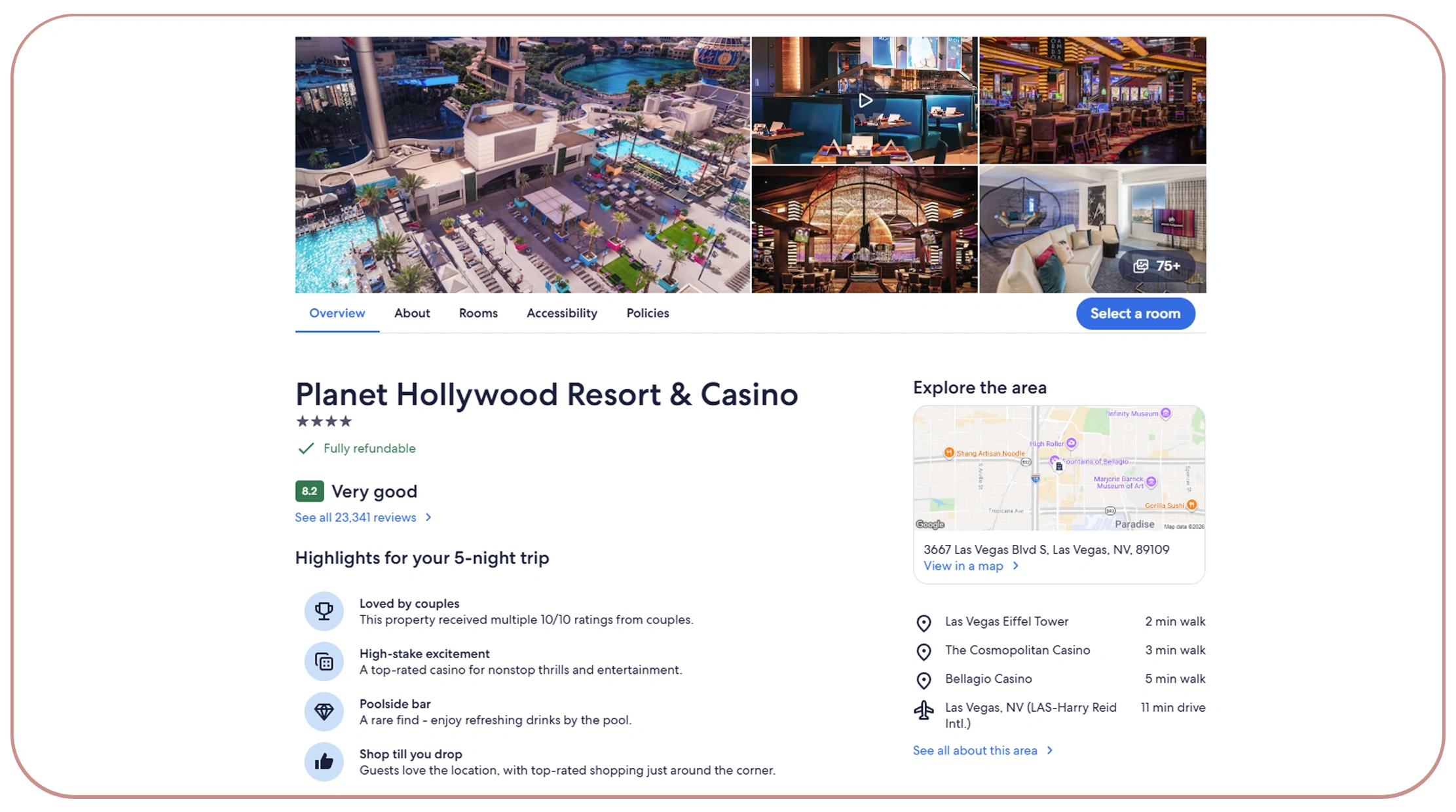
What are travel data intelligence services?
Travel data intelligence services transform raw OTA data into structured insights using analytics, AI models, and predictive systems.
Instead of just collecting prices, companies analyze:
- Demand patterns
- Booking behavior
- Seasonal trends
- Price elasticity
- Competitor performance
Real-world use cases:
- Predicting peak travel seasons
- Identifying high-value routes
- Optimizing hotel room allocation
- Improving flight pricing strategies
Industry Adoption Growth
| Year | Adoption Rate |
|---|---|
| 2020 | 29% |
| 2021 | 37% |
| 2022 | 46% |
| 2023 | 58% |
| 2024 | 67% |
| 2025* | 75% |
| 2026* | 83% |
*Projected values
Business impact:
Companies using travel intelligence services see:
- Faster pricing decisions
- Better forecasting accuracy
- Increased profit margins
- Reduced operational inefficiencies
This shift from manual analysis to automated intelligence is reshaping the travel industry.
How Does OTA Booking Data Improve Market Understanding?
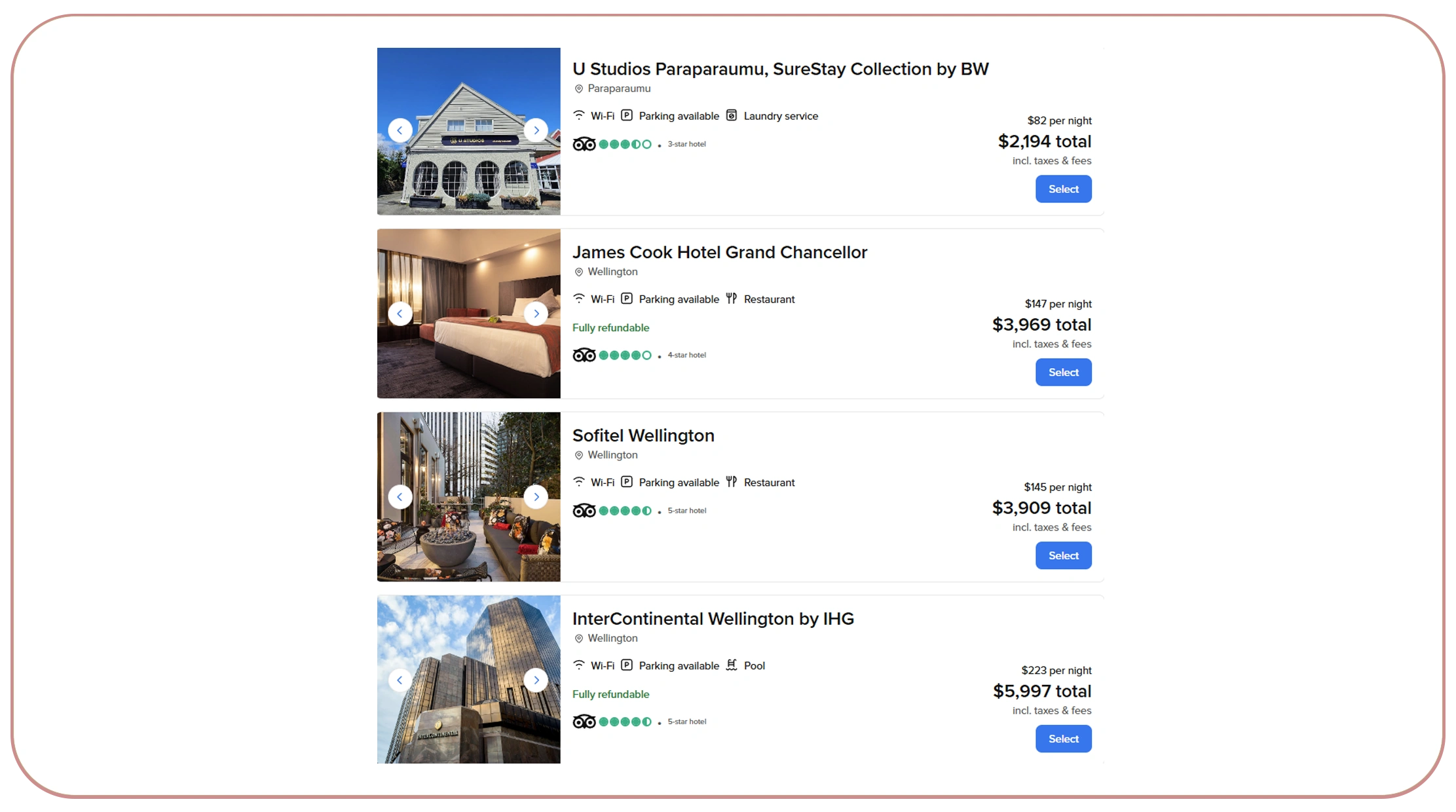
Why is structured booking data important?
The travel booking industry dataset API provides structured access to OTA pricing, availability, and booking trends across multiple platforms.
This helps businesses understand real customer behavior instead of assumptions.
Data Points Collected:
- Hotel room rates
- Flight fares
- Booking frequency
- Customer demand patterns
- Route-level performance
- Cancellation trends
OTA Data Growth Trends
| Year | Data Volume (TB/month) |
|---|---|
| 2020 | 140 |
| 2021 | 210 |
| 2022 | 300 |
| 2023 | 420 |
| 2024 | 560 |
| 2025* | 700 |
| 2026* | 860 |
*Projected values
Key insights enabled:
- Which destinations are trending
- Which hotels are underperforming
- How pricing impacts bookings
- Seasonal travel behavior patterns
Structured datasets allow companies to move from reactive pricing to predictive planning.
How Do OTAs Track Competitor Prices Effectively?
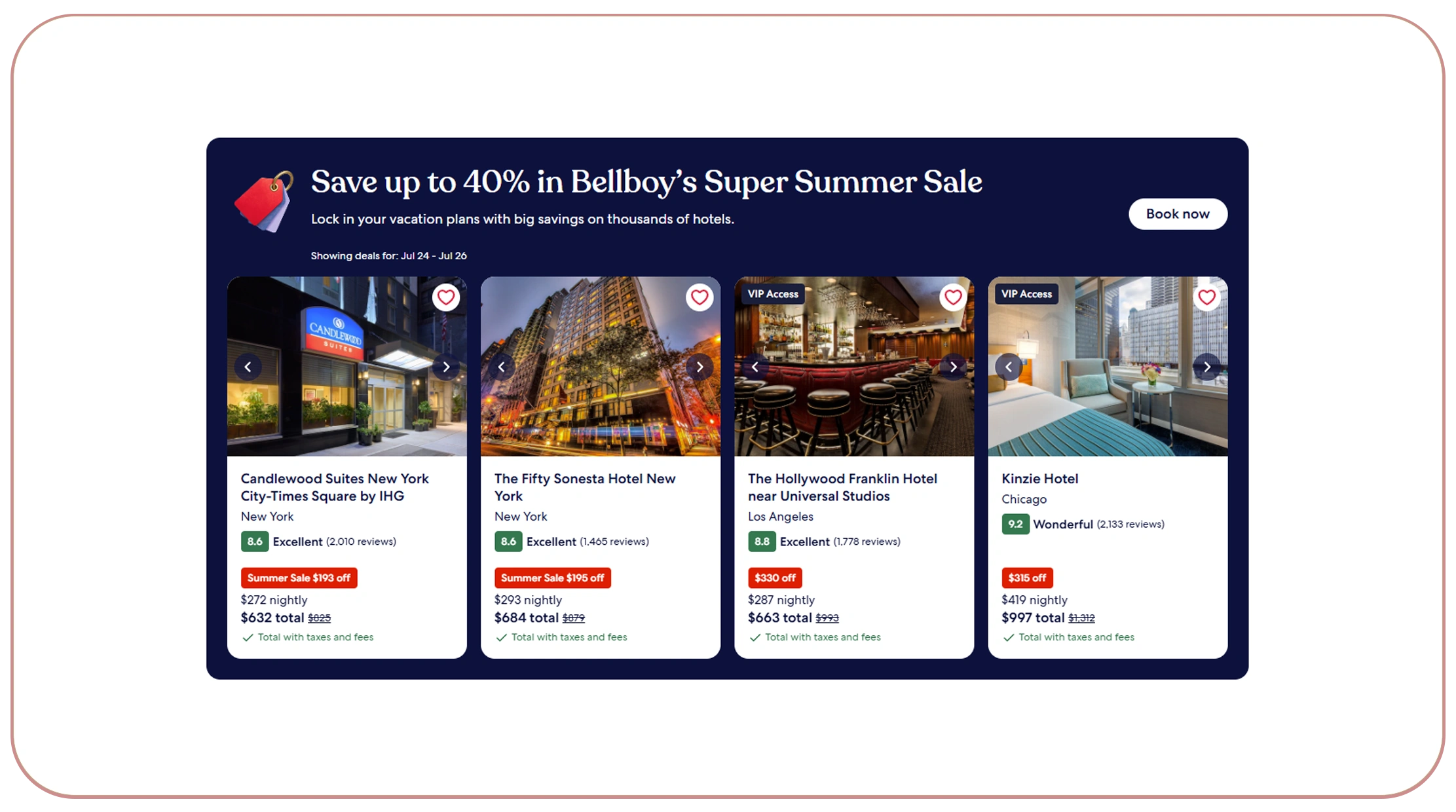
Why is competitor monitoring critical?
In the OTA ecosystem, pricing is the most important competitive factor. Even a $5–$10 difference can shift bookings.
Companies use Track OTA Competitor Prices Using Web Scraping to continuously monitor competitor pricing strategies.
Key benefits:
- Instant price change detection
- Improved conversion rates
- Reduced revenue leakage
- Better market positioning
- Faster promotional response
Performance Comparison
| Metric | Without Tracking | With Tracking |
|---|---|---|
| Response Time | Slow | Instant |
| Revenue Leakage | High | Low |
| Pricing Accuracy | 66% | 90% |
| Conversion Rate | 62% | 81% |
Why it matters:
Competitor tracking ensures:
- No missed pricing opportunities
- Better alignment with market demand
- Higher booking consistency
How Do Travel Datasets Improve Forecasting Accuracy?
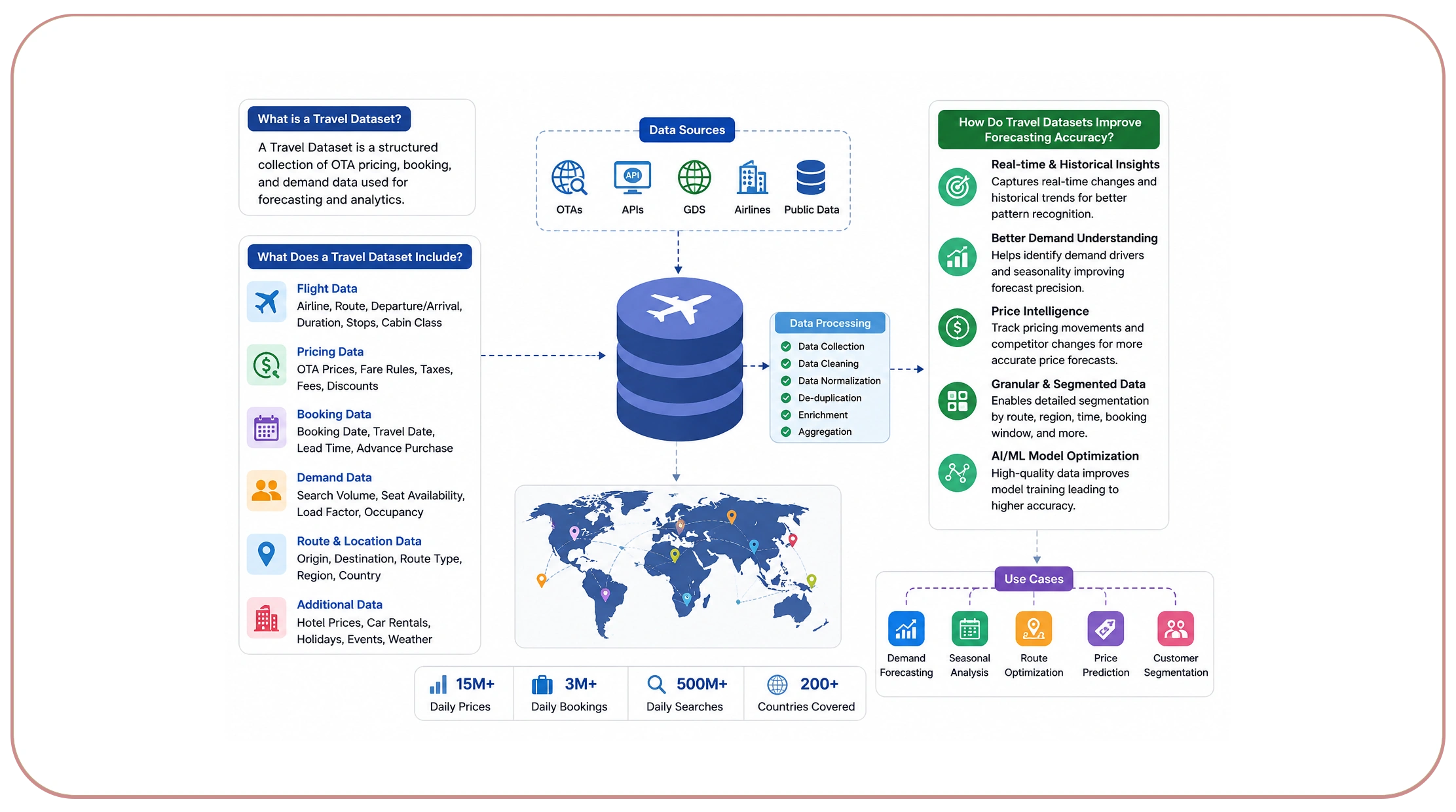
What is a travel dataset?
A Travel Dataset is a structured collection of OTA pricing, booking, and demand data used for forecasting and analytics.
Use cases:
- Demand forecasting
- Seasonal analysis
- Route optimization
- Price prediction
- Customer segmentation
Travel Demand Trends
| Year | Growth in Travel Demand |
|---|---|
| 2020 | 11% |
| 2021 | 19% |
| 2022 | 27% |
| 2023 | 35% |
| 2024 | 43% |
| 2025* | 52% |
| 2026* | 60% |
*Projected values
Benefits:
- Better inventory planning
- Improved pricing decisions
- Reduced forecasting errors
- Higher revenue efficiency
Datasets help OTAs understand long-term travel behavior patterns.
Why Choose Real Data API?
Real Data API provides enterprise-grade travel intelligence solutions for OTAs, airlines, and travel aggregators.
Using Top Travel Scraping API Use Cases, businesses can:
- Scrape real-time OTA pricing data
- Build dynamic pricing systems
- Monitor competitor travel rates
- Access structured travel datasets
- Improve conversion optimization
- Enable predictive demand forecasting
- Integrate APIs into travel platforms
Real Data API transforms raw OTA data into actionable intelligence that drives revenue growth and better customer experiences.
Conclusion
The travel industry is highly competitive, and pricing changes happen every second across OTAs. Companies that leverage scrape OTA pricing data for travel aggregators gain a major advantage in pricing accuracy, conversion optimization, and revenue management.
With real-time intelligence, travel businesses can respond faster, optimize pricing strategies, and improve overall profitability.
Ready to unlock real-time OTA pricing intelligence for your travel platform? Contact Real Data API today and turn travel data into high-conversion business growth!
Latest posts
How Mercado Libre API Helps Brands Overcome Product Monitoring, Pricing, and Market Visibility Challenges
How Shipt API for grocery data extraction Enables Real-Time Grocery Product, Pricing, and Inventory Intelligence
How real-time food data scraping services Help Food Brands Track Products, Prices, and Market Trends
Why Sainsbury's grocery data web scraper Is Essential for Smarter Grocery Pricing and Product Intelligence






.png)