
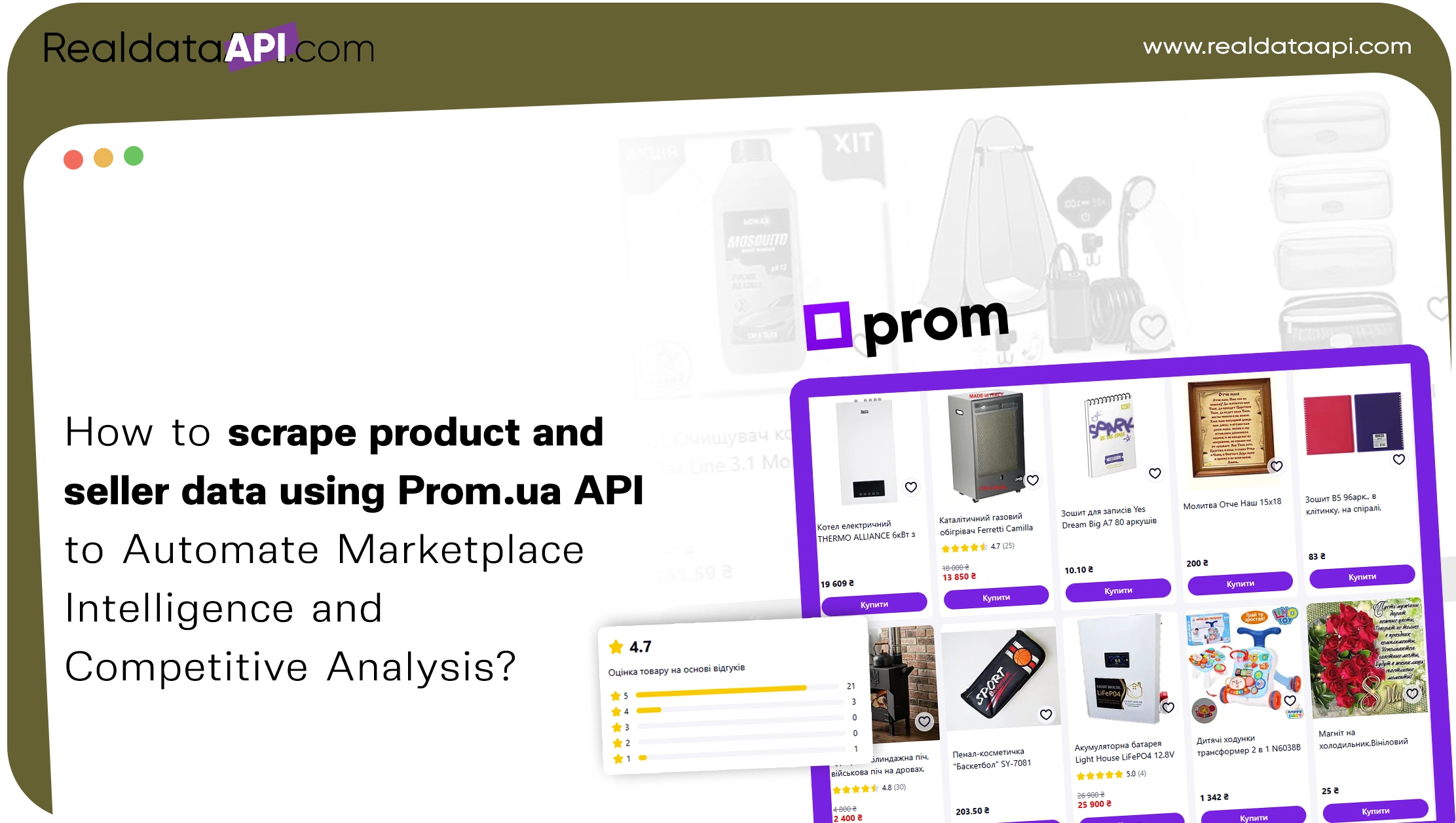
Introduction
Businesses can automate marketplace intelligence by scrape product and seller data using Prom.ua API to collect real-time product listings, seller information, pricing, inventory, and customer insights. This reduces manual work, improves data accuracy, and supports better competitive analysis, pricing strategies, and eCommerce decision-making.
Industry Insight (2026): According to industry estimates, global retail eCommerce sales are expected to surpass USD 8 trillion by 2026. More than 70% of digital retailers rely on automated data collection to monitor competitors, optimize pricing, and improve inventory decisions.
Online marketplaces generate enormous amounts of valuable business data every day. Product prices change frequently, sellers update inventories, and customer demand shifts rapidly. Companies that rely on manual monitoring often struggle to keep pace with these constant changes. Automated data extraction enables businesses to collect structured marketplace information quickly and accurately.
Organizations can scrape product and seller data using Prom.ua API to access product catalogs, seller profiles, pricing information, ratings, reviews, stock availability, and category-level insights. Combined with Prom.ua Scraping API, businesses can build automated workflows that deliver fresh marketplace intelligence for pricing optimization, competitive benchmarking, inventory planning, and market research.
This guide is written for eCommerce brands, marketplace sellers, pricing analysts, retail intelligence firms, product managers, and data-driven organizations looking to solve the challenge of manual marketplace monitoring. You'll discover how automated Prom.ua data extraction helps improve decision-making while reducing operational costs and supporting long-term business growth.
Why Should Businesses Automate Marketplace Product Collection?
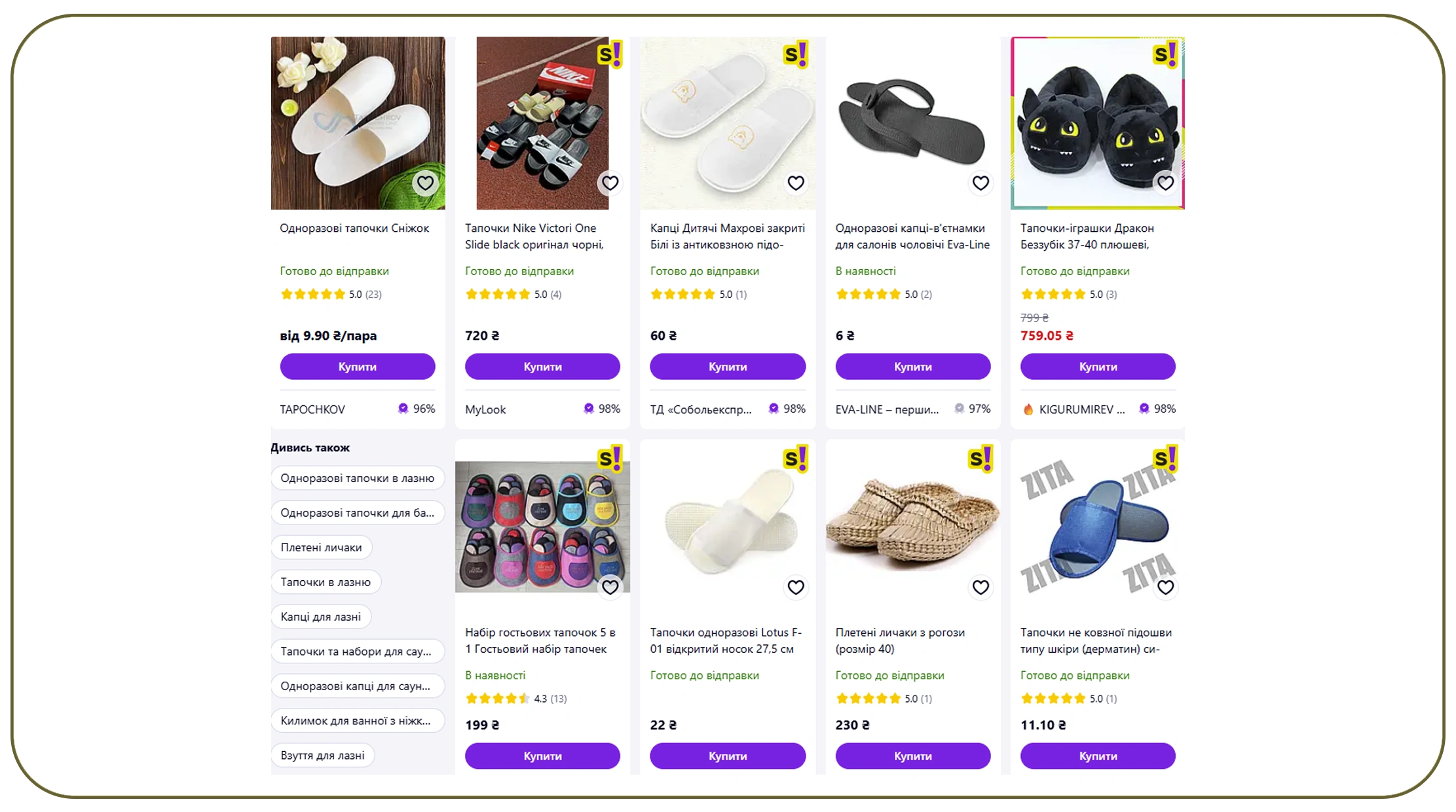
Manual product tracking is slow, expensive, and difficult to scale. Thousands of new products, price updates, inventory changes, and seller activities occur every day across online marketplaces. Businesses need automated systems that continuously collect structured information without manual effort.
By implementing Extract product listings from Prom.ua using API, organizations can build reliable datasets that support competitive intelligence, pricing analytics, assortment optimization, and demand forecasting.
Benefits of Automated Product Collection
Businesses can automatically collect:
- Product titles
- Product descriptions
- Categories
- Images
- Pricing information
- Discounts
- Inventory status
- Product specifications
- Seller details
- Customer ratings
Automation eliminates repetitive work while improving data consistency and reducing human error.
Business Advantages
Organizations benefit from:
- Faster competitive analysis.
- Improved pricing decisions.
- Better inventory visibility.
- More accurate product research.
- Enhanced category management.
- Increased operational efficiency.
These improvements enable marketing, merchandising, and analytics teams to respond more quickly to changing market conditions.
Marketplace Data Trends (2020-2026)
| Year | Businesses Using Automated Product Monitoring | Average Product Catalog Growth |
|---|---|---|
| 2020 | 30% | 15% |
| 2021 | 37% | 19% |
| 2022 | 45% | 24% |
| 2023 | 54% | 29% |
| 2024 | 63% | 35% |
| 2025* | 71% | 40% |
| 2026* | 79% | 46% |
*Projected industry estimates.
As online marketplaces continue expanding, automated product collection becomes an essential capability for businesses seeking accurate market intelligence. Structured datasets help organizations launch products faster, optimize merchandising strategies, and make data-driven decisions based on current marketplace conditions.
How Can Real-Time Marketplace Data Improve Competitive Decisions?
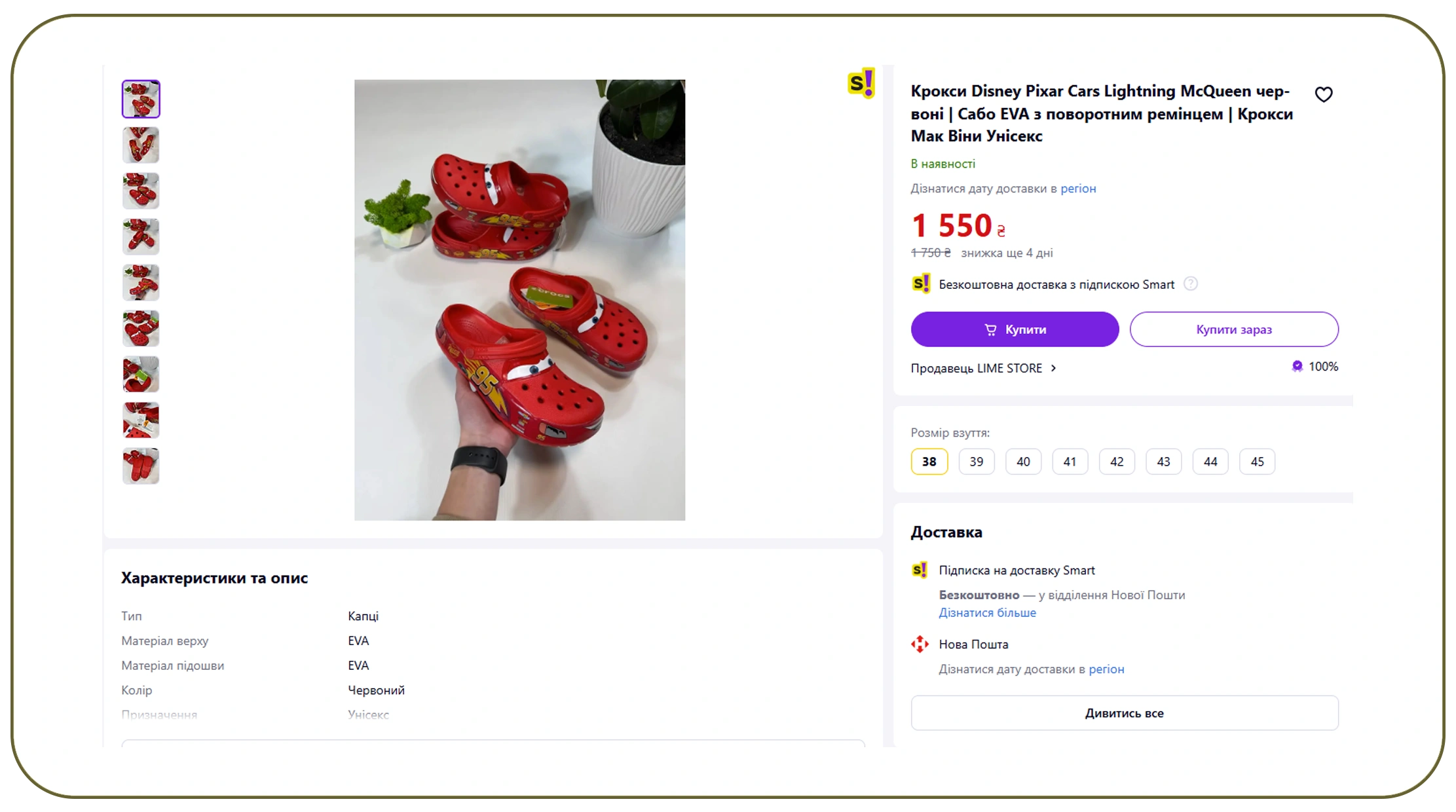
Successful eCommerce businesses react quickly to pricing changes, inventory updates, and new product launches. Delayed information can lead to lost sales opportunities and inaccurate market analysis. Real-time data collection enables organizations to monitor marketplace activity continuously and respond faster than competitors.
Using a Real-time Prom.ua product catalog data scraper, businesses gain immediate visibility into product updates, seller activity, assortment changes, promotional campaigns, and stock availability. This allows decision-makers to adjust pricing strategies and inventory plans using fresh marketplace intelligence.
Why Real-Time Monitoring Matters
Businesses can monitor:
- Price fluctuations
- New product launches
- Inventory changes
- Promotional campaigns
- Seller performance
- Category trends
Continuous monitoring helps reduce delays and improves forecasting accuracy.
Key Business Benefits
Organizations can:
- Optimize dynamic pricing.
- Improve promotional planning.
- Detect competitor movements.
- Identify market opportunities.
- Strengthen assortment planning.
- Support predictive analytics.
These capabilities improve operational efficiency while helping businesses stay competitive in rapidly changing marketplace environments.
Real-Time Analytics Adoption (2020-2026)
| Year | Companies Using Real-Time Marketplace Analytics | Decision-Making Improvement |
|---|---|---|
| 2020 | 28% | 14% |
| 2021 | 35% | 18% |
| 2022 | 43% | 23% |
| 2023 | 52% | 28% |
| 2024 | 61% | 34% |
| 2025* | 69% | 39% |
| 2026* | 77% | 45% |
*Projected industry estimates.
As marketplace competition increases, businesses that leverage real-time product intelligence gain a significant advantage. They can react quickly to pricing shifts, improve customer experiences, optimize inventory planning, and make faster strategic decisions backed by reliable data. Automated monitoring also provides a strong foundation for AI-driven analytics, forecasting models, and long-term marketplace growth.
How Can SKU-Level Insights Improve Marketplace Intelligence?
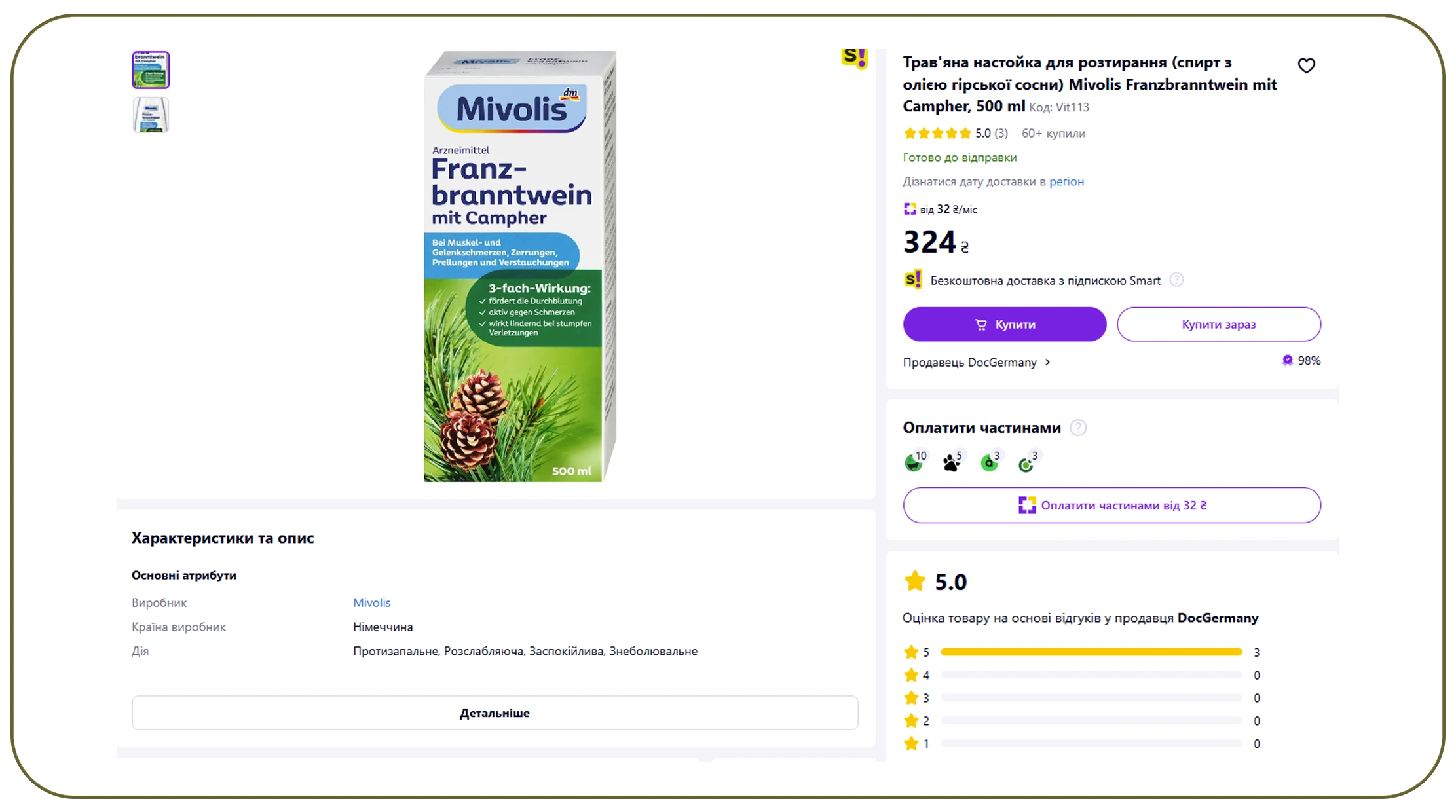
Product-level analytics become more valuable when businesses monitor Stock Keeping Units (SKUs). Each SKU represents a unique product variation based on size, color, model, brand, or packaging. Tracking SKU data helps organizations understand inventory movement, pricing trends, product availability, and customer demand across different marketplace categories.
Businesses can automate Prom.ua Marketplace SKU data collection to capture detailed product identifiers, specifications, availability, pricing history, seller information, and category placement. This structured data enables retailers, manufacturers, distributors, and market research firms to make faster and more informed decisions.
SKU intelligence supports several important business activities:
- Product assortment analysis
- Inventory planning
- Price comparison
- Competitor benchmarking
- Demand forecasting
- Product lifecycle management
- Market expansion analysis
- Sales trend monitoring
By centralizing SKU information, organizations gain better visibility into marketplace performance and reduce the time spent manually tracking thousands of individual products.
Benefits of SKU Analytics
Businesses can use SKU data to:
- Identify top-performing products.
- Monitor competitor inventory.
- Compare product pricing.
- Improve replenishment planning.
- Optimize category performance.
- Support AI-powered forecasting.
SKU Data Growth (2020-2026)
| Year | Businesses Using SKU Analytics | SKU Records Managed (Millions) |
|---|---|---|
| 2020 | 26% | 110 |
| 2021 | 34% | 145 |
| 2022 | 43% | 188 |
| 2023 | 53% | 241 |
| 2024 | 63% | 308 |
| 2025* | 72% | 386 |
| 2026* | 81% | 472 |
*Projected industry estimates.
As online marketplaces continue expanding, SKU-level intelligence becomes increasingly valuable for organizations seeking deeper operational insights. Automated SKU collection improves inventory visibility, simplifies competitive benchmarking, and provides accurate datasets that support advanced analytics, pricing strategies, and long-term business planning.
Why Is Structured Marketplace Data Essential for Smarter Business Decisions?

Modern businesses depend on accurate and organized information to compete in digital commerce. Raw marketplace data has limited value unless it is standardized, validated, and transformed into usable business intelligence. A comprehensive E-Commerce Dataset provides decision-makers with reliable information that supports pricing, inventory management, product research, and market analysis.
A structured dataset combines multiple marketplace elements into a single source of truth. It typically includes product information, seller profiles, pricing history, inventory availability, customer ratings, reviews, categories, and historical trends. Having all this information in one place improves reporting accuracy and reduces manual processing.
Organizations use structured marketplace datasets to:
- Build pricing intelligence platforms
- Analyze competitor strategies
- Track inventory changes
- Study customer purchasing trends
- Improve merchandising decisions
- Support AI and machine learning models
- Generate executive dashboards
- Identify emerging market opportunities
Clean and standardized data also simplifies integration with business intelligence software, ERP systems, CRM platforms, and predictive analytics tools.
Marketplace Data Adoption (2020-2026)
| Year | Organizations Using Structured Datasets | Analytics Accuracy Improvement |
|---|---|---|
| 2020 | 31% | 16% |
| 2021 | 39% | 20% |
| 2022 | 47% | 25% |
| 2023 | 56% | 30% |
| 2024 | 65% | 35% |
| 2025* | 73% | 40% |
| 2026* | 82% | 46% |
*Projected industry estimates.
Organizations that invest in structured marketplace datasets gain a stronger competitive advantage through faster reporting, better forecasting, and more informed strategic planning. Clean, validated, and centralized data enables teams across marketing, merchandising, operations, and analytics to collaborate effectively while making confident, data-driven business decisions.
How Can Automated Data Collection Scale with Marketplace Growth?
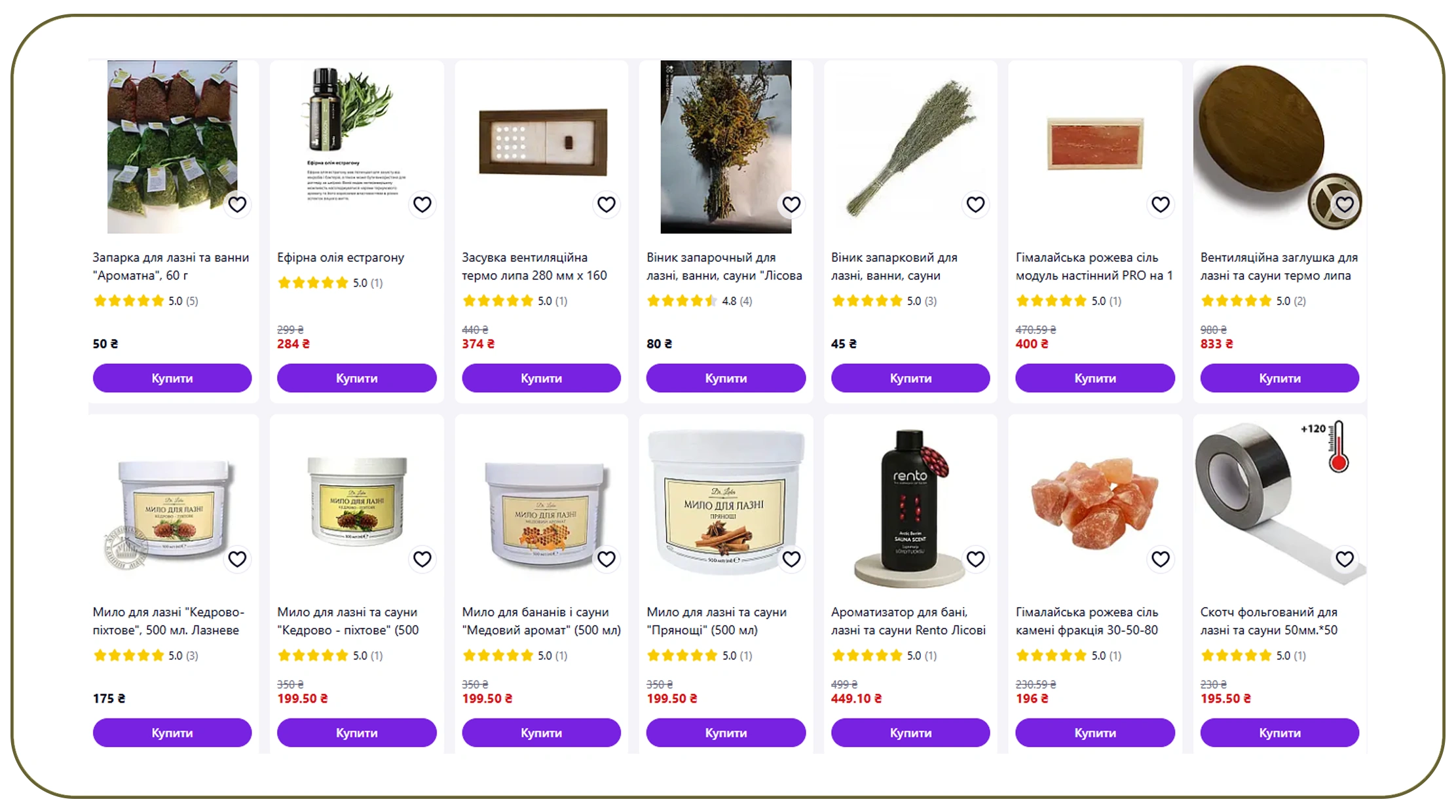
As online marketplaces expand, businesses need data collection systems that are reliable, scalable, and easy to maintain. Manual monitoring becomes inefficient when thousands of products, sellers, and pricing updates change every day. An automated Prom.ua Scraper helps organizations collect structured marketplace data continuously without interrupting business operations.
Modern scraping solutions are designed to capture publicly available marketplace information efficiently while supporting analytics, reporting, and business intelligence initiatives. Businesses can schedule automated extraction processes to receive updated datasets at regular intervals, eliminating repetitive manual work and improving operational efficiency.
Automated marketplace data collection supports several business functions:
- Competitive price monitoring
- Product catalog management
- Seller performance analysis
- Inventory tracking
- Market trend identification
- Promotional campaign monitoring
- Business intelligence reporting
- Historical data analysis
These capabilities enable organizations to react quickly to changing market conditions while maintaining accurate and consistent datasets for decision-making.
Advantages of Automation
Businesses gain several operational benefits:
- Reduce manual effort.
- Improve data consistency.
- Scale data collection efficiently.
- Support multiple product categories.
- Increase reporting accuracy.
- Accelerate business insights.
Automation Adoption (2020-2026)
| Year | Businesses Using Automated Marketplace Collection | Operational Efficiency Improvement |
|---|---|---|
| 2020 | 29% | 15% |
| 2021 | 36% | 19% |
| 2022 | 45% | 24% |
| 2023 | 55% | 30% |
| 2024 | 64% | 35% |
| 2025* | 73% | 40% |
| 2026* | 81% | 46% |
*Projected industry estimates.
As marketplace ecosystems continue to grow, automation becomes an essential investment for businesses seeking reliable market intelligence. Scalable data extraction enables organizations to monitor thousands of products and sellers efficiently while supporting faster analytics, smarter pricing strategies, and long-term digital transformation.
Where Can Marketplace Data Deliver the Greatest Business Value?
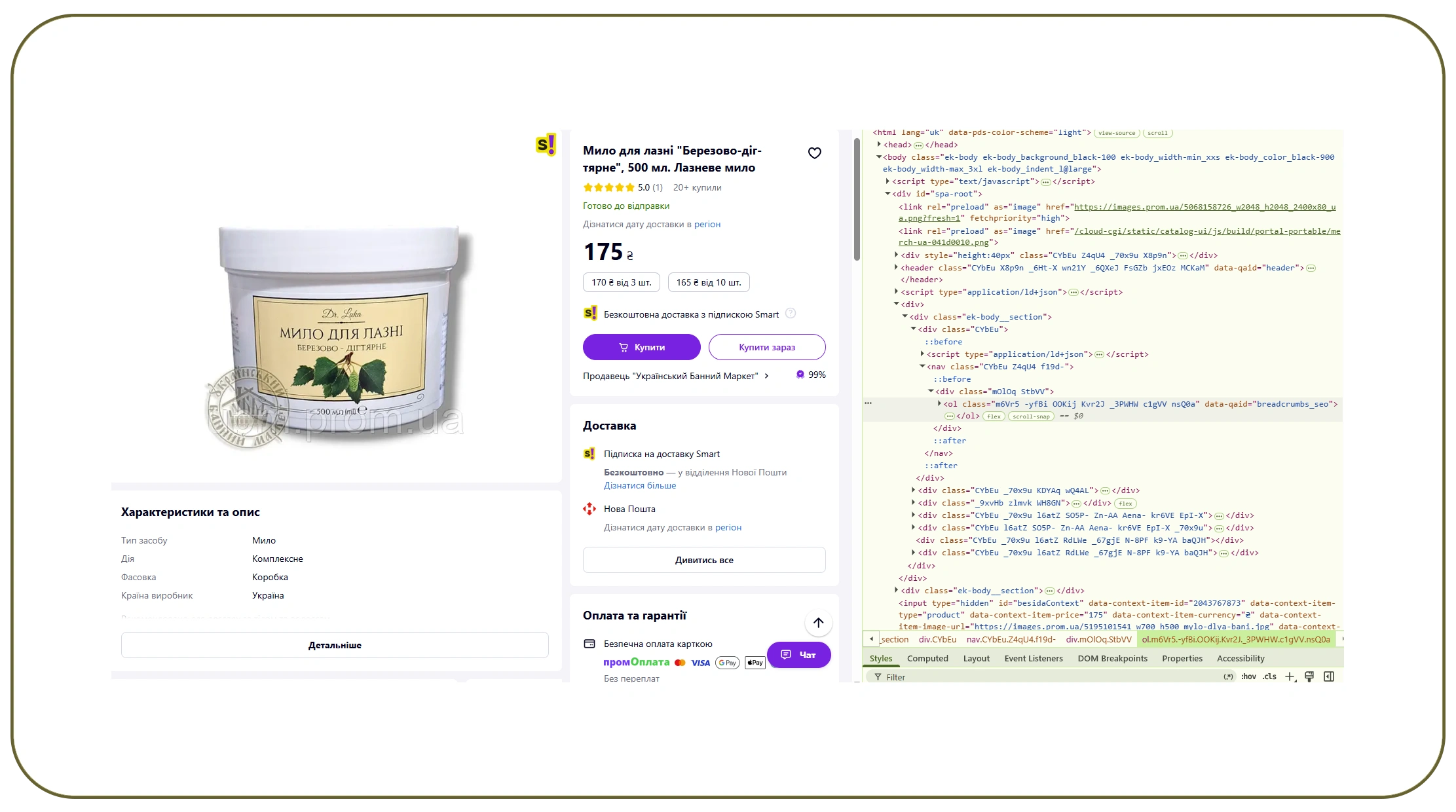
Marketplace data supports far more than competitive price tracking. Organizations across retail, manufacturing, distribution, consulting, and market research use automated data collection to improve decision-making, optimize operations, and identify new business opportunities.
One of the most effective ways to maximize marketplace intelligence is by implementing Top Ecommerce Scraping API Use Cases that align with business goals. These use cases transform raw marketplace information into actionable insights that support growth and innovation.
Common Business Applications
Organizations use marketplace data for:
- Dynamic pricing optimization
- Competitive benchmarking
- Product assortment analysis
- Inventory forecasting
- Seller performance monitoring
- Demand prediction
- Customer behavior analysis
- Market expansion planning
Each application helps businesses make faster decisions while reducing uncertainty in highly competitive eCommerce environments.
Marketplace Analytics Trends (2020-2026)
| Year | Companies Using Marketplace Intelligence | Revenue Improvement from Data-Driven Decisions |
|---|---|---|
| 2020 | 32% | 12% |
| 2021 | 40% | 16% |
| 2022 | 49% | 21% |
| 2023 | 58% | 27% |
| 2024 | 67% | 33% |
| 2025* | 75% | 39% |
| 2026* | 83% | 45% |
*Projected industry estimates.
As businesses continue adopting advanced analytics and AI-powered decision-making, marketplace data will remain one of the most valuable strategic assets. Organizations that integrate automated data collection into their operations can respond faster to market changes, improve customer experiences, and build stronger competitive advantages.
Why Choose Real Data API?
Real Data API delivers reliable, scalable, and customized marketplace data solutions that help businesses transform raw information into actionable intelligence. Whether you are a retailer, marketplace seller, pricing analyst, brand owner, or research organization, our solutions simplify data collection while maintaining high accuracy and consistency.
With the ability to scrape product and seller data using Prom.ua API, businesses can automate the extraction of product listings, seller profiles, pricing information, inventory status, ratings, reviews, and category data. Our structured datasets integrate seamlessly with analytics platforms, business intelligence tools, ERP systems, CRM software, and machine learning applications.
Why Businesses Trust Real Data API
- Enterprise-grade data extraction
- Automated and scalable workflows
- Real-time and historical marketplace datasets
- High-quality structured data delivery
- Flexible API integration
- Customized scraping solutions
- Secure and reliable infrastructure
- Dedicated technical support
Our experienced team helps organizations reduce manual effort, improve reporting accuracy, and build data-driven strategies that support long-term growth in competitive eCommerce markets.
Conclusion
Marketplace intelligence is essential for businesses that want to compete in today's fast-changing digital commerce landscape. Automated data collection improves operational efficiency, increases data accuracy, and provides the real-time insights needed for smarter pricing, inventory management, seller analysis, and competitive benchmarking. Organizations that scrape product and seller data using Prom.ua API can replace time-consuming manual processes with scalable, reliable, and structured data pipelines.
As marketplace ecosystems continue expanding, businesses that invest in automated data extraction will be better equipped to identify emerging opportunities, optimize product strategies, and make confident decisions backed by accurate information. Reliable marketplace intelligence is no longer optional—it is a key driver of sustainable business growth and competitive advantage.
Ready to automate your marketplace intelligence? Contact Real Data API today to implement customized Prom.ua data scraping and API solutions that deliver accurate, real-time product and seller insights for your business!
Latest posts
How Foodpanda Food Dataset Helps Businesses Track Restaurants, Menus, Prices, Ratings, and Food Delivery Trends?

How IKEA E-commerce Dataset Helps Businesses Solve Product, Pricing, Category, and Retail Trend Challenges?
How Target e-commerce dataset Helps Brands Track Products, Prices, Availability, and Retail Market Trends for Smarter Insights?

How Dior fashion dataset Helps Brands Track Luxury Products, Prices, Collections, and Fashion Trends for Smarter Insights?






.png)