Introduction
How can businesses improve bid success rates and stop missing valuable tender opportunities?
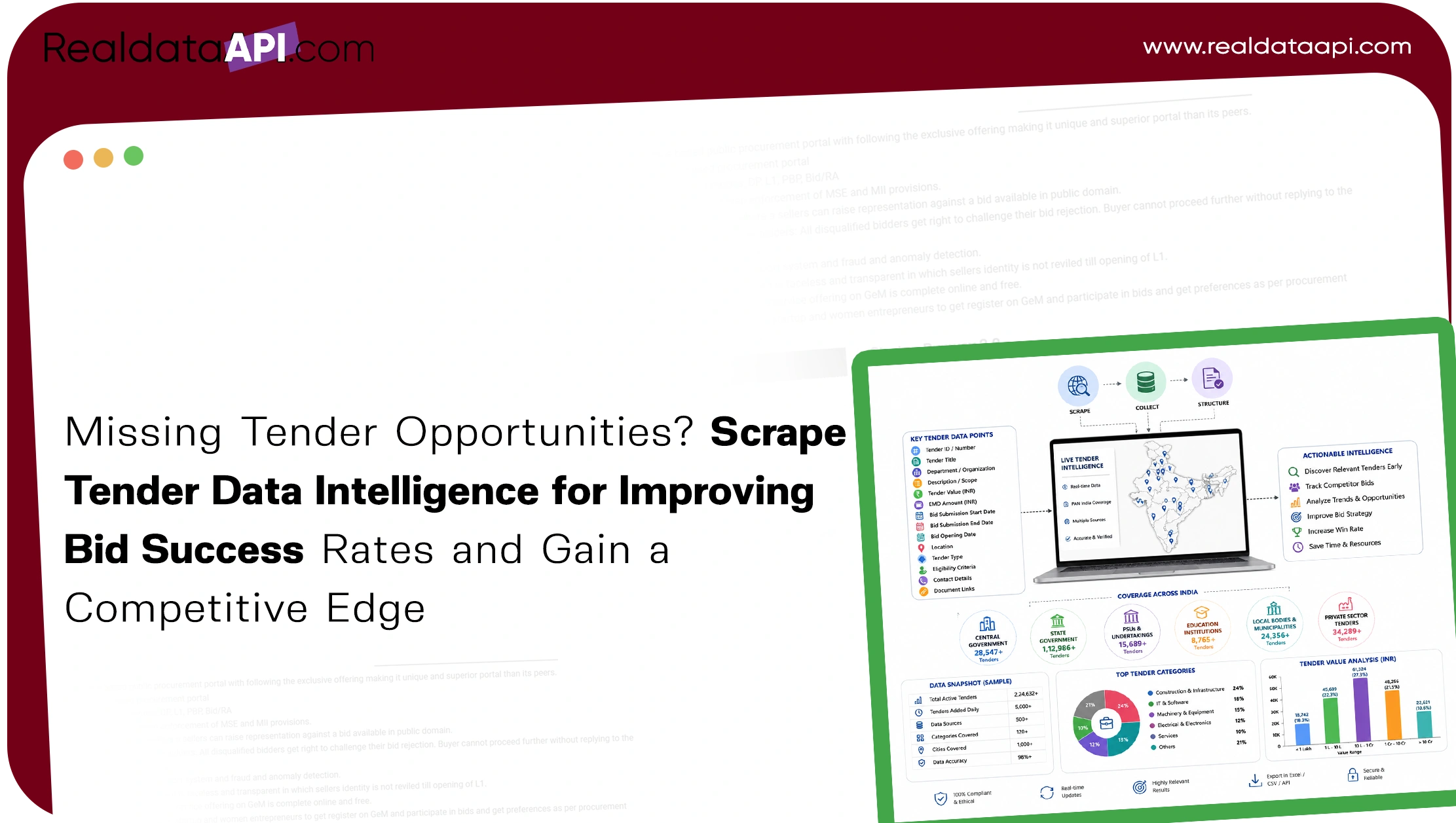
The fastest way to improve bidding performance is to use data-driven procurement intelligence. Companies that scrape tender data intelligence for improving bid success rates can analyze historical tenders, identify winning patterns, monitor competitors, and discover new opportunities before they become crowded.
Industry Insight: Procurement analytics adoption has grown significantly over the last decade as organizations increasingly rely on tender intelligence to improve decision-making, reduce research time, and increase contract win rates.
Government and private-sector procurement portals publish thousands of tenders every day. Manually tracking these opportunities is difficult, especially for organizations bidding across multiple industries and regions. Solutions like the GeM Tender Data Scraping API help automate data collection, making tender intelligence accessible, accurate, and actionable.
Procurement managers, business development teams, consultants, contractors, and enterprise decision-makers can use tender intelligence to identify market demand, evaluate competitor strategies, and optimize bid submissions. Instead of relying on assumptions, organizations can leverage real procurement data to guide every stage of the bidding process.
The result is improved visibility, faster response times, and stronger bids that align with actual procurement trends.
Why Do Winning Companies Depend on Historical Procurement Insights?
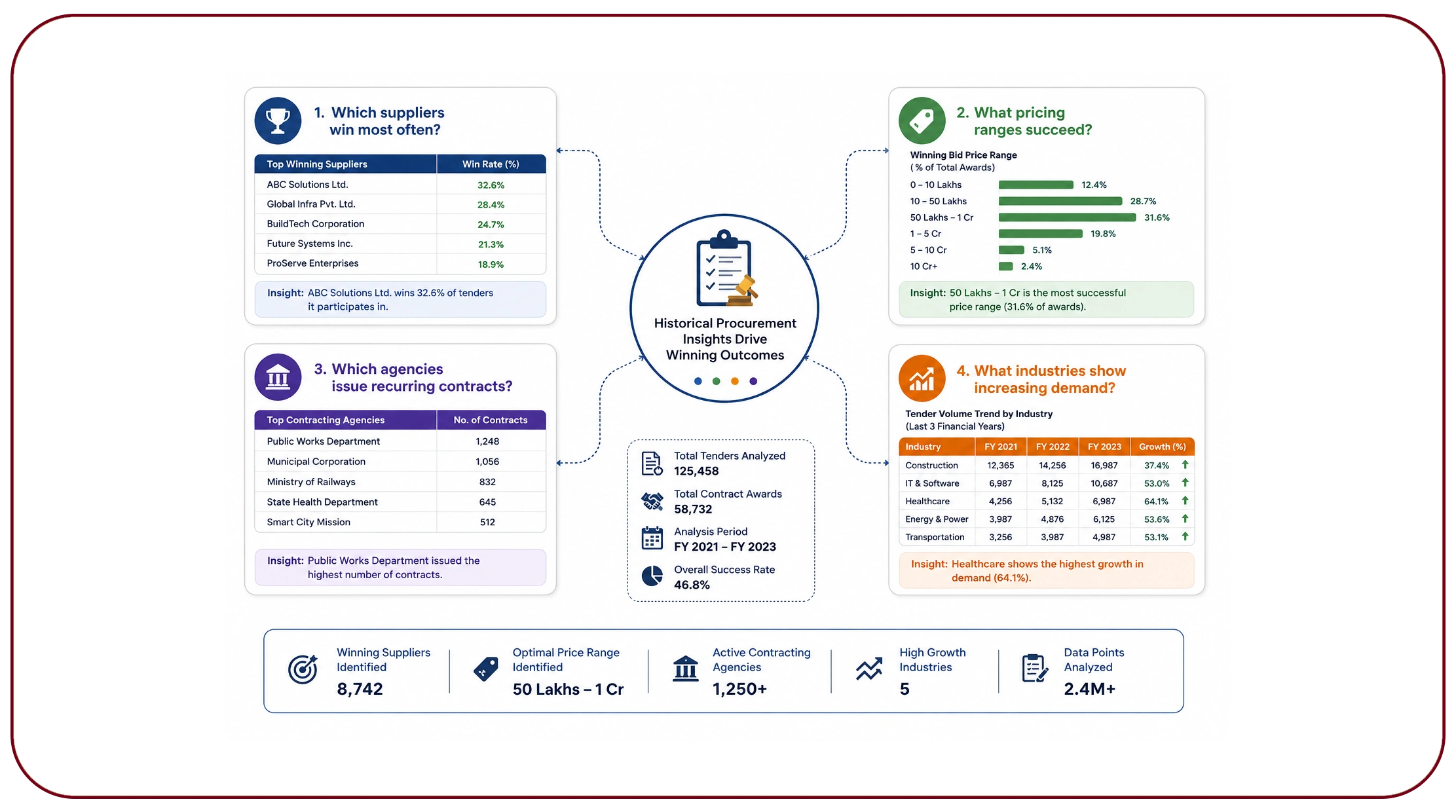
Organizations increasingly use tender data scraping for bid success analysis because historical procurement records reveal what drives successful contract awards. Understanding past outcomes allows businesses to refine future bidding strategies.
Historical tender intelligence helps answer critical questions:
- Which suppliers win most often?
- What pricing ranges succeed?
- Which agencies issue recurring contracts?
- What industries show increasing demand?
Procurement Intelligence Adoption Trends
| Year | Organizations Using Tender Analytics (%) |
|---|---|
| 2020 | 28 |
| 2021 | 34 |
| 2022 | 41 |
| 2023 | 50 |
| 2024 | 59 |
| 2025 | 68 |
| 2026 | 76 |
Benefits of Historical Tender Analysis
- Identify award-winning patterns
- Benchmark competitor pricing
- Improve proposal quality
- Predict future procurement demand
- Reduce bidding risks
For example, a technology provider analyzing previous government software contracts may discover that agencies consistently favor vendors offering implementation support and training services. Such findings help improve future proposal structures.
Historical procurement intelligence also allows organizations to evaluate long-term spending behavior. Trends observed across multiple years often reveal future procurement priorities.
As competition increases, companies that leverage historical procurement data gain a significant advantage when preparing and positioning bids.
How Can Opportunity Discovery Become Faster and More Accurate?
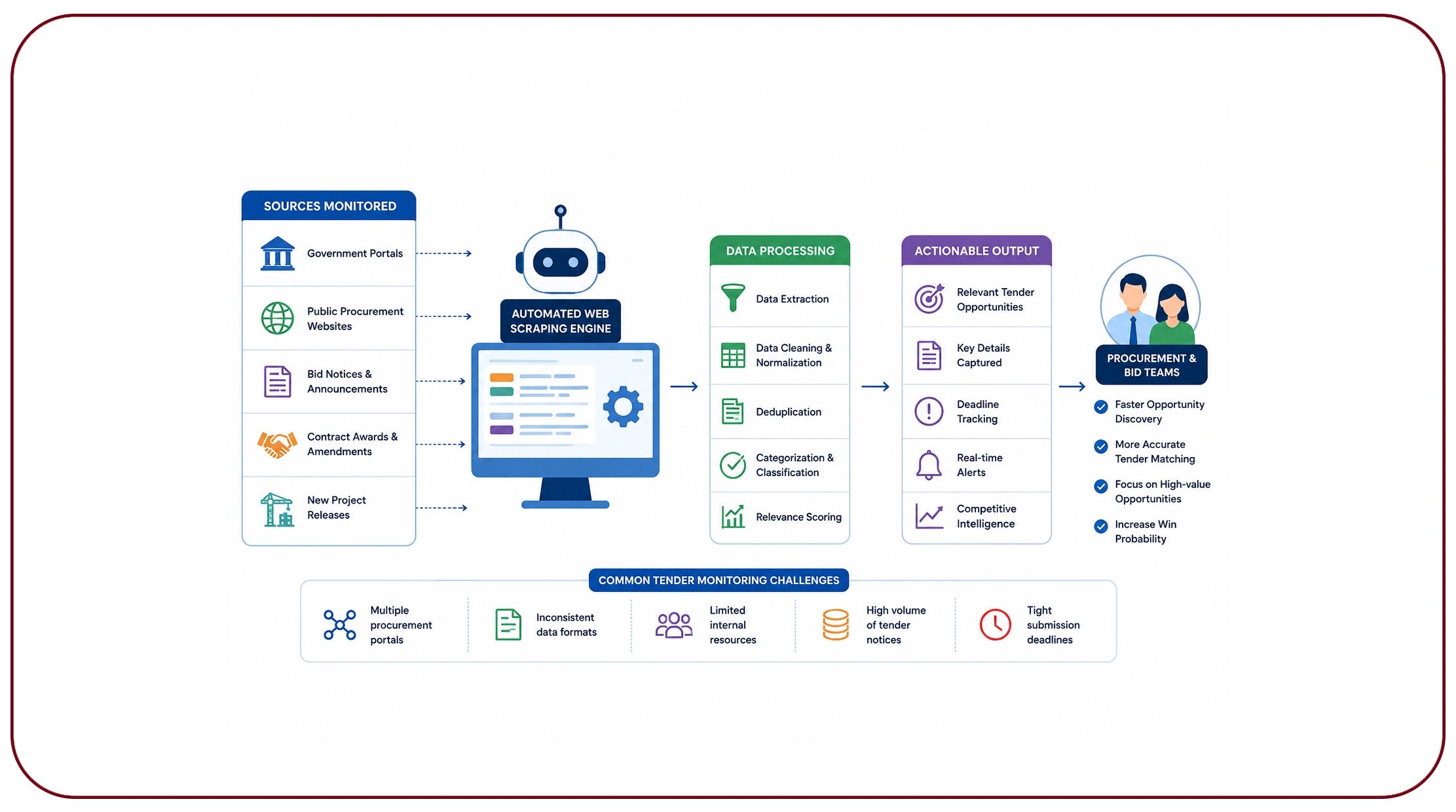
Many organizations miss profitable contracts simply because they cannot monitor every procurement source effectively. Businesses increasingly rely on web scraping tender opportunities for competitive bidding to discover relevant tenders before competitors react.
Automated opportunity discovery enables procurement teams to continuously track procurement announcements, bid notices, contract amendments, and new project releases.
Common Tender Monitoring Challenges
- Multiple procurement portals
- Inconsistent data formats
- Limited internal resources
- High volume of tender notices
- Tight submission deadlines
Tender Listings Published Globally
| Year | Estimated Tender Listings (Millions) |
|---|---|
| 2020 | 48 |
| 2021 | 55 |
| 2022 | 63 |
| 2023 | 72 |
| 2024 | 82 |
| 2025 | 94 |
| 2026 | 108 |
Why Automated Opportunity Discovery Matters
Organizations can:
- Reduce manual monitoring effort
- Discover tenders faster
- Improve response readiness
- Expand market coverage
- Increase bidding efficiency
A construction company bidding on infrastructure projects may monitor hundreds of procurement sources. Automated tender discovery helps ensure that relevant opportunities are identified immediately rather than days later.
By consolidating procurement information into a single workflow, businesses can focus more time on evaluating opportunities and preparing competitive submissions.
This proactive approach significantly improves bid readiness and reduces the likelihood of missing high-value contracts.
Why Does Speed Matter in Competitive Procurement Markets?
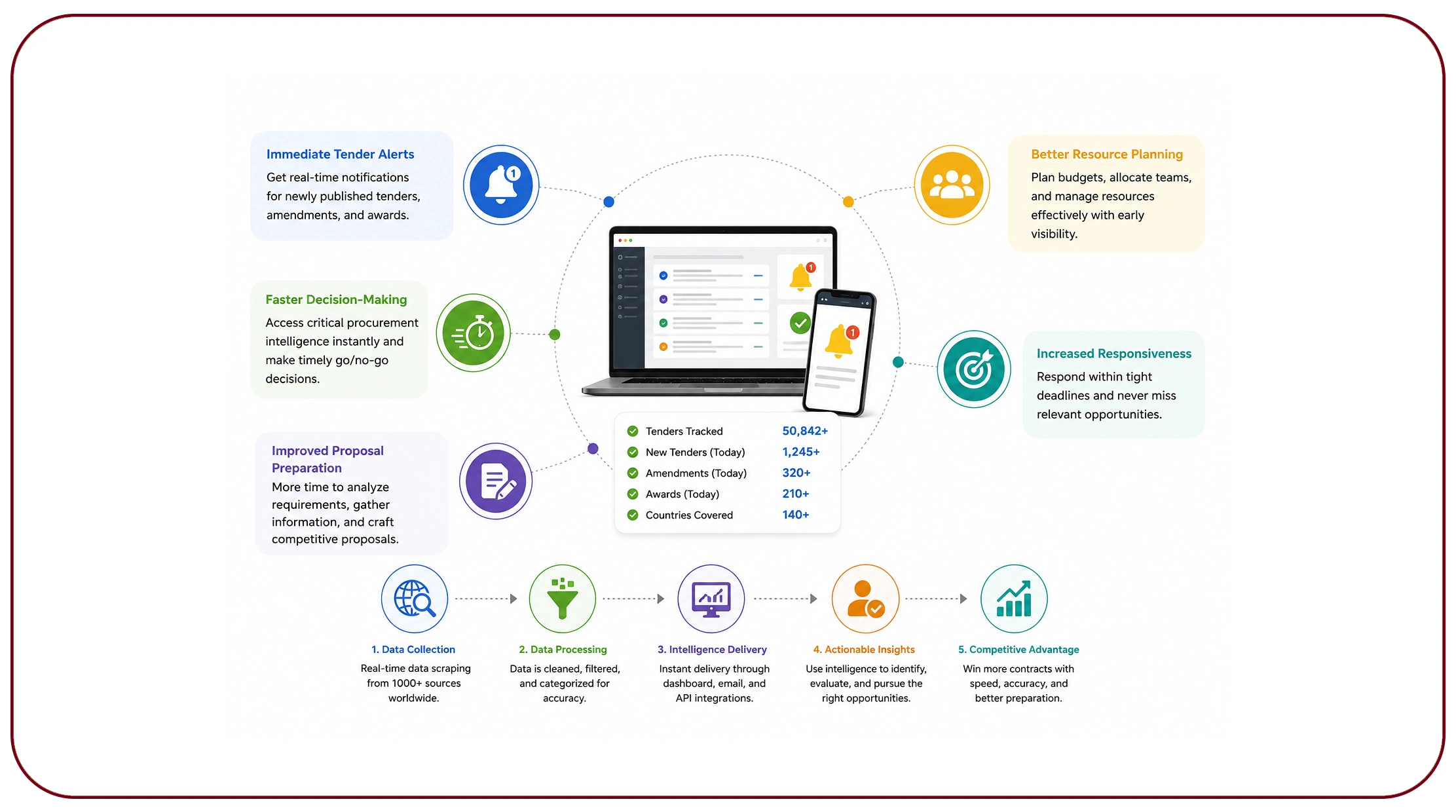
Procurement opportunities often have limited response windows. Companies using real-time tender intelligence data scraping gain immediate access to newly published tenders, bid amendments, procurement notices, and award announcements.
Early visibility creates a competitive advantage because businesses have more time to research requirements, coordinate teams, and develop stronger proposals.
Benefits of Real-Time Procurement Monitoring
- Immediate tender alerts
- Faster decision-making
- Improved proposal preparation
- Better resource planning
- Increased responsiveness
Real-Time Procurement Monitoring Growth
| Year | Organizations Using Real-Time Procurement Tracking (%) |
|---|---|
| 2020 | 17 |
| 2021 | 23 |
| 2022 | 31 |
| 2023 | 40 |
| 2024 | 52 |
| 2025 | 63 |
| 2026 | 74 |
What Can Businesses Monitor in Real Time?
Organizations can track:
- Newly published tenders
- Bid deadline changes
- Procurement amendments
- Award notifications
- Vendor registration announcements
For example, an engineering consultancy receiving real-time procurement updates can begin evaluating opportunities as soon as they are released. This additional preparation time often improves submission quality and increases competitiveness.
Real-time procurement intelligence also supports executive decision-making by providing current market visibility. Leaders can quickly identify sectors experiencing increased procurement activity and align business strategies accordingly.
As procurement ecosystems become increasingly digital, real-time monitoring is becoming essential for organizations seeking to maximize bid success and maintain a competitive edge.
How Can Businesses Simplify Large-Scale Tender Monitoring?
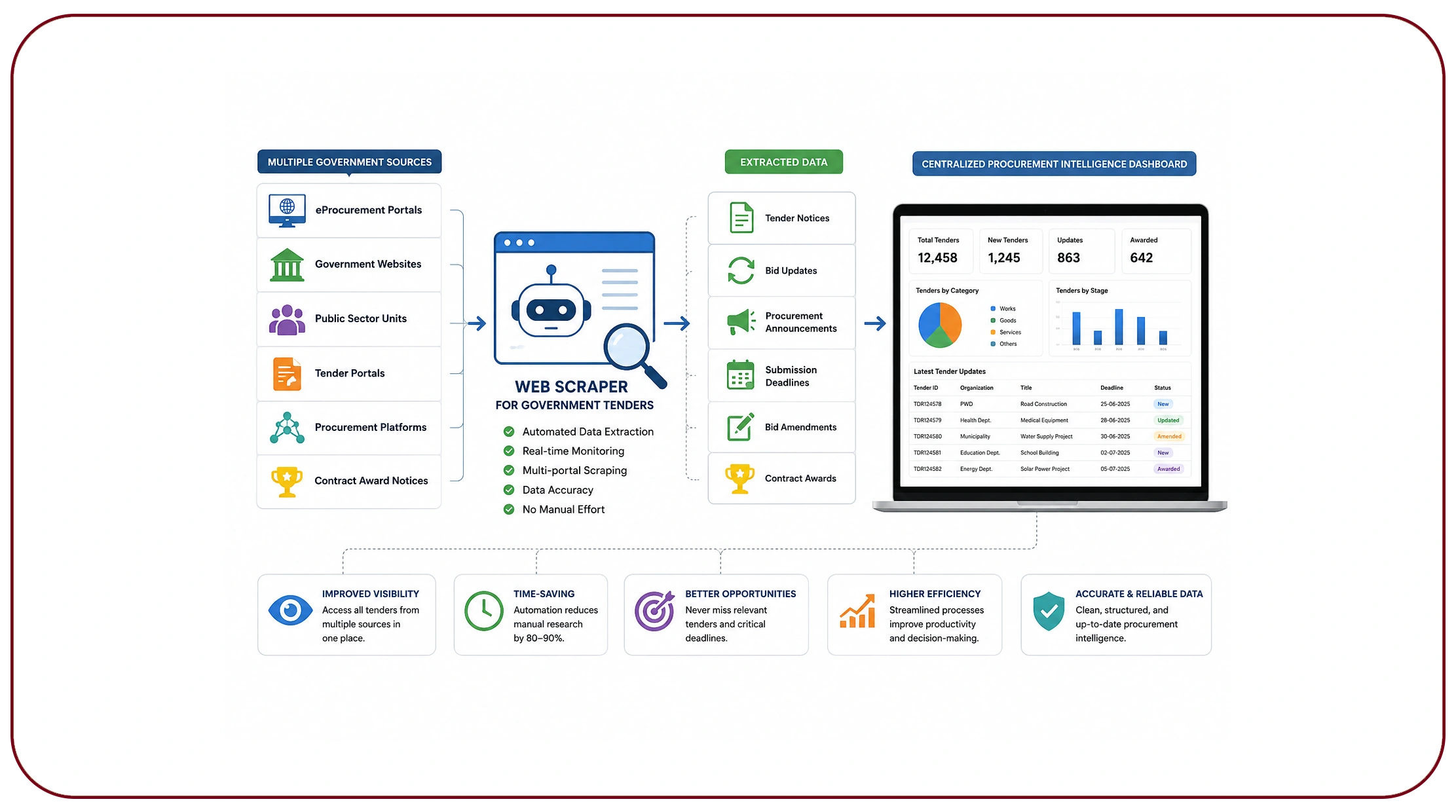
Monitoring procurement opportunities across multiple portals can quickly become overwhelming. A Web Scraper for Government Tenders Offers a Streamlined Solution by automatically collecting tender notices, bid updates, procurement announcements, and contract awards from various government and public-sector sources.
Instead of assigning teams to manually review hundreds of websites, organizations can centralize procurement intelligence into a single system. This improves visibility and significantly reduces research effort.
Why Is Manual Tender Tracking Inefficient?
Organizations often face:
- Thousands of daily procurement notices
- Multiple procurement platforms
- Frequent bid amendments
- Changing submission deadlines
- Resource-intensive monitoring processes
Automation eliminates these challenges by continuously collecting and organizing procurement data.
Procurement Portal Growth Index
| Year | Procurement Portal Activity Index |
|---|---|
| 2020 | 100 |
| 2021 | 111 |
| 2022 | 124 |
| 2023 | 139 |
| 2024 | 156 |
| 2025 | 176 |
| 2026 | 198 |
What Advantages Does Automated Tender Monitoring Provide?
Businesses can:
- Reduce manual workload
- Improve opportunity visibility
- Track procurement updates automatically
- Minimize missed deadlines
- Improve bidding efficiency
For example, a supplier operating across multiple states may need to monitor hundreds of procurement sources simultaneously. Automated monitoring ensures all relevant opportunities are captured and categorized for review.
Organizations that centralize procurement intelligence can make faster decisions and allocate resources more effectively, improving overall bid performance.
How Can Data Collection Support Better Procurement Decisions?
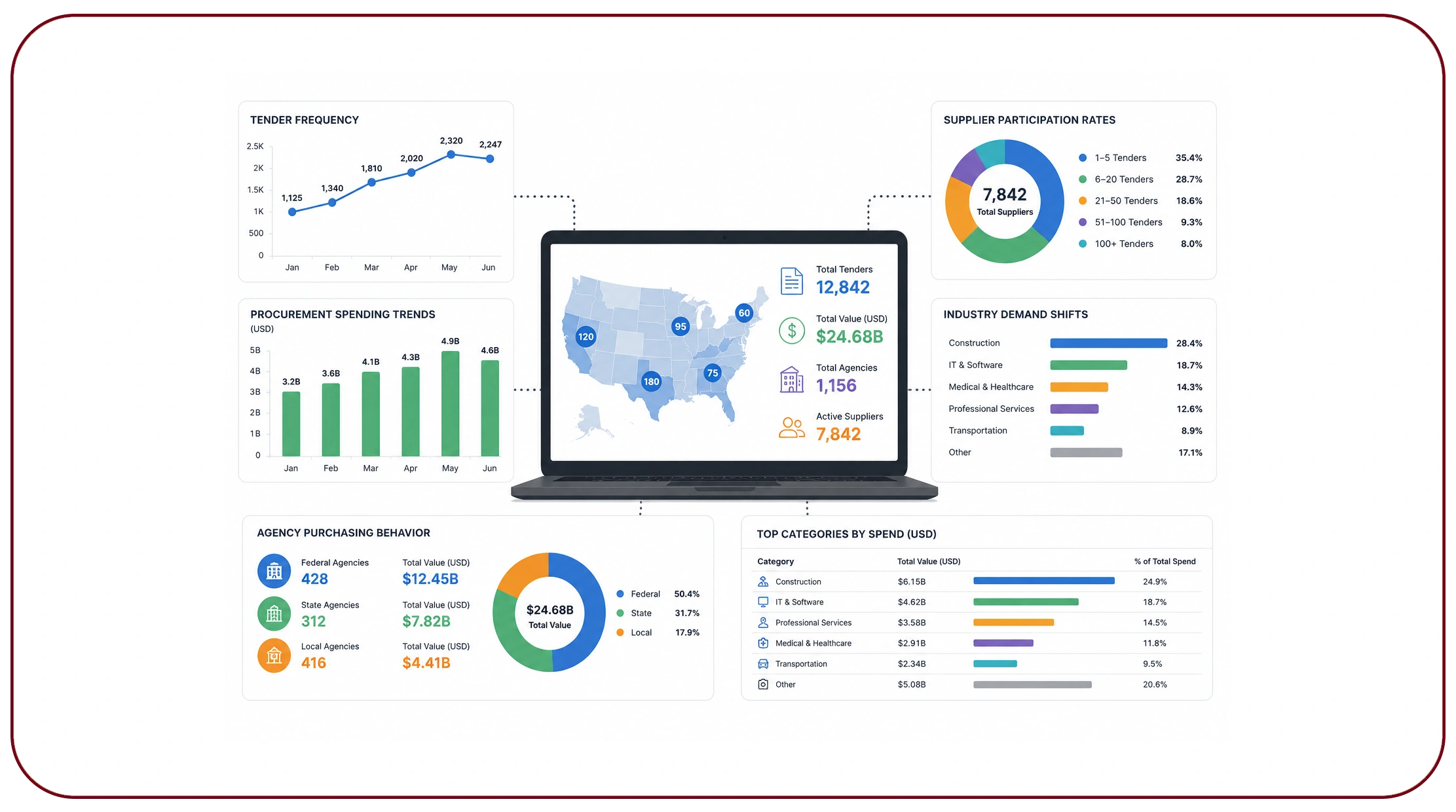
Access to comprehensive procurement information enables businesses to make smarter strategic decisions. Modern Web Scraping Services help organizations collect, structure, and analyze tender intelligence at scale.
Instead of relying on fragmented information sources, businesses can build a centralized procurement intelligence framework that supports long-term growth.
What Insights Can Procurement Data Provide?
Companies can analyze:
- Tender frequency
- Procurement spending trends
- Supplier participation rates
- Industry demand shifts
- Agency purchasing behavior
Procurement Analytics Market Expansion
| Year | Procurement Analytics Market (USD Billion) |
|---|---|
| 2020 | 2.0 |
| 2021 | 2.4 |
| 2022 | 2.9 |
| 2023 | 3.5 |
| 2024 | 4.2 |
| 2025 | 5.0 |
| 2026 | 5.9 |
Why Is Procurement Intelligence Valuable?
Organizations can:
- Improve forecasting accuracy
- Discover emerging opportunities
- Evaluate competitor activity
- Optimize resource allocation
- Support strategic planning
A professional services firm analyzing procurement data may discover increased demand in digital transformation projects. Such insights can influence service offerings, staffing plans, and market expansion strategies.
Data-driven procurement intelligence transforms raw procurement records into actionable business insights that support sustainable growth.
How Can Advanced Analytics Improve Contract Win Rates?
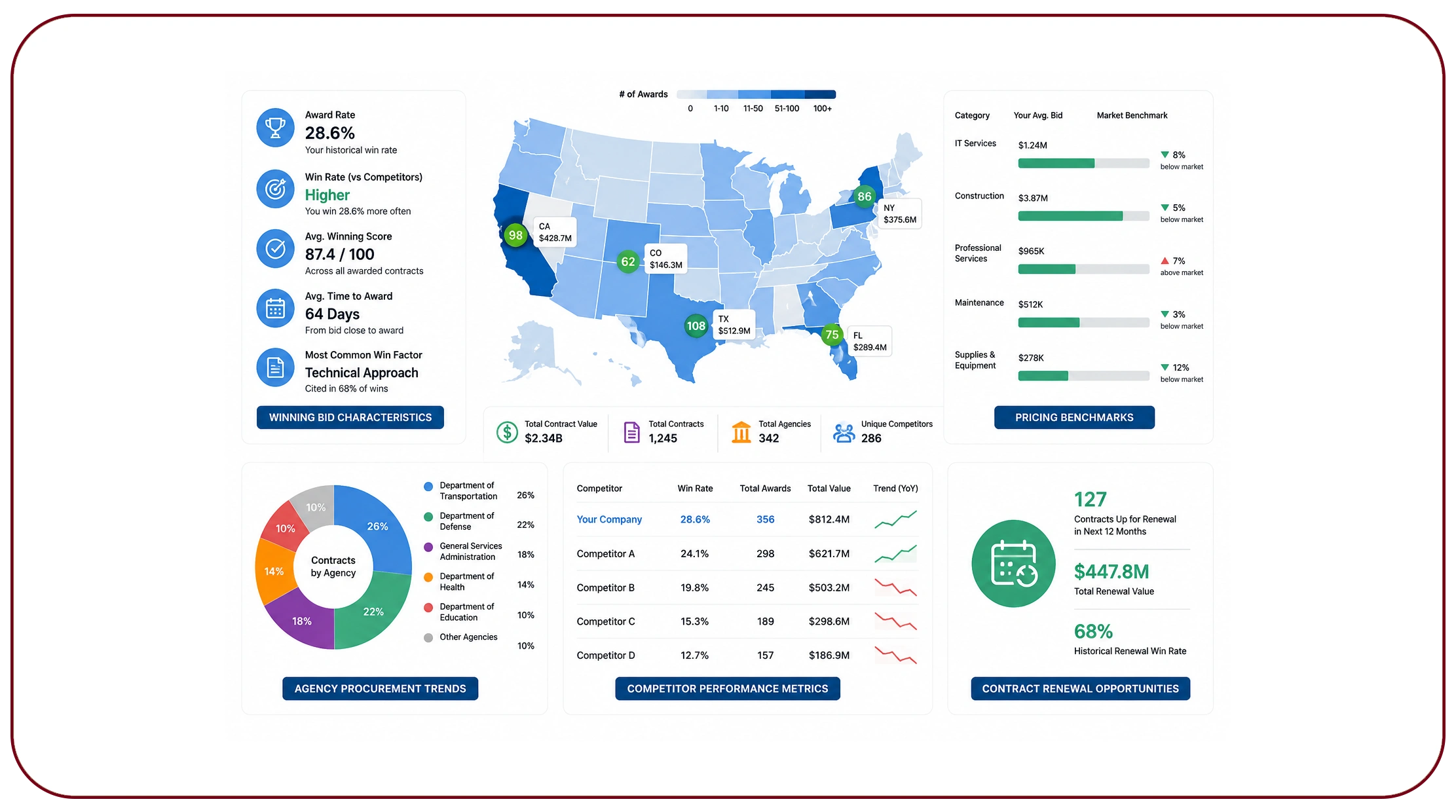
Modern procurement teams increasingly leverage a Web Scraping API to automate data collection and gain deeper visibility into procurement markets. Organizations that scrape tender data intelligence for improving bid success rates can use advanced analytics to identify patterns that strengthen future bidding strategies.
Procurement analytics helps businesses move beyond basic opportunity tracking and focus on evidence-based decision-making.
What Can Advanced Tender Analytics Reveal?
Businesses can uncover:
- Winning bid characteristics
- Pricing benchmarks
- Agency procurement trends
- Competitor performance metrics
- Contract renewal opportunities
Bid Intelligence Adoption Growth
| Year | Organizations Using Bid Intelligence (%) |
|---|---|
| 2020 | 24 |
| 2021 | 31 |
| 2022 | 39 |
| 2023 | 48 |
| 2024 | 58 |
| 2025 | 69 |
| 2026 | 79 |
How Does Analytics Improve Bid Performance?
Organizations can:
- Improve proposal targeting
- Prioritize high-probability opportunities
- Benchmark competitor activity
- Reduce bid preparation risks
- Increase contract win potential
For example, a logistics company analyzing procurement outcomes may discover recurring purchasing patterns among transportation agencies. This information can guide future bid strategies and improve proposal alignment with buyer expectations.
Advanced procurement analytics allows organizations to transform large datasets into meaningful competitive intelligence that directly supports revenue growth.
Why Choose Real Data API?
Organizations seeking reliable procurement intelligence need a scalable and accurate solution. Real Data API helps businesses scrape tender data intelligence for improving bid success rates through automated data extraction, real-time monitoring, and structured procurement datasets.
Key Benefits of Real Data API
- Automated tender data collection
- Real-time procurement monitoring
- Scalable enterprise infrastructure
- Structured and clean datasets
- Historical procurement intelligence
- Custom API integrations
- High-frequency data updates
- Analytics-ready procurement records
How Real Data API Supports Procurement Teams
Real Data API enables organizations to:
- Discover opportunities faster
- Track competitor activities
- Analyze historical procurement trends
- Improve bidding strategies
- Increase operational efficiency
Whether you are a contractor, supplier, consultant, procurement analyst, or enterprise organization, Real Data API provides the intelligence needed to compete effectively in increasingly data-driven procurement markets.
Conclusion
Tender intelligence has become a critical resource for organizations seeking to improve bidding performance and identify new contract opportunities. Companies that scrape tender data intelligence for improving bid success rates gain access to valuable insights that support opportunity discovery, competitor analysis, proposal optimization, and strategic planning.
From historical procurement analysis to real-time monitoring and advanced bid intelligence, data-driven decision-making helps businesses compete more effectively and improve contract win rates. Organizations that leverage procurement intelligence can identify opportunities earlier, respond faster, and develop stronger proposals backed by market evidence.
Ready to increase your bid success rate with powerful tender intelligence?
Contact Real Data API today to automate tender data collection, uncover hidden opportunities, monitor procurement trends, and build a smarter strategy for winning more contracts!
Latest posts

How ecommerce scraping API for real-time product data Helps Businesses Track Prices, Inventory, and Competitor Changes
How Web Scraping APIs for Business Data Improve Pricing and Product Insights
How Extracting Bilibili API Data for Social Media Analytics Helps Brands Track Content, Engagement, and Audience Trends

How Prom.ua scraper Helps Businesses Collect Marketplace Data for Competitive Pricing and Product Intelligence







.png)