
Introduction
Businesses can improve customer satisfaction by analyzing customer reviews, ratings, search behavior, delivery feedback, product availability, and shopping trends from quick commerce platforms. These insights help companies identify service gaps, optimize inventory, personalize experiences, and respond faster to customer needs.
Research indicates that more than 80% of consumers consider customer experience as important as product quality when choosing where to shop. Meanwhile, quick commerce platforms generate millions of customer interactions daily, creating valuable datasets for business intelligence.
Many businesses struggle to understand why customers abandon carts, leave negative reviews, or switch to competitors. Traditional surveys often provide delayed feedback.
By leveraging Scraping customer experience data from quick commerce apps, businesses gain real-time visibility into customer behavior and expectations.
A reliable Quick Commerce Data Scraping API allows organizations to collect structured information from reviews, ratings, search activity, inventory updates, and purchasing trends. These insights help improve customer satisfaction while supporting smarter operational decisions.
What Can Customer Search Behavior Reveal About Consumer Sentiment?
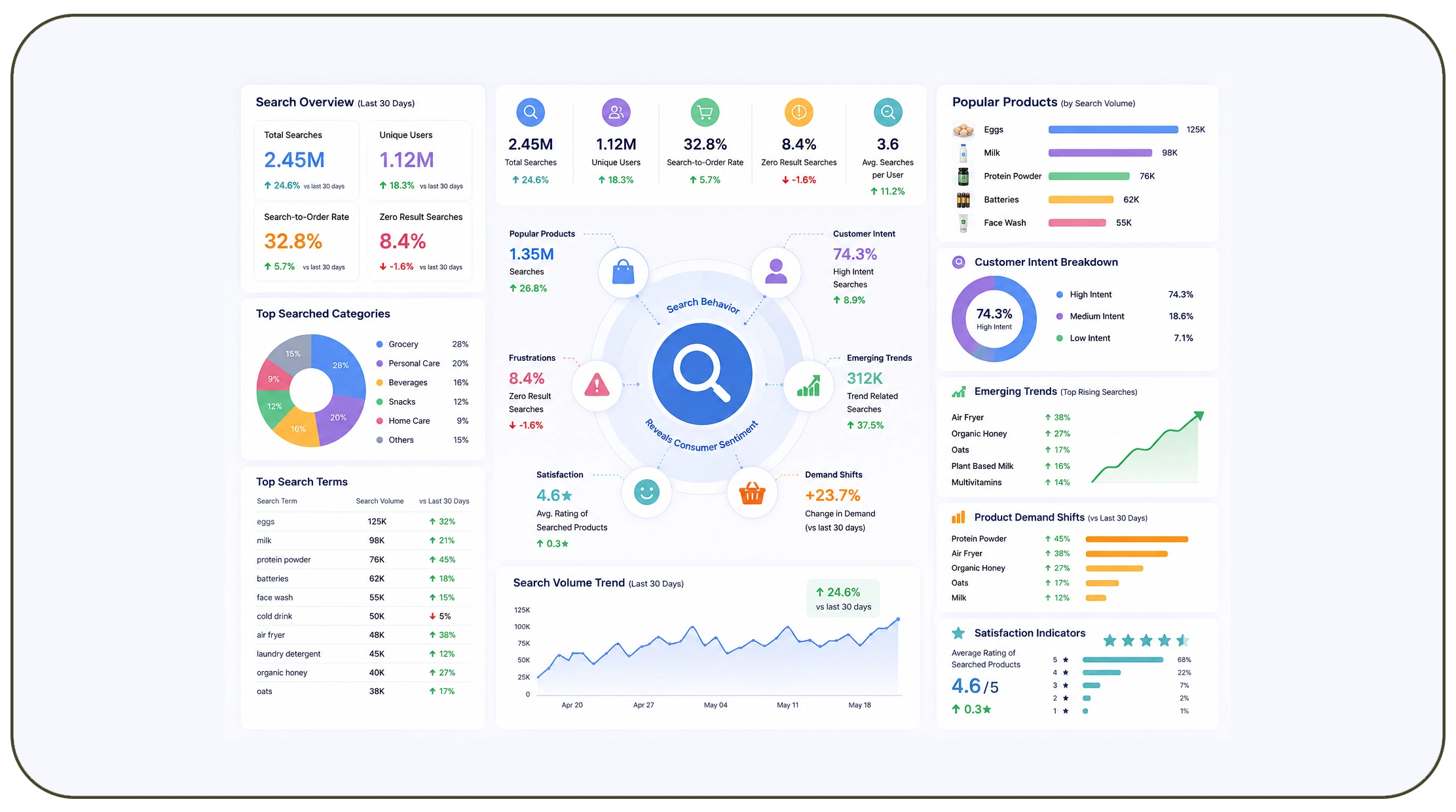
Customer searches often reveal preferences before purchases occur.
Businesses increasingly use Scrape quick commerce search data for consumer sentiment analysis to understand what shoppers want, how they feel about products, and where frustrations may exist.
Search data helps identify:
- Popular products
- Customer intent
- Emerging trends
- Product demand shifts
- Satisfaction indicators
Consumer Sentiment Indicators (2020–2026)
| Year | Positive Search Intent (%) | Negative Feedback Signals (%) |
|---|---|---|
| 2020 | 61 | 18 |
| 2021 | 65 | 17 |
| 2022 | 69 | 15 |
| 2023 | 72 | 13 |
| 2024 | 75 | 11 |
| 2025 | 78 | 10 |
| 2026 | 81 | 9 |
Key Benefits:
- Identify customer frustrations early.
- Track sentiment changes over time.
- Improve product recommendations.
- Optimize search experiences.
When customers repeatedly search for unavailable products, businesses gain insight into unmet demand. Search behavior also highlights product categories receiving increased attention.
Companies that monitor sentiment through search activity can proactively address concerns before they become customer service issues. This leads to better experiences, stronger loyalty, and higher retention rates.
How Does Search Data Help Businesses Understand Demand?

Customer demand changes rapidly in quick commerce environments.
Businesses often rely on quick commerce search data scraping for consumer demand analysis to identify purchasing intent and forecast future demand patterns.
Search activity provides a direct signal of customer interest. Unlike historical sales data, search behavior reveals demand before transactions occur.
Search Volume Growth Trends
| Year | Monthly Search Queries (Millions) |
|---|---|
| 2020 | 45 |
| 2021 | 72 |
| 2022 | 105 |
| 2023 | 138 |
| 2024 | 176 |
| 2025 | 214 |
| 2026 | 248 |
Insights Derived from Search Data:
- Seasonal demand patterns
- Regional preferences
- Emerging product trends
- Inventory planning opportunities
- Consumer interest forecasting
For example, rising searches for healthy snacks may indicate future purchasing growth in that category.
Businesses can use these insights to:
- Improve stock availability
- Reduce lost sales
- Optimize promotions
- Increase customer satisfaction
Understanding demand before purchases occur allows organizations to make faster decisions and better meet customer expectations.
How Can Analytics Transform Customer Experience Strategies?
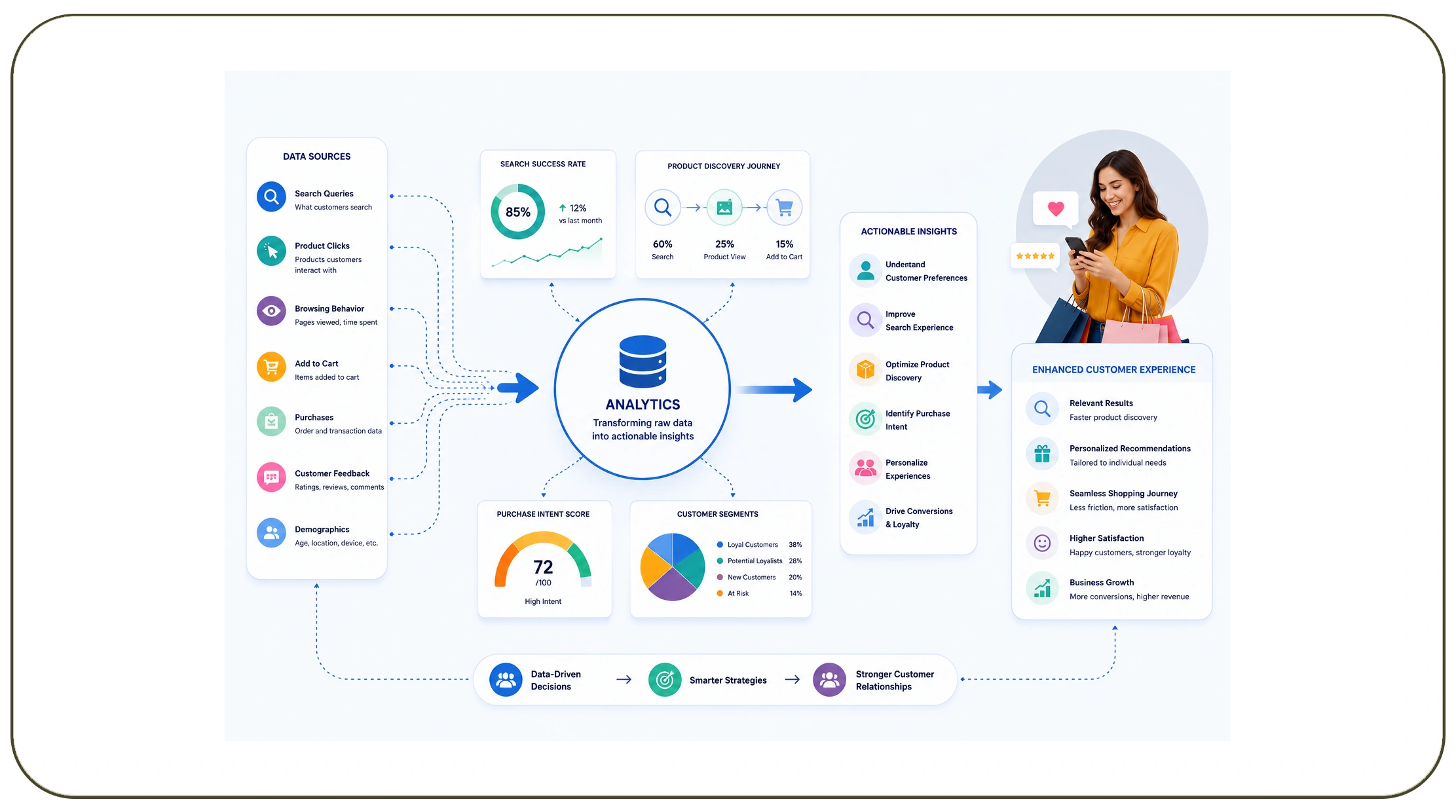
Modern customer experience management relies on actionable data.
Organizations use Quick Commerce Search data Analytics to convert raw search and interaction data into meaningful business intelligence.
Analytics platforms help companies evaluate:
- Customer preferences
- Search success rates
- Product discovery journeys
- Purchase intent
- Shopping behaviors
Analytics Adoption Trends
| Year | Companies Using Search Analytics (%) |
|---|---|
| 2020 | 27 |
| 2021 | 34 |
| 2022 | 42 |
| 2023 | 55 |
| 2024 | 66 |
| 2025 | 74 |
| 2026 | 82 |
Key Performance Metrics:
- Search conversion rates
- Product click-through rates
- Customer engagement levels
- Category demand trends
Analytics reveals where customers encounter friction during shopping experiences.
For example:
- High search volume but low conversion may indicate pricing issues.
- Repeated searches may signal inventory shortages.
- Abandoned searches may indicate poor product discoverability.
These insights help businesses improve navigation, inventory planning, and customer engagement while delivering better shopping experiences.
Why Is Access to Search Data Important for Retail Success?
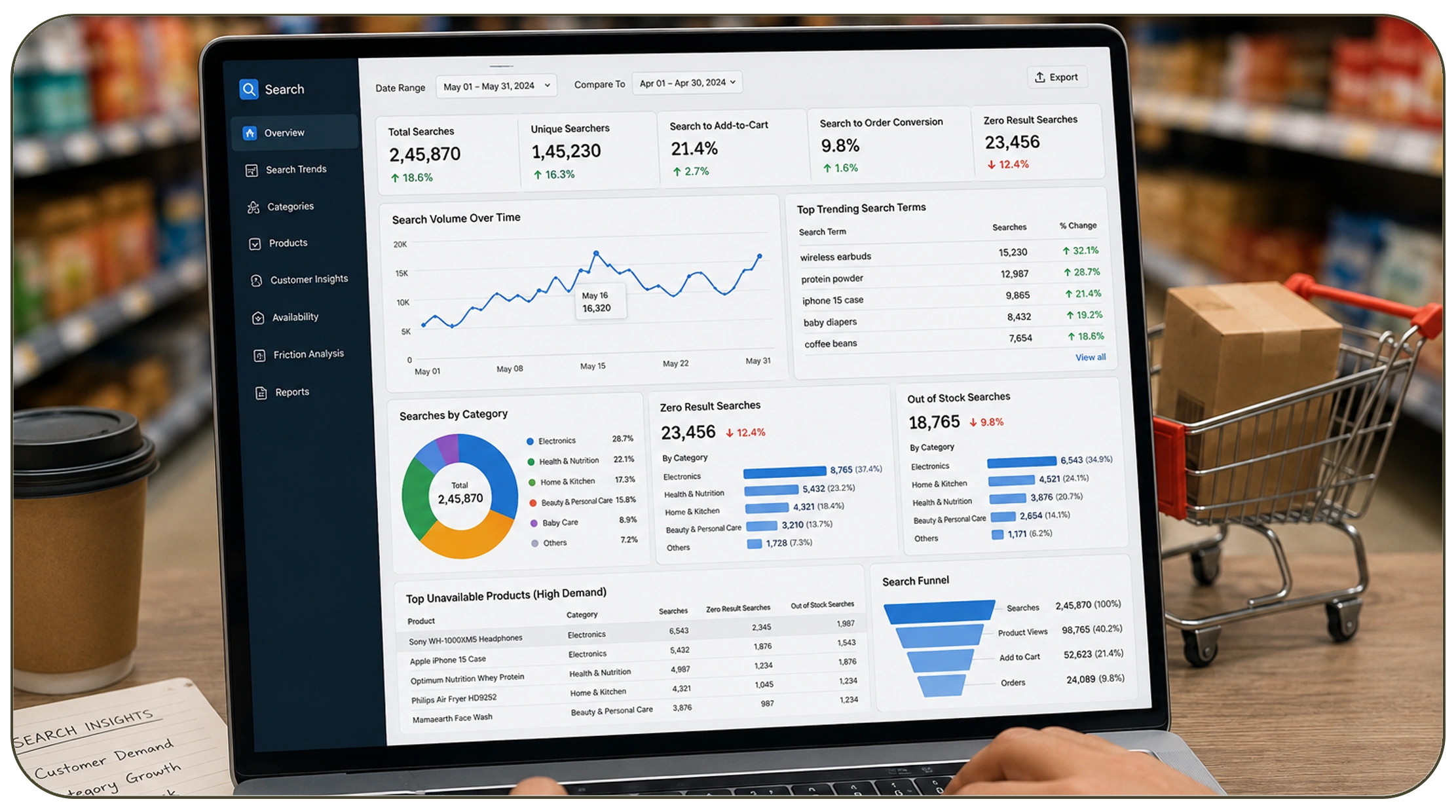
Search activity provides one of the most valuable customer intelligence sources available today.
Businesses leverage Quick Commerce Search Data extraction to gather information about customer preferences, market trends, and shopping behaviors.
Search data helps answer critical questions:
- What products are customers looking for?
- Which categories are growing fastest?
- Where are customers experiencing friction?
- What products are frequently unavailable?
Search Data Expansion (2020–2026)
| Year | Search Records Collected (Millions) |
|---|---|
| 2020 | 350 |
| 2021 | 520 |
| 2022 | 790 |
| 2023 | 1,050 |
| 2024 | 1,420 |
| 2025 | 1,860 |
| 2026 | 2,350 |
Business Benefits:
- Better product placement
- Improved recommendation systems
- Enhanced customer journeys
- Faster trend detection
By collecting and analyzing search activity, businesses gain deeper visibility into customer needs.
This information supports strategic decisions that improve satisfaction, conversion rates, and long-term customer loyalty.
How Do Availability and Pricing Impact Customer Satisfaction?
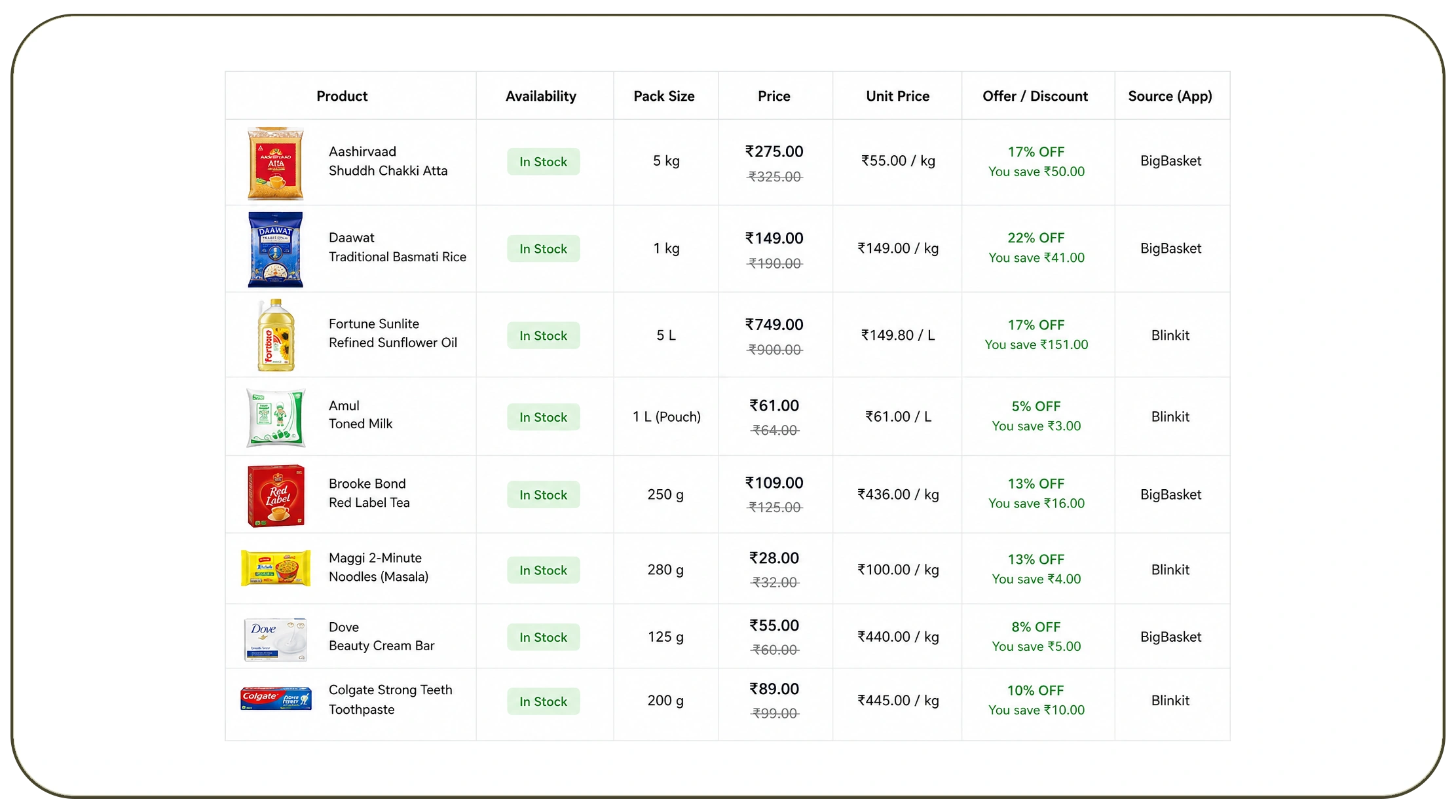
Nothing frustrates customers more than unavailable products or inconsistent pricing.
Businesses increasingly seek to extract product availability and pricing from grocery apps to monitor inventory levels and pricing changes across markets.
Availability directly affects customer experience.
When products remain consistently in stock, customers are more likely to complete purchases and return for future orders.
Product Availability Trends
| Year | Average In-Stock Rate (%) |
|---|---|
| 2020 | 84 |
| 2021 | 86 |
| 2022 | 88 |
| 2023 | 90 |
| 2024 | 92 |
| 2025 | 94 |
| 2026 | 95 |
Why Availability Matters:
- Reduces customer frustration
- Improves purchase completion
- Strengthens trust
- Enhances brand loyalty
Pricing transparency is equally important.
Customers frequently compare prices across multiple apps before making purchases. Monitoring pricing trends helps businesses remain competitive while maintaining customer confidence.
Access to real-time inventory and pricing intelligence enables organizations to create better shopping experiences and reduce dissatisfaction.
How Can Predictive Intelligence Improve Future Customer Experiences?
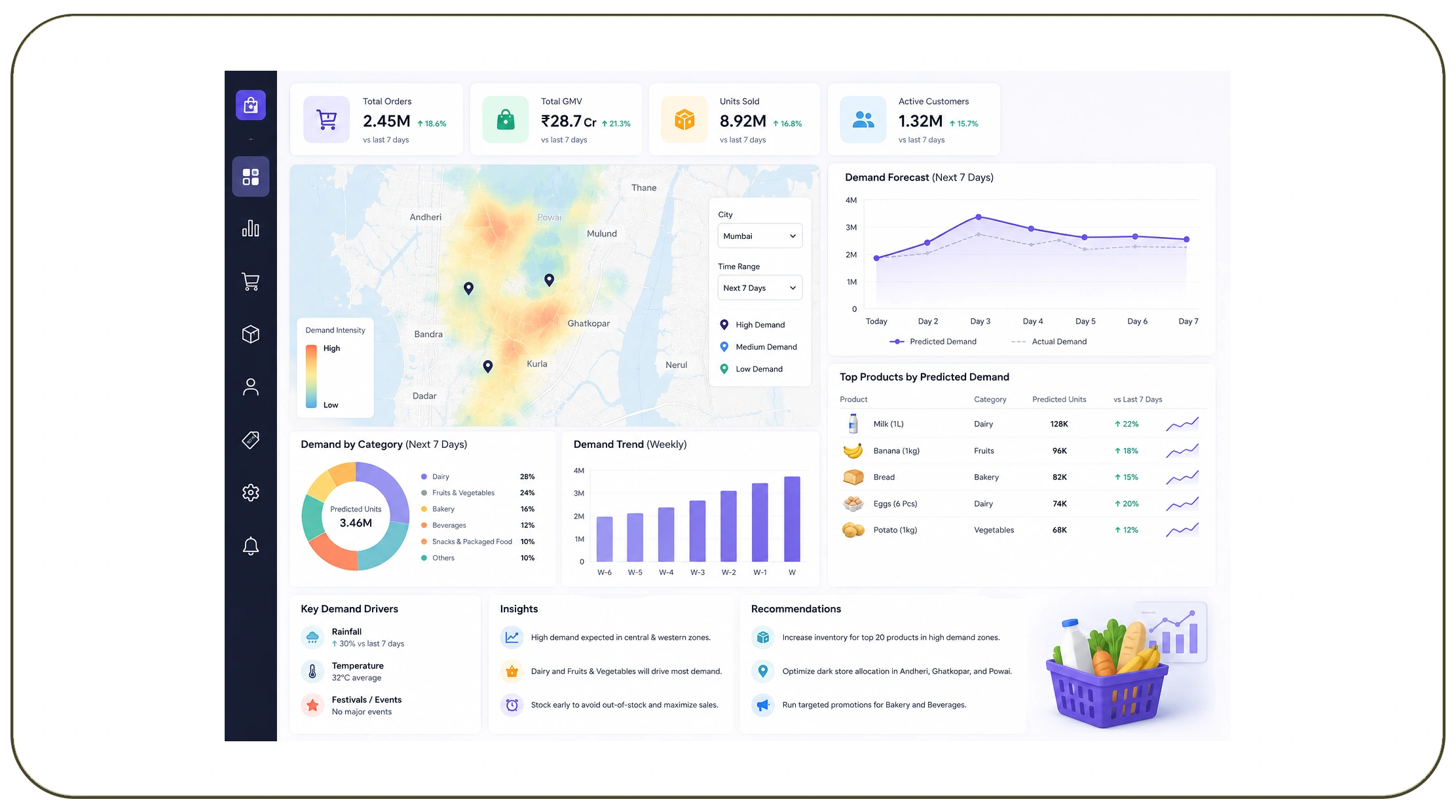
The future of customer satisfaction depends on predictive decision-making.
Businesses increasingly use data models to Predict Grocery Demand via quick commerce data intelligence and proactively address customer needs.
Predictive intelligence combines:
- Search activity
- Purchase trends
- Inventory levels
- Seasonal patterns
- Pricing movements
Demand Forecast Accuracy Improvements
| Year | Forecast Accuracy (%) |
|---|---|
| 2020 | 68 |
| 2021 | 71 |
| 2022 | 75 |
| 2023 | 79 |
| 2024 | 83 |
| 2025 | 87 |
| 2026 | 91 |
Benefits of Demand Forecasting:
- Better inventory planning
- Reduced stockouts
- Improved customer satisfaction
- Increased operational efficiency
When businesses accurately predict demand, customers find products available when needed.
Predictive intelligence also helps companies optimize delivery operations, reduce waste, and improve profitability while maintaining positive customer experiences.
Why Choose Real Data API?
Organizations need reliable and scalable data solutions to improve customer experience strategies.
Real Data API provides structured datasets and advanced APIs that help businesses collect and analyze customer behavior across quick commerce ecosystems.
With Real Data API, organizations can scrape Quick Commerce Product Stock Levels while simultaneously benefiting from Scraping customer experience data from quick commerce apps for deeper market intelligence.
Benefits of Real Data API:
- Real-time customer experience data
- Search trend monitoring
- Product availability tracking
- Pricing intelligence
- Consumer sentiment analysis
- Demand forecasting support
- Historical data access
- Enterprise-grade scalability
Supported Use Cases:
- Customer satisfaction improvement
- Retail analytics
- Market research
- Competitive intelligence
- Product planning
- Inventory optimization
- Consumer behavior analysis
Real Data API helps businesses transform raw customer interactions into actionable insights that drive better decisions and stronger customer relationships.
Conclusion
Customer satisfaction has become a major competitive advantage in the quick commerce industry. Businesses that understand customer preferences, monitor search behavior, track product availability, and analyze feedback can respond faster to changing expectations.
By leveraging Scraping customer experience data from quick commerce apps, organizations gain valuable insights that improve customer engagement, optimize operations, strengthen loyalty, and increase long-term profitability.
Ready to unlock actionable customer insights from quick commerce platforms? Contact Real Data API today and discover how real-time customer experience data can help your business deliver exceptional shopping experiences and stay ahead of the competition!
Latest posts
How Scrape Xiaohongshu Product Trends in Real Time Solves Product Discovery and Competitor Monitoring Challenges?
How to Scrape Taobao Product Data to Solve Pricing, Inventory, and Competitor Monitoring Challenges?
How to Extract grocery product listings Data from SPAR to Build Accurate Grocery Intelligence and Competitive Market Insights?
Scrape Douyin follower growth and engagement data to track influencer performance and trends






.png)