
Introduction
Businesses can scrape Blinkit search results by keyword to identify top-ranking products, monitor competitor visibility, track pricing changes, and understand customer search trends. Working with the best Blinkit data scraping API provider in India helps brands make faster merchandising, pricing, and inventory decisions using accurate, real-time quick commerce data.
Industry Insight: India's quick commerce sector continues to expand rapidly as urban consumers increasingly prefer 10–20-minute deliveries. Industry estimates indicate that millions of product searches are performed daily across quick commerce platforms, making keyword-level search intelligence a valuable resource for brands and retailers.
Quick commerce shoppers usually purchase products that appear at the top of search results. As rankings change throughout the day because of pricing, promotions, inventory availability, and customer demand, businesses need continuous visibility into search performance.
Manual tracking cannot monitor thousands of keyword searches efficiently. Automated search intelligence provides structured data that helps organizations optimize product placement, benchmark competitors, and improve digital shelf performance across Blinkit's fast-moving marketplace.
How Can Product Search Data Improve Product Visibility?
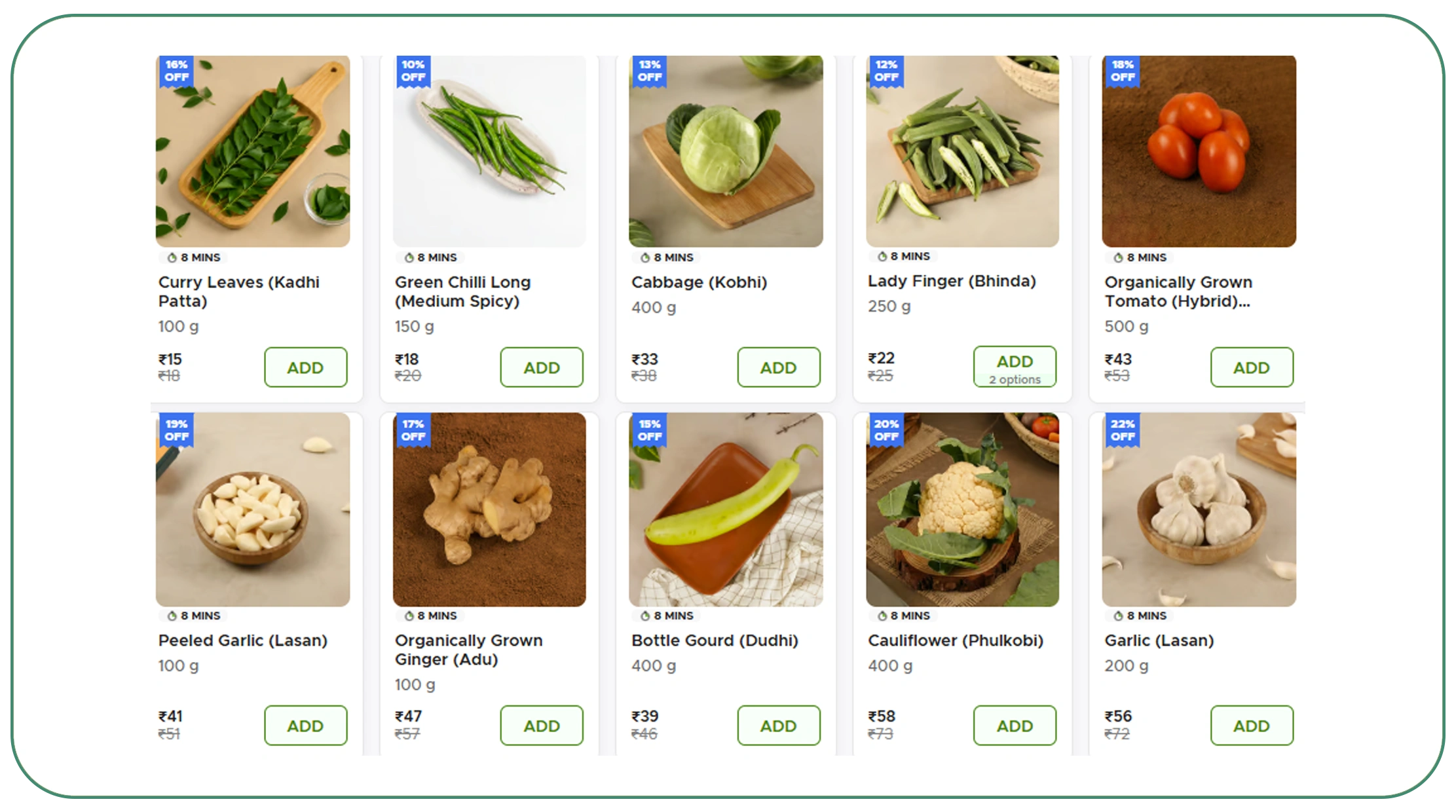
Product search data reveals how products appear for specific customer searches. Businesses can understand which products receive greater visibility, how rankings change over time, and what factors influence search placement.
Using Blinkit product search data extraction, retailers and brands gain detailed insights into keyword rankings, product positioning, sponsored listings, availability, and category performance.
Industry Insight: Retail search analytics indicate that products appearing on the first page of search results receive significantly higher customer engagement than products displayed lower in search rankings.
Search Visibility Trend (2020–2026)
| Year | Average Indexed Search Keywords | First-Page Product Coverage |
|---|---|---|
| 2020 | 5,500 | 64% |
| 2021 | 7,200 | 68% |
| 2022 | 9,600 | 73% |
| 2023 | 12,800 | 78% |
| 2024 | 16,400 | 82% |
| 2025* | 20,300 | 85% |
| 2026* | 24,800 | 88% |
*Projected
Why should brands monitor search results?
Search visibility helps businesses:
- Identify top-ranking products.
- Track keyword performance.
- Compare competing brands.
- Monitor sponsored listings.
- Improve product discoverability.
- Measure search trends.
How does search intelligence improve business decisions?
Organizations can:
- Optimize product listings.
- Improve pricing strategies.
- Monitor category competition.
- Increase search visibility.
- Benchmark competitors.
- Support marketing campaigns.
For example, if a cooking oil brand consistently appears among the top search results for "sunflower oil," competing brands can evaluate pricing, product ratings, promotions, and stock availability to understand the ranking advantage. These insights enable businesses to refine digital merchandising strategies and improve marketplace performance.
Continuous product search monitoring also helps identify newly emerging brands, seasonal search behavior, and changing customer preferences before they significantly impact sales.
Why Is Keyword Intelligence Essential for Quick Commerce?

Customer searches reveal what shoppers intend to purchase. Monitoring keyword performance allows businesses to understand demand, identify high-value search terms, and optimize product positioning across different categories.
Using Blinkit keyword data scraping, organizations can continuously analyze search behavior, keyword popularity, ranking movements, and product visibility across thousands of customer searches.
Industry Insight: Search-driven shopping continues to shape online retail, with keyword optimization playing a critical role in helping products reach customers during the purchase journey.
Keyword Growth Trend (2020–2026)
| Year | Tracked Keywords | Monthly Search Growth |
|---|---|---|
| 2020 | 4,800 | — |
| 2021 | 6,300 | 31% |
| 2022 | 8,700 | 38% |
| 2023 | 11,900 | 37% |
| 2024 | 15,600 | 31% |
| 2025* | 19,800 | 27% |
| 2026* | 24,200 | 22% |
*Projected
Why analyze keyword performance?
Keyword intelligence enables businesses to:
- Monitor customer demand.
- Identify trending searches.
- Compare search rankings.
- Improve SEO within marketplaces.
- Track seasonal search behavior.
- Support merchandising decisions.
How does keyword data create business value?
Businesses can:
- Discover high-demand keywords.
- Improve product visibility.
- Optimize digital shelf strategies.
- Benchmark competitor rankings.
- Forecast customer demand.
- Increase marketplace conversions.
For instance, if searches for "protein snacks" increase sharply during the fitness season, brands can optimize inventory, adjust pricing, and improve promotions to capture additional demand. Similarly, monitoring keyword trends across grocery, beverages, personal care, and household essentials enables retailers to respond quickly to changing shopping patterns.
Keyword intelligence, when combined with pricing and inventory analytics, creates a comprehensive view of customer intent and marketplace performance, helping businesses make faster, data-driven decisions.
How Can Search Ranking Intelligence Improve Competitive Visibility?
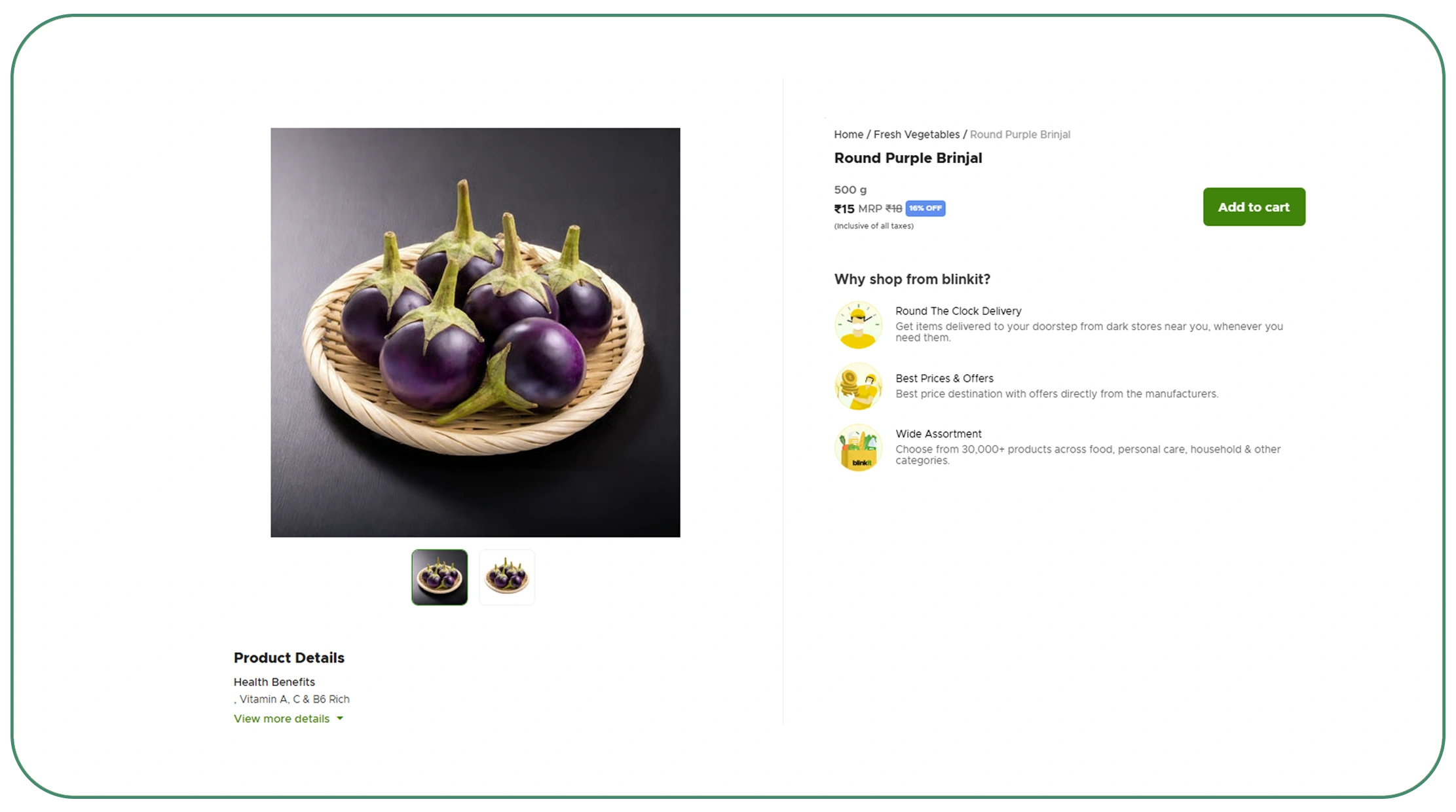
Search ranking determines which products customers see first when they search on Blinkit. Higher-ranking products usually receive more clicks, greater visibility, and increased purchase opportunities. Monitoring ranking changes helps brands understand how pricing, promotions, inventory, and customer demand influence search placement.
Using Blinkit Search Ranking data Intelligence, businesses can continuously monitor ranking movements across thousands of keywords and product categories, enabling faster competitive responses and improved marketplace performance.
Industry Insight: Digital commerce research indicates that products appearing within the first few search positions consistently generate higher customer engagement than products displayed further down the results page.
Search Ranking Performance (2020–2026)
| Year | Average Keywords Tracked | First-Page Ranking Accuracy |
|---|---|---|
| 2020 | 6,200 | 82% |
| 2021 | 8,400 | 85% |
| 2022 | 11,300 | 88% |
| 2023 | 14,900 | 91% |
| 2024 | 18,700 | 93% |
| 2025* | 22,600 | 95% |
| 2026* | 26,900 | 96% |
*Projected
Why should brands monitor search rankings?
Search ranking intelligence helps businesses:
- Identify top-performing products.
- Compare competitor visibility.
- Measure ranking consistency.
- Monitor seasonal changes.
- Analyze category competition.
- Improve product discoverability.
How does ranking intelligence support business growth?
Organizations can:
- Improve digital shelf performance.
- Optimize product placement.
- Benchmark competing brands.
- Identify emerging competitors.
- Strengthen promotional strategies.
- Increase customer engagement.
For example, if a detergent brand consistently ranks above competing products for high-volume search terms, competing manufacturers can evaluate pricing, stock availability, ratings, and promotional activity to understand the reasons behind its stronger visibility. Continuous ranking intelligence enables faster optimization and better competitive positioning.
Why Should Businesses Track Search Results Continuously?

Search results change throughout the day because of inventory availability, pricing updates, promotional campaigns, and customer demand. Continuous monitoring helps businesses identify these changes before they impact sales and product visibility.
Using the Blinkit Keyword Scraper together with scrape Blinkit search results by keyword, retailers and FMCG brands can automatically monitor search rankings across multiple product categories and customer queries.
Industry Insight: Retail analytics experts estimate that frequent search monitoring significantly improves competitive awareness by providing near real-time visibility into product positioning and marketplace changes.
Search Update Frequency (2020–2026)
| Year | Average Daily Search Updates | Keyword Coverage |
|---|---|---|
| 2020 | 3 | 5,500 |
| 2021 | 5 | 7,400 |
| 2022 | 7 | 10,100 |
| 2023 | 9 | 13,600 |
| 2024 | 11 | 17,800 |
| 2025* | 13 | 22,000 |
| 2026* | 15 | 26,500 |
*Projected
Why automate search monitoring?
Automation enables businesses to:
- Detect ranking changes instantly.
- Monitor product visibility.
- Compare competing brands.
- Track inventory-related ranking shifts.
- Analyze keyword performance.
- Improve marketplace intelligence.
How does continuous monitoring improve decisions?
Organizations can:
- React quickly to ranking losses.
- Optimize promotional timing.
- Improve assortment planning.
- Increase search visibility.
- Enhance customer acquisition.
- Support long-term growth strategies.
For instance, if a snack brand falls from the top five search results because competing products launch deeper discounts, pricing teams can respond immediately with revised offers or promotional campaigns. Continuous search monitoring transforms marketplace intelligence into actionable business decisions.
How Can Product and Pricing Intelligence Support Better Retail Decisions?
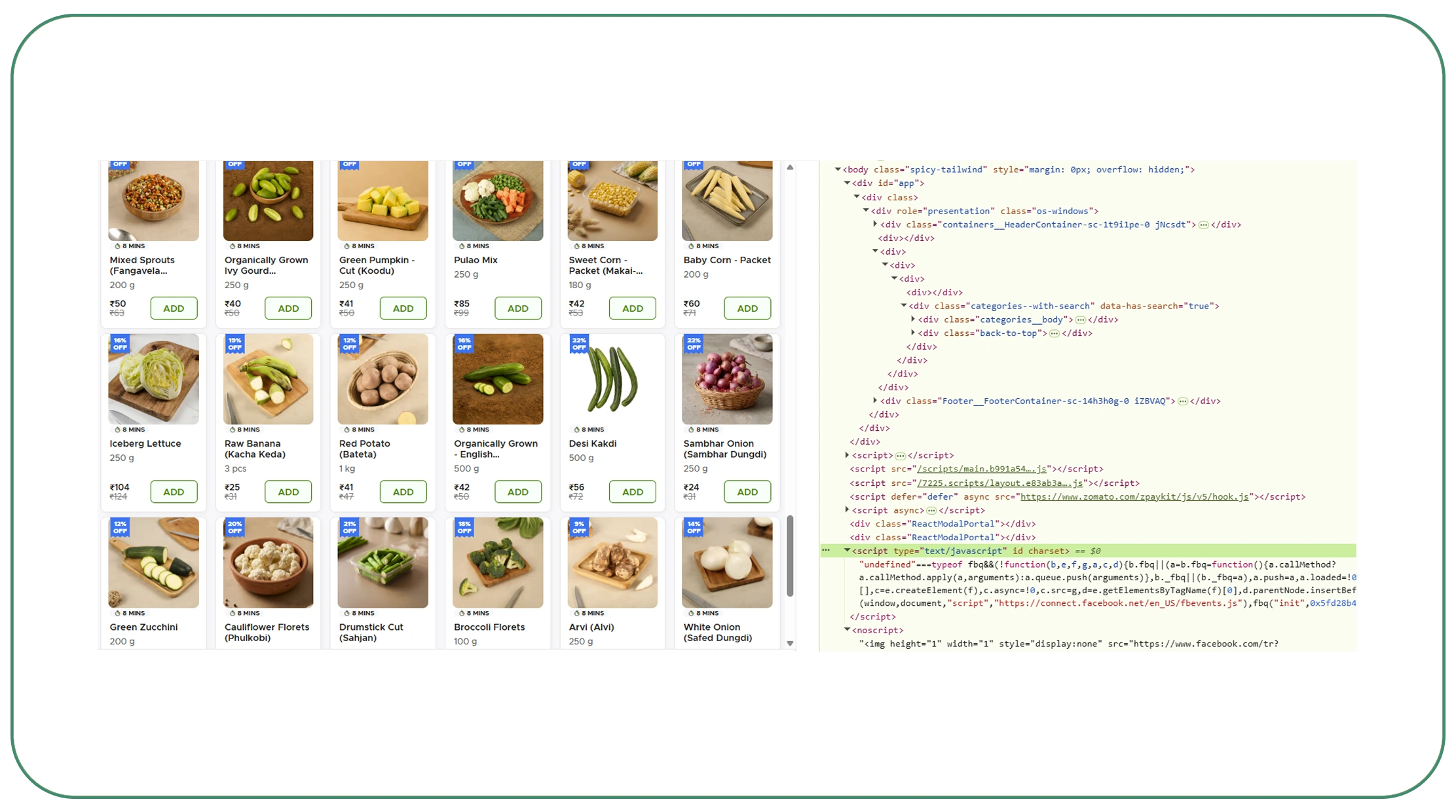
Pricing and product intelligence work together to provide a complete understanding of marketplace performance. Businesses that monitor both product listings and pricing trends can optimize merchandising, improve promotional planning, and respond faster to changing customer demand.
By leveraging Blinkit Product and Pricing Data Scraping via VPSS API, organizations can automate the collection of structured product information, prices, discounts, stock availability, and category updates from Blinkit's marketplace.
Industry Insight: Retailers using automated pricing intelligence often make faster merchandising and pricing decisions because they receive structured, continuously updated marketplace data.
Product & Pricing Intelligence Growth (2020–2026)
| Year | Products Monitored | Daily Price Updates |
|---|---|---|
| 2020 | 40,000 | 2 |
| 2021 | 55,000 | 4 |
| 2022 | 72,000 | 6 |
| 2023 | 91,000 | 8 |
| 2024 | 113,000 | 10 |
| 2025* | 136,000 | 12 |
| 2026* | 160,000 | 15 |
*Projected
Why combine product and pricing intelligence?
Integrated monitoring helps businesses:
- Track price movements.
- Monitor product availability.
- Compare promotions.
- Analyze category performance.
- Improve assortment planning.
- Support dynamic pricing.
What business value does integrated intelligence provide?
Organizations can:
- Increase pricing accuracy.
- Improve demand forecasting.
- Optimize promotional campaigns.
- Benchmark competitors.
- Reduce stock-out risks.
- Strengthen retail decision-making.
For example, if multiple beverage brands reduce prices during a festive season while maintaining strong search rankings, competing retailers can evaluate the relationship between pricing and visibility before adjusting their own strategies. Combining pricing intelligence with search analytics enables organizations to understand not only what customers see but also why products perform better in Blinkit's competitive marketplace.
How Can Pricing Data Help Analyze Inflation and Consumer Costs?
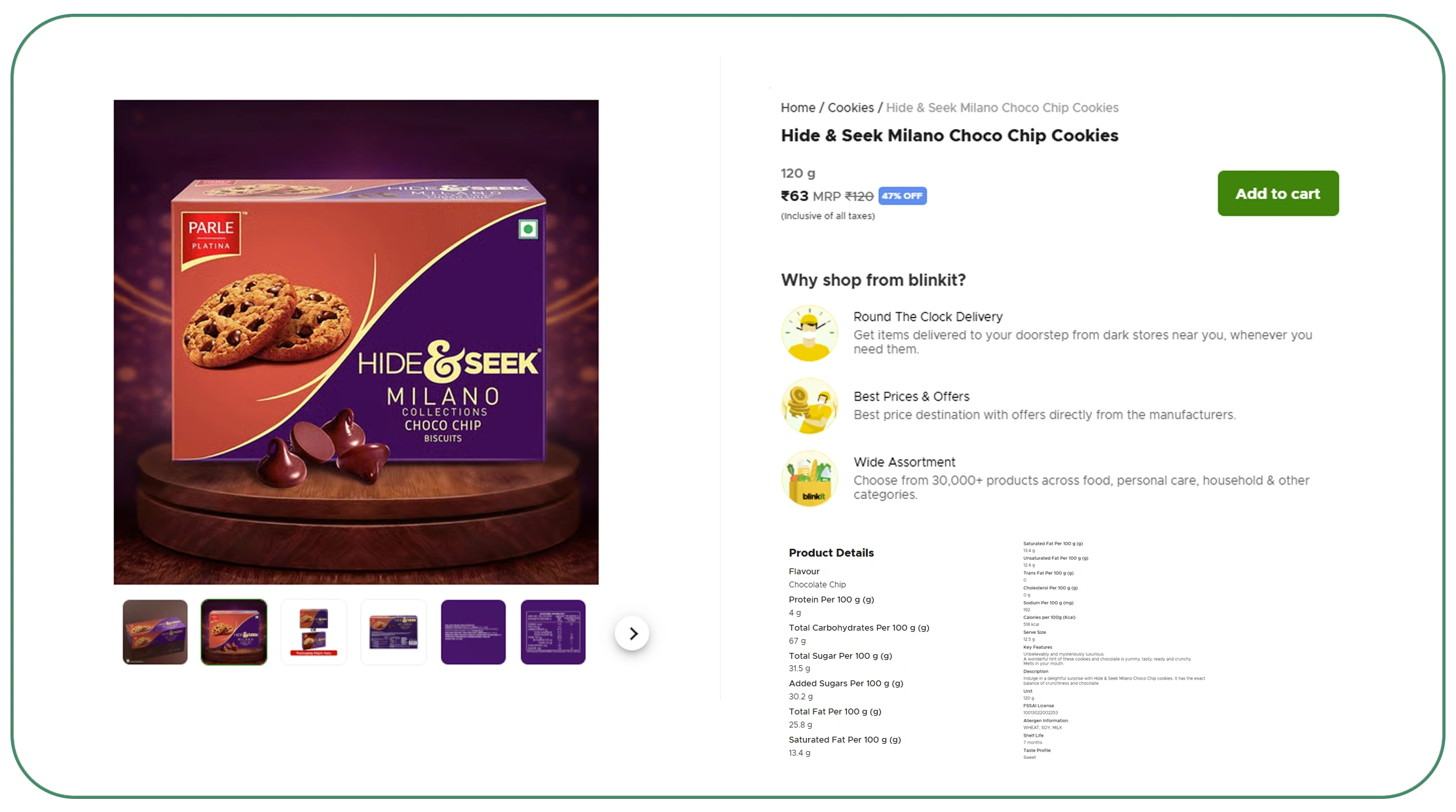
Retail pricing data provides valuable insights into inflation, purchasing behavior, and cost fluctuations across grocery and household categories. By continuously monitoring product prices, businesses can identify inflationary trends, understand consumer spending patterns, and optimize pricing strategies based on market conditions.
Using Web Scraping Blinkit Pricing Data for Inflation and Cost Analysis, organizations can collect structured pricing information across thousands of SKUs, helping economists, retailers, FMCG brands, and market researchers evaluate price movements over time.
Industry Insight: Industry analysts estimate that real-time pricing intelligence improves retail forecasting by helping businesses detect cost increases earlier and measure the impact of inflation across product categories such as groceries, dairy, beverages, personal care, and household essentials.
Grocery Price Trend (2020–2026)
| Year | Average Grocery Price Index (2020=100) | Estimated Annual Inflation |
|---|---|---|
| 2020 | 100 | 3.8% |
| 2021 | 104 | 4.2% |
| 2022 | 111 | 6.7% |
| 2023 | 118 | 6.3% |
| 2024 | 123 | 4.5% |
| 2025* | 127 | 3.7% |
| 2026* | 131 | 3.2% |
*Projected
Why should businesses monitor pricing trends?
Continuous pricing intelligence enables organizations to:
- Measure inflation across product categories.
- Compare regional pricing.
- Monitor supplier cost changes.
- Evaluate promotional pricing.
- Forecast consumer demand.
- Improve pricing decisions.
How does pricing intelligence improve business planning?
Organizations can:
- Detect inflation earlier.
- Optimize procurement strategies.
- Improve demand forecasting.
- Benchmark competitor pricing.
- Support financial planning.
- Strengthen long-term pricing strategies.
For example, if dairy products experience sustained price increases over several weeks while customer demand remains stable, retailers can adjust procurement plans, revise promotional calendars, and optimize inventory before higher costs significantly impact profitability. Combining pricing intelligence with search rankings and inventory data creates a complete retail analytics framework for smarter decision-making.
Why Choose Real Data API?
Real Data API empowers retailers, FMCG brands, quick commerce platforms, manufacturers, and market research firms with enterprise-grade marketplace intelligence solutions. Our automated infrastructure delivers reliable SKU-level data, keyword rankings, pricing, inventory, promotions, and product catalog information from leading quick commerce platforms.
Leveraging Web Scraping Blinkit Grocery Delivery Data together with scrape Blinkit search results by keyword, we help organizations transform raw marketplace information into structured datasets that support competitive benchmarking, pricing optimization, assortment planning, demand forecasting, and digital shelf analytics.
Our capabilities include:
- Keyword-based search monitoring
- Product ranking intelligence
- SKU-level product tracking
- Price and promotion monitoring
- Inventory availability analytics
- Product catalog extraction
- Historical pricing intelligence
- AI-ready structured datasets
- API integration for BI platforms
- Custom dashboards and reporting
Why businesses choose Real Data API
- High-frequency automated data collection.
- Accurate and scalable marketplace intelligence.
- Enterprise-ready API delivery.
- Flexible data formats for analytics.
- Reliable monitoring across thousands of products.
- Dedicated technical support and customized solutions.
Whether you are tracking search visibility, monitoring competitor pricing, or analyzing customer demand, Real Data API delivers actionable insights that help businesses make faster, data-driven decisions in India's rapidly evolving quick commerce ecosystem.
Conclusion
Blinkit's search results provide a powerful view of customer intent, product visibility, pricing strategies, and competitive performance. Businesses that scrape Blinkit search results by keyword gain valuable intelligence to improve digital shelf visibility, optimize pricing, strengthen assortment planning, and respond quickly to changing market conditions. Continuous keyword monitoring enables brands to identify emerging trends, benchmark competitors, and make smarter merchandising decisions that support sustainable growth.
Ready to unlock real-time Blinkit search intelligence? Contact Real Data API today to build a customized data solution for keyword tracking, product ranking analysis, pricing intelligence, and competitive benchmarking that helps your business stay ahead in the fast-growing quick commerce market!
Latest posts
How Target API Simplifies Product, Price, Category, Inventory & Retail Data Collection for Retail Intelligence
How Pull & Bear Fashion Dataset Solves Fashion Intelligence Challenges Across Products, Prices, Categories, and Apparel Trends?
How Levi's Fashion Dataset Improves Fashion Intelligence Across Products, Prices, Categories, and Denim Market Trends?
How Myntra Fashion Dataset Solves Fashion Intelligence Challenges Across Products, Prices, Brands, and Fashion Market Trends?






.png)