.gif)
.jpg)

Quick Summary
- WooCommerce scraper for product variation analysis helps businesses organize variant-level information such as sizes, colors, SKUs, prices, and stock status for structured catalog research.
- WooCommerce Product Data Scraping can support competitive research when data is collected from authorized sources and validated against defined product attributes.
- This report explains API integration, variation-level pricing, catalog extraction, and research workflows using documented WooCommerce capabilities and official sources.
Introduction
A WooCommerce scraper for product variation analysis can help e-commerce managers, brands, retailers, and marketplace researchers transform authorized product information into structured records for comparing sizes, colors, prices, SKUs, and availability. WooCommerce officially supports product and variation data through its REST API, while its documentation describes authenticated API access using API keys. WooCommerce
WooCommerce Product Data Scraping is most useful when the resulting information is standardized rather than simply collected as raw HTML. A variation-aware dataset can distinguish a parent product from its individual variants and preserve attributes such as size and color alongside prices and stock status. WooCommerce's documentation shows variation responses containing attributes, SKU, price, regular price, sale price, purchasability, stock quantity, and stock status. WooCommerce
The central research question is therefore not how many products can be collected, but how accurately their variations can be identified, compared, and monitored. Businesses need reliable product identity, consistent attribute normalization, dated price observations, and transparent data-quality controls.
This report examines how WooCommerce variation data can be used for catalog intelligence, pricing research, API-based integrations, and competitive analysis. It focuses on verifiable WooCommerce functionality and avoids treating hypothetical scraping results as real market statistics.
How can product information be extracted from WooCommerce stores?
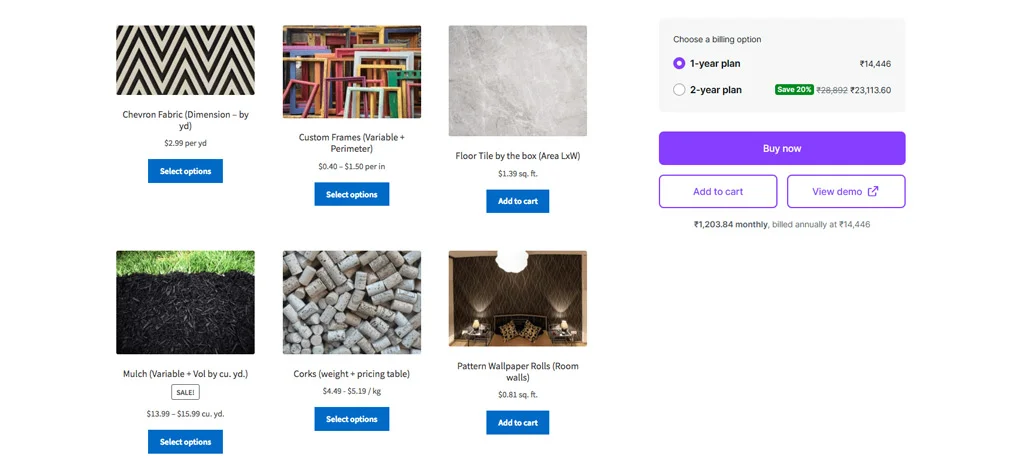
Extract product data from WooCommerce stores should begin by determining whether the business owns the store, has authorization from the store operator, or has another lawful basis for accessing the information. For first-party WooCommerce stores, the official REST API provides an authenticated route for connecting external systems. WooCommerce states that API keys are generated and managed from the store administration interface. WooCommerce
For research involving third-party storefronts, automated collection should not be assumed to be permitted simply because product pages are publicly visible. Researchers should review the relevant website terms, technical restrictions, and applicable law before collecting data.
A variation-focused extraction workflow should separate parent products from their child variations. WooCommerce documentation provides product variation endpoints and examples showing attributes such as size and other options. Variation records can also contain SKU, pricing, stock status, and stock quantity fields when those values are available. WooCommerce
| Data field | Research purpose | Validation requirement |
|---|---|---|
| Product ID | Parent-product identification | Preserve source identifier |
| Variation ID | Variant identification | Keep distinct from parent ID |
| SKU | Product matching | Check for duplicates |
| Attribute name | Variation classification | Normalize carefully |
| Attribute option | Size/color/value matching | Preserve original value |
| Regular price | Price benchmarking | Store currency context |
| Sale price | Promotion research | Distinguish from regular price |
| Stock status | Availability analysis | Record observation date |
These fields reflect documented WooCommerce API capabilities, but actual values depend on each store's configuration and permissions. WooCommerce
For research quality, raw values should be preserved before normalization. For example, "XL," "Extra Large," and another store's equivalent label should not automatically be treated as identical without a documented mapping. This is particularly important for apparel, footwear, electronics, and configurable products where variations can affect both price and availability.
A structured extraction workflow should also record timestamps. Without observation dates, analysts cannot distinguish current information from historical information or establish whether an apparent price or stock change is genuine.
How does API integration improve variation-level research?
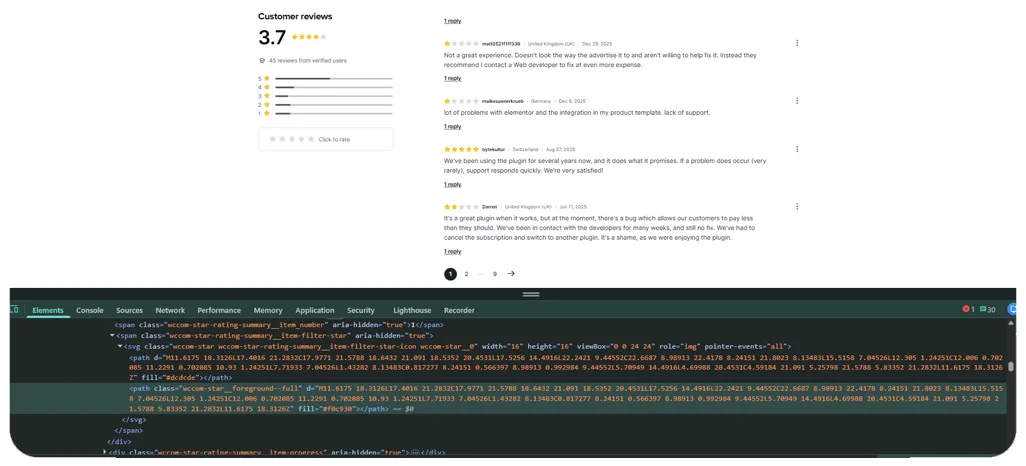
WooCommerce product API integration provides a more structured alternative to parsing page layouts when an authorized store connection is available. WooCommerce's official REST API documentation states that the API connects a store to external systems and services and uses API keys to control access. WooCommerce
The API approach is particularly relevant to variation analysis because product and variation information can be represented as structured fields rather than requiring analysts to interpret visual page elements. WooCommerce documentation also identifies product and variation endpoints and provides examples of variation-specific attributes and pricing fields. WooCommerce
A reliable integration should include authentication, pagination, validation, error handling, logging, and controlled storage. API credentials should never be embedded in publicly accessible applications or shared unnecessarily.
| Integration component | Function | Research benefit |
|---|---|---|
| Authentication | Establish approved API access | Controlled data retrieval |
| Product endpoint | Retrieve parent-product information | Catalog mapping |
| Variation endpoint | Retrieve individual variants | Variant-level analysis |
| Pagination | Retrieve larger result sets systematically | More complete coverage |
| Validation | Check response fields and types | Data quality |
| Timestamping | Record retrieval time | Historical analysis |
| Error logging | Record failed requests | Operational transparency |
WooCommerce's documentation notes that API keys include a consumer key and consumer secret, with the secret displayed only once when generated. This makes credential management an important part of any integration. WooCommerce
API integration should also account for extensions. WooCommerce documentation shows that extensions can add properties to product and variation responses, meaning the exact schema can differ depending on the store's installed functionality. WooCommerce
Consequently, researchers should not assume that every WooCommerce store exposes an identical dataset. Schema discovery and validation should occur before production analysis.
What makes variation-level price research reliable?
A WooCommerce price scraper for competitor research can help analysts compare displayed prices across comparable products when collection is authorized. However, meaningful benchmarking requires more than recording the first price visible on a product page.
A WooCommerce scraper for product variation analysis should preserve the relationship between the parent product and each variation. If a shirt has different prices by size, for example, assigning one parent-level price to every size would distort the analysis. WooCommerce's documented variation data model supports variation-specific price fields, including regular and sale prices. WooCommerce
Price research should therefore retain the following context:
- Parent product identity
- Variation identifier
- Attribute values
- Regular price
- Sale price, when available
- Currency
- Observation timestamp
- Product or variation URL
- Availability status
- Data source
| Price research measure | Definition | Required context |
|---|---|---|
| Displayed price | Price recorded for the selected product/variation | Currency and timestamp |
| Price difference | Difference between two comparable observations | Same product definition |
| Percentage difference | Price difference relative to a defined reference | Reference must be stated |
| Sale-price difference | Difference between verified promotional prices | Promotion context |
| Price movement | Change between dated observations | Consistent product identity |
A benchmark should exclude incomparable products rather than force a match. Different sizes, configurations, bundles, currencies, shipping charges, taxes, or promotional conditions can produce differences that are not evidence of a competitor pricing strategy.
For this reason, a price research dataset should contain both raw observations and standardized analytical fields. Analysts can then reproduce calculations and inspect the original values when a result appears unusual.
Explore structured WooCommerce product and variation data to uncover pricing, catalog, and competitive intelligence opportunities.
Get Insights Now!How can product prices be collected for research?
To scrape WooCommerce product prices for research, analysts should first establish whether they have permission to access and use the source data. For stores under the researcher's control, the official API is generally preferable to relying on page markup because structured API responses can expose product and variation fields directly. WooCommerce's documentation describes its REST API as a mechanism for connecting stores with external systems and services. WooCommerce
A research pipeline should capture price observations as time-series records instead of repeatedly replacing the same database field. This allows researchers to distinguish a new price from a historical value.
For each observation, the system should retain the product identity, variation identity, displayed price, currency, date and time, and any applicable sale-price information. When stock status is relevant, it should be recorded separately rather than inferred from price.
WooCommerce's official product search documentation also demonstrates filtering capabilities for price, stock, sale status, SKU, attributes, categories, and variations within its Product Search extension. WooCommerce
| Research field | Why it matters |
|---|---|
| Product name | Human-readable identification |
| Product ID | Stable parent-product reference |
| Variation ID | Variant-level reference |
| SKU | Additional matching key |
| Attribute values | Distinguishes variants |
| Regular price | Baseline pricing |
| Sale price | Promotional pricing |
| Stock status | Availability context |
| Timestamp | Historical reconstruction |
The actual availability of these fields depends on the source, permissions, WooCommerce configuration, and extensions installed. The dataset should therefore distinguish between "not available," "not returned," and "not applicable."
Researchers should also avoid interpreting every price change as a deliberate competitive move. A price can change because of a sale, product configuration, tax treatment, currency, inventory policy, or other commercial factors. A responsible research report should identify the observed fact first and reserve strategic interpretation for cases supported by sufficient evidence.
What should an API-driven variation dataset contain?
A WooCommerce scraper API for product data should be designed around the analytical questions the business needs to answer. A WooCommerce scraper for product variation analysis becomes significantly more useful when each variation is treated as an independent analytical record connected to its parent product.
WooCommerce's documented product search API supports filtering and can include variation information in responses. Its documentation also shows fields for stock status, prices, sale status, attributes, SKUs, and other product properties. WooCommerce
A useful warehouse design can contain separate product, variation, attribute, price-observation, and availability-observation tables.
| Dataset layer | Example information | Analytical purpose |
|---|---|---|
| Product | Product ID, name, category | Parent catalog |
| Variation | Variation ID, SKU, attributes | Variant identity |
| Attribute | Size, color, material | Variant comparison |
| Price observation | Regular/sale price, timestamp | Price history |
| Availability observation | Stock status, timestamp | Inventory research |
| Source metadata | Source, retrieval status | Auditability |
This relational approach avoids duplicating the same parent-product information across every observation. It also makes historical reporting easier because price and stock changes can be stored independently from relatively stable catalog attributes.
Quality controls should identify duplicate variation IDs, missing SKUs where a SKU is expected, invalid prices, inconsistent currencies, and impossible attribute combinations. The system should also flag products that disappear from subsequent responses instead of immediately declaring them discontinued.
API-based datasets can support dashboards showing variation counts, price ranges, sale activity, stock-status distributions, and historical changes. However, dashboards should expose the date and scope of the underlying observations.
WooCommerce's official API documentation provides the technical foundation for authenticated integrations, while its extension documentation demonstrates that additional product properties can be introduced by extensions. WooCommerce Therefore, schema discovery remains important even when two stores both run WooCommerce.
How should automated WooCommerce data collection be governed?
A WooCommerce Scraper project should combine technical controls with clear authorization and research objectives. The strongest workflow is not necessarily the one that sends the most requests; it is the one that produces traceable, reproducible information while respecting the source's access requirements.
For first-party stores, WooCommerce provides authenticated REST API access. For third-party stores, the researcher should establish that the collection method and intended use are permitted before proceeding. This distinction matters because WooCommerce is a software platform, while individual stores control their own websites, content, configurations, and policies.
The data pipeline should include:
- Source authorization: Establish the legal and technical basis for collection.
- Schema discovery: Identify available product and variation fields.
- Controlled retrieval: Use documented endpoints and appropriate request limits.
- Validation: Check identifiers, prices, attributes, and stock fields.
- Historical storage: Preserve observations with timestamps.
- Quality monitoring: Track missing data, duplicates, failures, and schema changes.
- Reporting: Explain coverage, limitations, and observation periods.
| Control | Measurement | Action |
|---|---|---|
| Completeness | Required fields populated | Investigate missing fields |
| Duplicate detection | Repeated product/variation IDs | Deduplicate or review |
| Price validation | Numeric and currency checks | Reject malformed records |
| Attribute validation | Expected attribute structure | Flag inconsistencies |
| Freshness | Time since last successful observation | Identify stale data |
| API health | Successful versus failed requests | Investigate integration issues |
These metrics should be calculated from actual project data. There is no universal completeness percentage or refresh frequency that can be presented as a verified WooCommerce industry benchmark.
The research workflow should also preserve raw source values where permitted. Normalized values are useful for analysis, but the original data provides context when a transformation is questioned.
Ultimately, variation analysis is most effective when product identity, variant attributes, pricing, availability, and observation time remain connected. This enables researchers to distinguish genuine catalog changes from data-collection artifacts.
Why Choose Real Data API?
A specialist data partner can help businesses design structured product-data workflows around defined research objectives. The appropriate approach depends on whether the client needs first-party WooCommerce integration, authorized third-party data collection, historical pricing, catalog monitoring, or a combination of these use cases.
For businesses evaluating a WooCommerce API Data Provider for Product Price Monitoring, the most important capabilities are structured product and variation handling, historical observation storage, validation, source traceability, and secure integration practices.
WooCommerce itself documents REST API connectivity between stores and external systems and provides mechanisms for API-key authentication. WooCommerce Its product documentation also confirms that structured product information can include variation, pricing, SKU, attribute, and stock-related fields depending on the endpoint and configuration. WooCommerce
A well-designed solution can help teams:
- Maintain product and variation relationships.
- Track dated price observations.
- Standardize sizes, colors, and other attributes.
- Identify catalog changes.
- Monitor data completeness and freshness.
- Feed validated datasets into dashboards and analytical systems.
- Maintain an auditable research trail.
The most important consideration is source coverage. A data provider should clearly explain which sources are available, what fields are included, how often records can be updated, and what authorization requirements apply.
This prevents a common research problem: assuming that a technically accessible product page represents complete or continuously available market information. A reliable data program documents what was collected, when it was collected, and what the dataset does not establish.
Conclusion
Variation-level product data can provide a stronger foundation for e-commerce research than simple product-level listings. When each variation retains its own attributes, SKU, price, stock status, and timestamp, analysts can investigate catalog structure and pricing with greater precision.
A WooCommerce scraper for product variation analysis should therefore be designed around product identity, variant relationships, historical observations, data validation, and authorized access. WooCommerce's official documentation provides structured API capabilities for products and variations, but individual stores can differ because of configuration and extensions. WooCommerce
For competitive research, the objective should be comparable evidence rather than maximum data volume. Price comparisons need matching products, consistent currencies, relevant variation attributes, and clear observation dates. Availability analysis similarly requires a distinction between confirmed stock status and missing or stale data.
Businesses can use these principles to develop more reliable product intelligence workflows, whether the goal is catalog research, price benchmarking, inventory analysis, or historical monitoring.
Ready to transform WooCommerce product and variation information into structured research data? Get Insights Now!
Frequently Asked Questions
1. What does variation analysis involve?
A WooCommerce scraper for product variation analysis organizes parent products and individual variants, allowing researchers to compare attributes, prices, SKUs, and availability without merging distinct variations.
2. What information can be collected?
WooCommerce Product Data Scraping can capture permitted product fields such as names, SKUs, attributes, prices, and stock information when those fields are available through an authorized source.
3. Can WooCommerce APIs support product research?
WooCommerce product API integration connects authorized stores with external systems using API credentials, allowing structured product information to support analytics, catalog management, and research workflows.
4. How can price research be structured?
WooCommerce price scraper for competitor research should retain product identity, variation attributes, displayed price, currency, source, and timestamp to make comparisons reproducible and transparent.
5. Why use Real Data API for product intelligence?
Real Data API can help businesses structure product research workflows around authorized sources. WooCommerce scraper API for product data projects can include validation, historical records, and analysis-ready outputs.
Latest posts

How to Use Amazon API integration for e-commerce analytics to Track Competitor Prices and Improve Product Performance
How IKEA API for retail market intelligence Helps Retailers Solve Product Data Inconsistency and Pricing Challenges

How Instagram API integration for business analytics Helps Brands Track Engagement and Measure Social Media Performance
How OTT Dataset Updates for Entertainment Analytics Help Streaming Platforms Fix Outdated Content Insights



.png)


